
Injunctions, superinjunctions & SLAPPs, what are they?
The distinction between protecting private information and concealing the exercise of judicial power is squarely back in public discussion as of November 2026. Injunctions, SLAPPs and superinjunctions are often terms associated with this balancing act. But what are they?

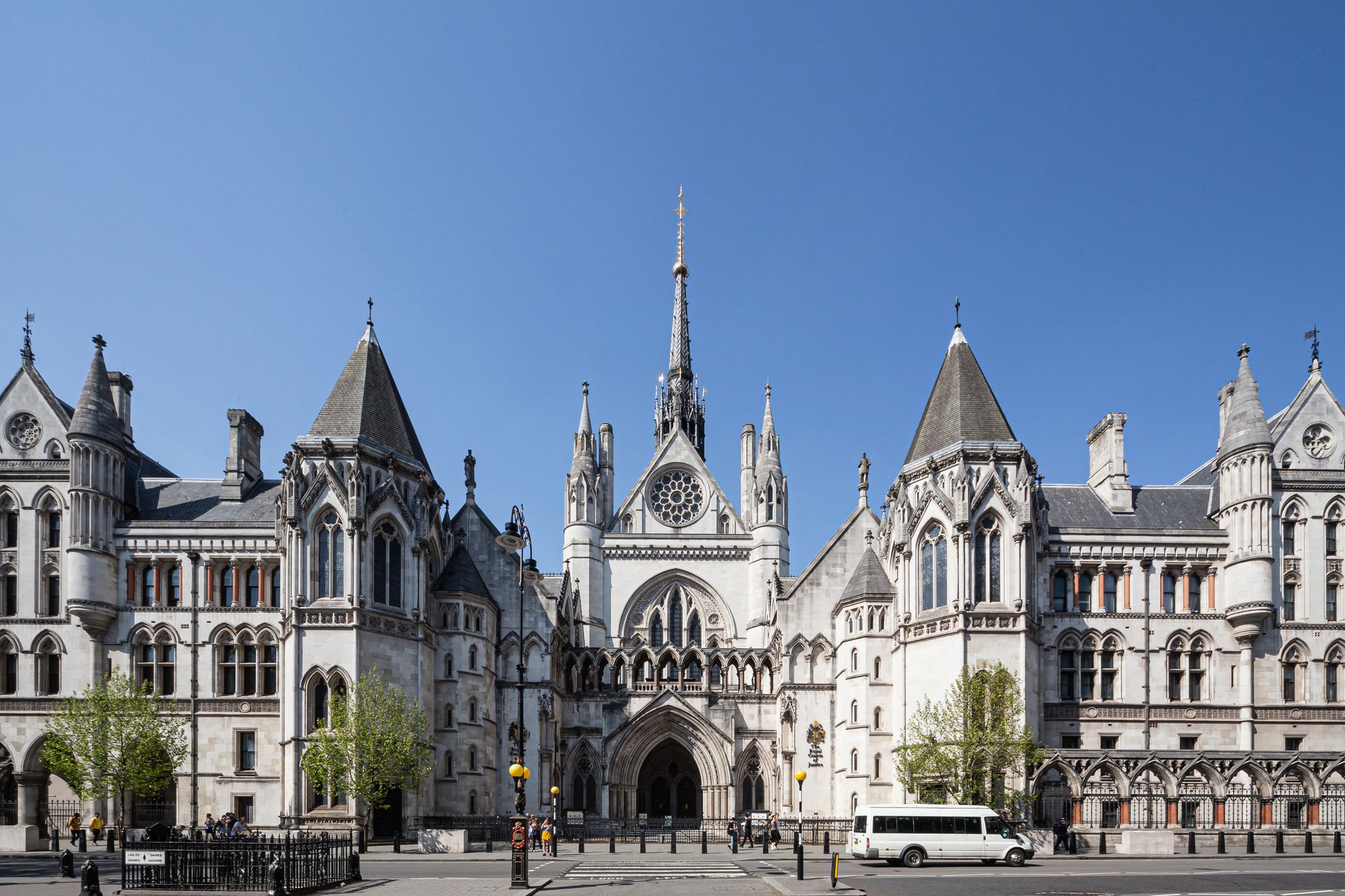

On 10 November 2026, Sky News identified David Walliams as the celebrity whose application to prevent publication by the Guardian and ITN had failed. Walliams denies the allegations. Mr Justice Nicklin expressly stated that the court had neither determined their truth nor approved whatever the publishers might subsequently publish. Refusing an injunction is not a verdict on the underlying accusations. The proceedings nevertheless provide an occasion to explain a much misunderstood feature of English law. “Superinjunction” is frequently used to describe almost any restriction involving a celebrity, although its proper meaning is considerably narrower.
What is a superinjunction:
An injunction is a court order requiring someone to do, or refrain from doing, something. In the terminology adopted by Lord Neuberger’s 2011 committee, a superinjunction is an interim order which prohibits disclosure of information said to be private or confidential, while also prohibiting disclosure of the existence of the order (injunction) and proceedings which led to it. An anonymised injunction, by contrast, can permit reporting of the litigation while withholding the parties’ identities. A superinjunction is an injunction whose existence, and specifics of the restriction, cannot even be declared to exist within the relevant jurisdiction. It is perhaps the most extreme civil form of restriction on speech available.
In light of this weeks' news regarding Mr Walliams' case, and the disclosure of his identity; Walliams’s proceedings were publicly reportable while his identity was protected. That variety of anonymity in an injunction should not be confused with a superinjunction, nor should an unsuccessful application for a publication ban be described as though the applicant had obtained one.
In England and Wales, restrictions on publication commonly engage Article 8 of the European Convention on Human Rights, protecting private and family life, and Article 10, protecting expression. Neither Article automatically prevails; this is the uncertainty so common among ECHR legal balancing acts. Section 12 of the Human Rights Act 1998 requires particular regard to freedom of expression; before restraining publication pending trial, the court must be satisfied that the applicant is likely to establish that publication should not be allowed. Concealing the proceedings requires a further justification under the demanding rules governing departures from open justice.
There are defensible reasons for protecting confidential information. Publishing a medical record or exposing a child’s identity can inflict harm which damages cannot meaningfully repair. There are also times in which these publications, intended for damage, are framed as being a matter of public interest to maximise damage – this phenomenon is generally increasing in the public consciousness, and is known as doxxing. I covered it here, as doxxing and identity theft remain grey areas in the digital realm. I have also addressed the activity of UK-based organisations, which routinely deal routinely in doxxing as an intimidation and ostracisation tactic, here.
When it comes to superinjunctions, concealing the existence of litigation outright removes the means by which the public might scrutinise the restriction, its proportionality, the circumstances which led to it. We are then expected to trust a judicial decision whose existence we are forbidden to discuss, or investigate. The 2011 judicial guidance recognises the difficulty, reserving superinjunctions for the rarest cases of strict necessity, including brief restrictions intended to prevent an order being frustrated before it can be served.
The consequences of such injunctions extend well beyond celebrity privacy. The Ministry of Defence obtained a superinjunction in September 2023 concerning a breach of Afghan applicants’ personal data. Professor Mark Elliot discusses some of those reasons, including national security justifications, in his article "The Afghan super-injunction case: Some constitutional implications". That superinjunction remained in place until July 2025. The justification was the danger that disclosure would enable Taliban reprisals; its discharge followed a reassessment which undermined that justification. Whatever view one takes of the initial necessity, nearly two years of secrecy concerning government failure, and the implications for resettlement of those affected in total secrecy, represents a substantial loss of democratic scrutiny.
And what, therefore, is a SLAPP?
A related concern is the use of litigation to suppress lawful scrutiny, commonly described as a SLAPP, or strategic lawsuit against public participation. A SLAPP describes abusive litigation or threats, rather than a particular kind of injunction. The Solicitors Regulation Authority warns against unmeritorious claims and oppressive tactics used to stifle publication. Neither a privacy claim nor an injunction is inherently a SLAPP.
Dan Neidle’s recent examination of Brand v Berki illustrates why scrutiny must extend to the precise wording of orders. In 2015, Russell Brand and Jemima Goldsmith obtained summary judgment and a final harassment injunction against an unrepresented defendant. Neidle criticises restrictions which, on his analysis, reach private conversations and communications with police and medical professionals. He also reports Lady Justice Falk’s subsequent acknowledgment of concerns about the order’s breadth, while refusing to reopen an earlier appeal decision. These are criticisms of a harassment injunction, not evidence that the proceedings constituted a superinjunction or had been judicially classified as a SLAPP.
The broader concern is the practical inequality between those who can finance litigation and those who must defend themselves. Judicial scrutiny of an order’s scope becomes especially important where one party lacks representation, or indeed, where there is a considerable financial imbalance between the parties. A legitimate finding of harassment should not make every proposed restriction on speech immune from examination.
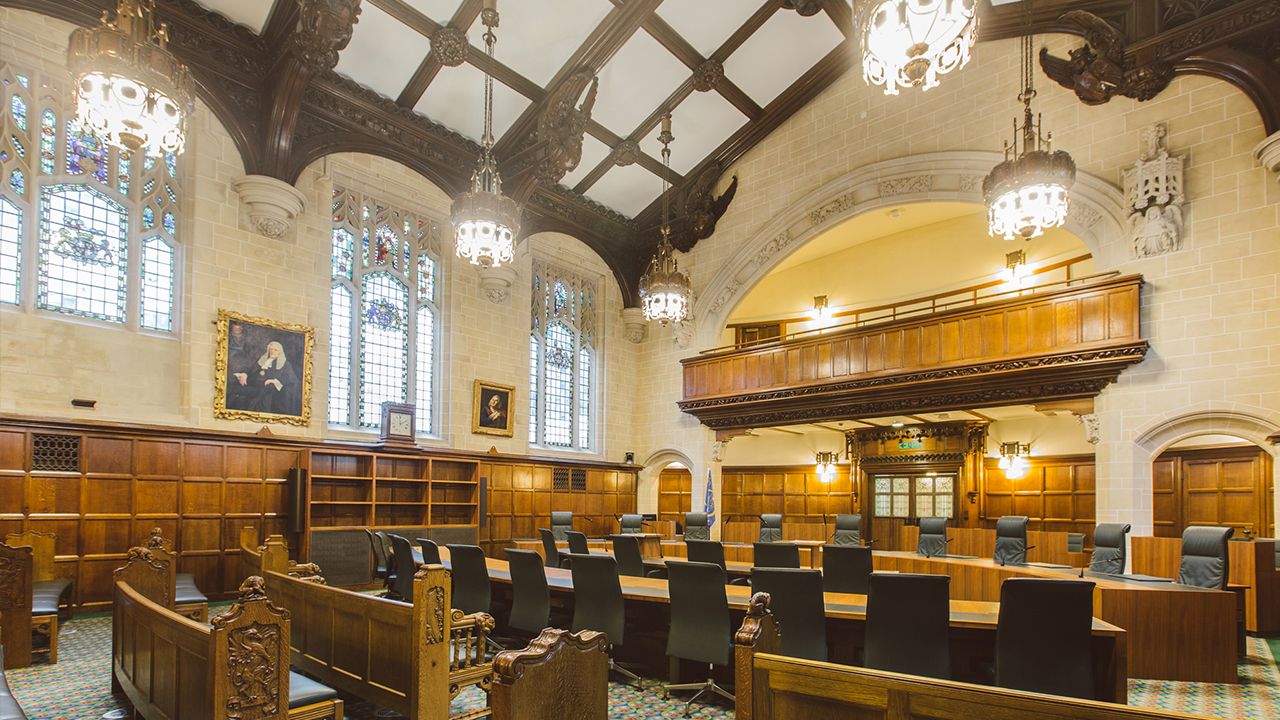
Publication abroad offers no automatic escape. In PJS v News Group Newspapers [2016] UKSC 26, the Supreme Court maintained an injunction despite overseas and online disclosure, recognising that further publication could cause additional intrusion. An existing order can therefore remain enforceable even where the information is readily discoverable elsewhere; knowingly assisting its breach can expose a third party to contempt proceedings.
Nor should criticism of secrecy diminish the seriousness of defamation. Knowingly spreading a false allegation that a man is a rapist, whether directly or through rumour and insinuation, is an especially cruel abuse of speech. An ordinary person, without wealth or a public platform, may have little practical means of repairing the damage even when an accusation has no foundation – this is not without fatal examples.
The death of Jay Cheshire illustrates the distress that an accusation can occasion. The 17-year-old from Southampton died by suicide in July 2015 after a rape complaint was withdrawn and the investigation ended. The Times described the accusation as false in their reporting on it. Reporting of the inquest records his history of depression and the coroner’s observation that he “found it difficult to cope with the police investigation”. His mother, Karin, died by suicide the following year. A withdrawn complaint or decision to take no further action is not itself proof of fabrication, and neither death should be reduced to a single explanation. Cases like this nevertheless deserves consideration when assessing the need for accessible remedies against reputational harm, and, illustrate the impact that such reputational harm can have.
The solutions:
Baroness Stowell of Beeston’s Strategic Litigation Against Public Participation Bill [HL], HL Bill 29, introduced on 16 June 2026, would extend protection beyond economic crime to expression on matters of public interest. It provides for early dismissal where a claimant cannot demonstrate likely success, subject to a safeguard where sufficiently serious harm justifies continuing the claim, alongside stronger costs protection for defendants. Sir John Whittingdale introduced a Commons bill on 17 June. As at 10 November, its text remained unpublished and its second reading was scheduled for 27 November.
The draft Freedom of Speech Bill 2026, which I co-authored with Preston Byrne and Elijah Granet, addresses the same problem within a broader reform programme. Clause 22 would allow defendants to seek early dismissal of claims concerning public-interest expression. Claimants would have to establish substantial merit, likely success, sufficiently serious harm and an absence of purpose to suppress protected expression. Defendants would normally recover their full reasonable costs following dismissal, with damages also available for losses caused by a SLAPP.
These remain proposals, and their anti-SLAPP provisions would not themselves abolish superinjunctions. They would offer a means of challenging abusive litigation before the expense of defending it becomes prohibitive. Secrecy requires continuing scrutiny of its own, particularly its duration and the justification for concealing proceedings. Any reform should preserve necessary protection for private information while making judicial restrictions on public discussion easier to examine and challenge – not simply the purvey of the ultra-wealthy and litigation-happy.