
Notice of Treason
James Stoker argues that permanent settlement raises a constitutional question about the people to whom the Crown and Parliament owe their authority.

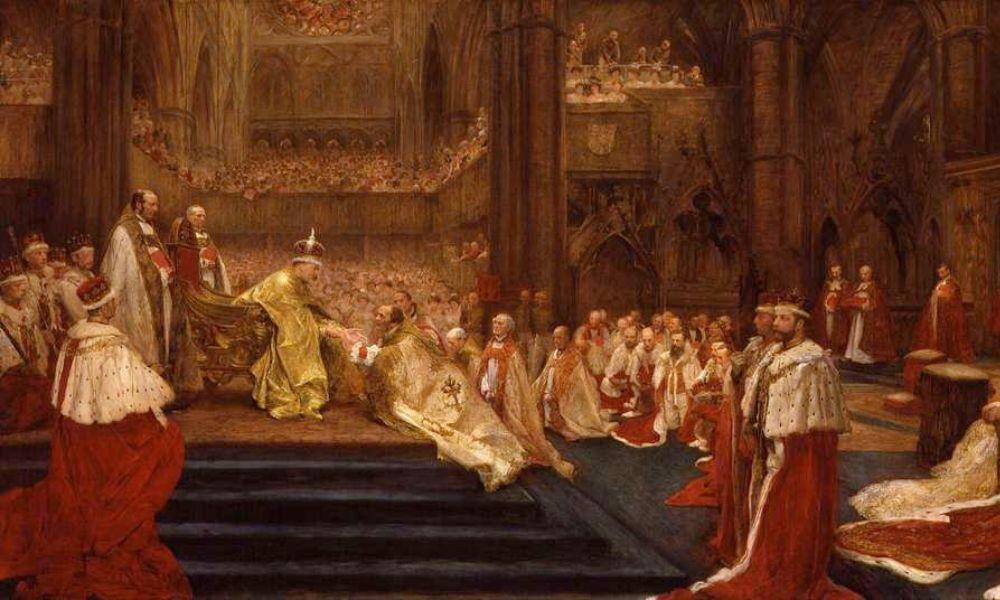
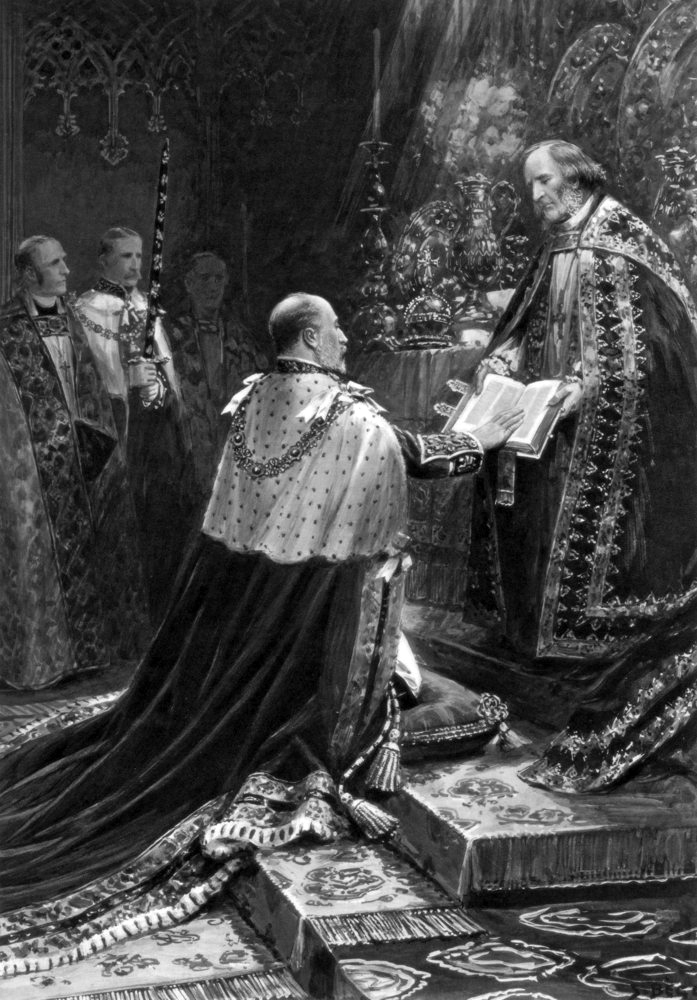
The article “The Coronation Oath and mass immigration” explained how the Coronation Oath identified the British People as the constitutional sovereign, so that neither Crown nor Parliament possesses the authority to substitute or permanently alter that population by the settlement of foreigners. Any attempt by those or other institutions to change the British population lies outside the constitution, and is therefore an act of treason.
This is not, however, how treason is defined in legislation: statutes are designed to protect the Crown and Parliament, rather than the sovereignty of the people from whom they derive their authority. Nonetheless, Parliament’s sovereignty is over legislation, not over the constitution, and treason against the People does not cease to be so because Parliament has not legislated a statutory offence for it.

This offence need not involve the presence of foreigners on British soil, as such. One can accommodate asylum seekers, overseas students, and temporary foreign workers, at least in theory, so long as they are legally distinct from the sovereign population, and returned home once the reason for their stay in Britain is complete. However, governments have sought avenues of permanent settlement. According to Labour policy adviser Andrew Neather, in his infamous Evening Standard article in October 2009:
“Immigration … didn't just happen: the deliberate policy of ministers from late 2000 until at least February last year, when the Government introduced a points-based system, was to open up the UK to mass migration … it's a question of genuine diversity now, not just tacking a few Afro-Caribbean and Bengali events on to a white British mainstream ...
“I wrote the landmark speech given by then immigration minister Barbara Roche in September 2000, calling for a loosening of controls. It marked a major shift from the policy of previous governments: from 1971 onwards, only foreigners joining relatives already in the UK had been permitted to settle here ...
“Eventually published in January 2001, the innocuously labelled ‘RDS Occasional Paper no. 67’, ‘Migration: an economic and social analysis’ focused heavily on the labour market case. But the earlier drafts I saw also included a driving political purpose: that mass immigration was the way that the Government was going to make the UK truly multicultural. I remember coming away from some discussions with the clear sense that the policy was intended - even if this wasn't its main purpose - to rub the Right's nose in diversity and render their arguments out of date”.
Shortly after the publication of his article, Neather backtracked:
“Multiculturalism was not the primary point of the report or the speech. The main goal was to allow in more migrant workers at a point when – hard as it is to imagine now – the booming economy was running up against skills shortages. Somehow this has become distorted by excitable right-wing newspaper columnists into being a ‘plot’ to make Britain multicultural”.
Neather’s rebuttal of his own article doesn’t bite on the point. From a constitutional perspective, it does not matter whether the motive is a left-wing multicultural project, or an economic one. The sole issue is the government’s decision to change the population, and Neather’s substitution of an economic motive still amounts to an admission of such a policy.
There have been other attempts to downplay the intentionality of mass immigration. Here is The Guardian in 2015, suggesting “chance events”:
“UKIP often cites an article by Andrew Neather, a former No 10 and Home Office adviser, who wrote that the Labour government embarked on a deliberate policy from late 2000 to ‘open up the UK to mass migration’. Yet where Farage sees a political conspiracy behind the numbers, others veer towards the theory of … the significance of chance events. Even the most ardent defenders of the New Labour government acknowledge that such a wave of immigration was not purely down to chance. But the key players of the time show in candid conversations that they were struggling to cope with a new world of rapid population movement across porous borders”.
Such explanations do not wash. Mass immigration and the conveying of British citizenship to foreigners can only be enabled by legislation, and “porous” borders exist only because decisions to enforce them are not taken. There are more than enough public statements to confirm that mass foreign settlement, and therefore demographic change, was intended and approved. For example:
Prime Ministers


- Tony Blair, April 2004: “So now is the time to make the argument for controlled migration … we have begun a top to bottom analysis of the immigration system, how it operates, how it can be improved … We are putting in place a strategy - globally, nationally and locally - to ensure migration works for Britain today and in the future”.
- Gordon Brown, November 2009: “The changes I have set out today – the new points-based system on entry, and the proposed points-based system for citizenship … are aimed at ensuring our economy continues to attract and retain the highly skilled workers we need”.
- David Cameron, November 2014, speaking at the GG2 Leadership Awards: “When I hear ‘sir’, ‘your honour’ or ‘right honourable’, I want them to be followed by a British Asian name. One day I want to hear that title ‘Prime Minister’ followed by a British Asian name … That is the sort of country we are building in the United Kingdom”.
- Theresa May, May 2017: “I am proud that Britain is one of the world’s most successful multi-racial, multi-religious and multi-cultural societies”.
- Boris Johnson, July 2019: “No one believes more strongly than me in the benefits of migration to our country”.
- Liz Truss, July 2019, when a minister in Boris Johnson’s government: “We do need immigration in our country, that it is incredibly important but that there should be limits”.
- Keir Starmer, January 2020: “We need to make the wider case on immigration … we have to make the case for the benefits of migration, for the benefits of free movement”.
In addition to Prime Ministers, there are any number of statements by ministers and MPs; Lord Mandelson said in May 2013, “In 2004 when as a Labour government, we were not only welcoming people to come into this country to work, we were sending out search parties for people and encouraging them, in some cases, to take up work in this country”. Speaking at a refugee rally in 2015, Labour MP Rachael Maskell called for Britain to take more refugees until “saturation point”.
Treason as policy
In some of the above quotes, politicians seek to justify mass immigration by claiming benefits. Whether these benefits are real need not concern us; the point is that any attempt to justify mass immigration is an admission of intent to change the population, and therefore treason.
Assurances to limit or control mass immigration are also immaterial since intention is not ameliorated by a lower scale. When playing chess, placing a single extra knight or castle on the board is no less a violation of the Rules of Chess than adding dozens of extra pawns.
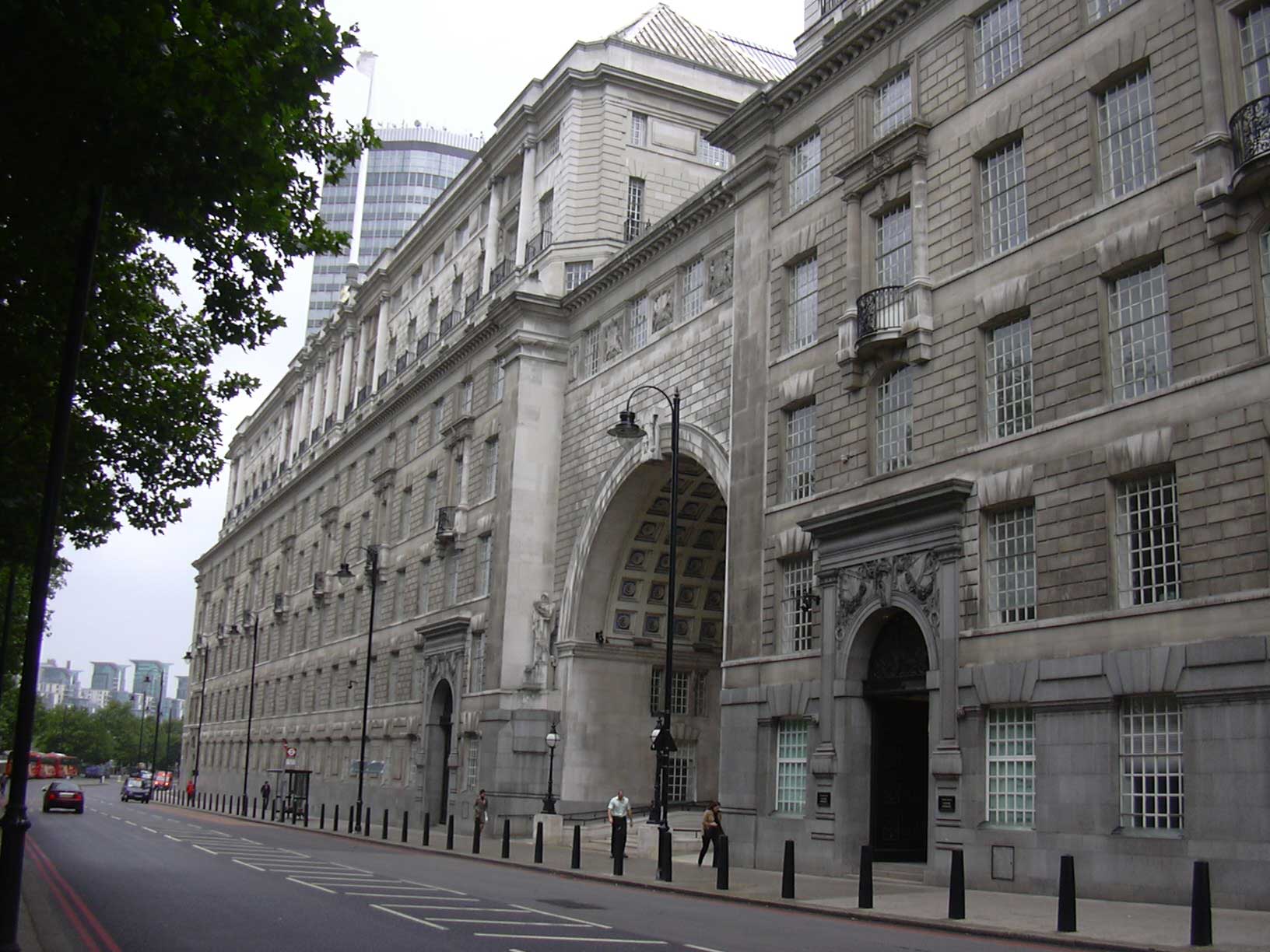

Given the openness of the demographic policy, one might expect security agencies such as MI5 to act. MI5 does not talk in terms of treason, but subversion, and it is authorised by the Security Service Act 1989, which states:
The function of the Service [MI5] shall be the protection of national security and, in particular, its protection against threats from … actions intended to overthrow or undermine parliamentary democracy by political, industrial or violent means.
Importing a new population, and therefore a new electorate, might be assumed to be of concern to MI5. However, according to MI5’s website: “The statutory basis under which MI5 operates authorises us to investigate subversion ... However, we no longer investigate [this] issue. Subversion is no longer seen as a significant threat”.
This is a remarkable statement; the institution charged with defending the realm from subversion has itself been subverted. In 2022, MI5, together with MI6 and GCHQ, removed the requirement that applicants have at least one parent who was British or from certain other countries, while retaining the requirement that applicants themselves be British citizens. This signifies a separation from the sovereign population. The extent to which MI5 is captured is illustrated by the following statement on its website in September 2021:
“For the sixth year in a row, MI5 is marking National Inclusion Week to highlight the importance of inclusion across the UK. As a visible display of our commitment to inclusion, we’ll be flying our Inclusion Flag above our London headquarters for the whole week … Director General Ken McCallum said: ‘I am passionate about MI5 becoming fully reflective of the UK we serve’”.
This statement is, of course, typical of government and public sector bodies, including the police and armed services, where the organised importation of a foreign population is codified as “diversity and inclusion”.
Regardless, the Coronation Oath and its identification of the sovereign British population still stands. The statutes that have been passed since 1948, and the administrative practice that has grown around them, cannot repeal it. They can only demonstrate that those who govern have chosen to govern a different people.
Editor’s note: Stoker uses “treason” in the constitutional sense he sets out above. This is distinct from establishing an offence under the Treason Act 1351.