
Cambridge Circus Research: Breaking the Charity Blob
Cambridge Circus Research is part of the new class of policy projects trying to map power rather than merely complain about it. Its debut report, Breaking The Blob, asks whether parts of Britain’s charity and NGO world have become a taxpayer-supported opposition circuit against elected government.


A new entrant in the new policy ecosystem
Cambridge Circus Research describes itself as an independent think tank conducting policy-focused research across governance, defence and education. It says its work is concerned with the institutions, regulations and incentive structures that determine whether government actually works. That is a useful self-description, because this first governance report is not really about charity in the sentimental sense. It is about power, and about the institutional arrangements by which power survives without having to put its name on a ballot paper.
As far as the public-facing material shows, this is a 2026 arrival. The site’s visible publication material and copyright line are dated 2026, and the press release calls Breaking The Blob the think tank’s debut report. I would describe it as newly launched or newly public in 2026 unless Cambridge Circus Research supplies a more exact legal founding date.
That places it in the same broad family as the better new civic-data projects now appearing around British politics. UKGovScanmakes the British state searchable by following public contracts, donations and interests. House of The People tries to measure Parliament against a parallel public vote. Cambridge Circus Research does something adjacent. It tries to map the institutional layer that sits between an elected government and the implementation of its programme.
This is the emerging world of the nu-thinktank. Not the old upholstered model, where a former minister supplies a foreword, a private lunch follows, and a report dies politely in a folder of PDFs. The better new institutions scrape registers, build maps, follow directors, trace grants and ask whether the official story corresponds with the machinery underneath it.
What the report says
Breaking The Blob is subtitled A Study and Antidote to British Ungovernability. The report page says it examines how parts of the UK NGO, charity, foundation and public-interest litigation ecosystem operate as a coordinated, durable political force that frustrates elected policy without equivalent democratic accountability. That is the thesis. Not that charity itself is the enemy. Not that voluntary action is suspect. The argument is that a political machine has grown within, around and beside the charity sector.
The press release is less diplomatic. It says Britain has become
“a state at war with itself”
and describes parts of the NGO and charity sector as a
“state-funded opposition loop”
Those are deliberately sharp phrases. One may accept them whole, reject them whole, or do the more useful thing and ask what they are pointing at. The answer, in Cambridge Circus Research’s telling, is a circuit of public money, charitable status, philanthropic funding, litigation, lobbying, coalition campaigning and sympathetic institutional pressure.
In plainer English, this is the world in which an elected government announces a policy, only for that policy to enter a long digestive system of consultation, legal challenge, activist briefing, regulatory hesitation, foundation-funded opposition and reputational panic. By the time it emerges, if it emerges at all, it may be thinner, softer and less recognisable than the promise made to voters.
Why does the charitable sector matter?
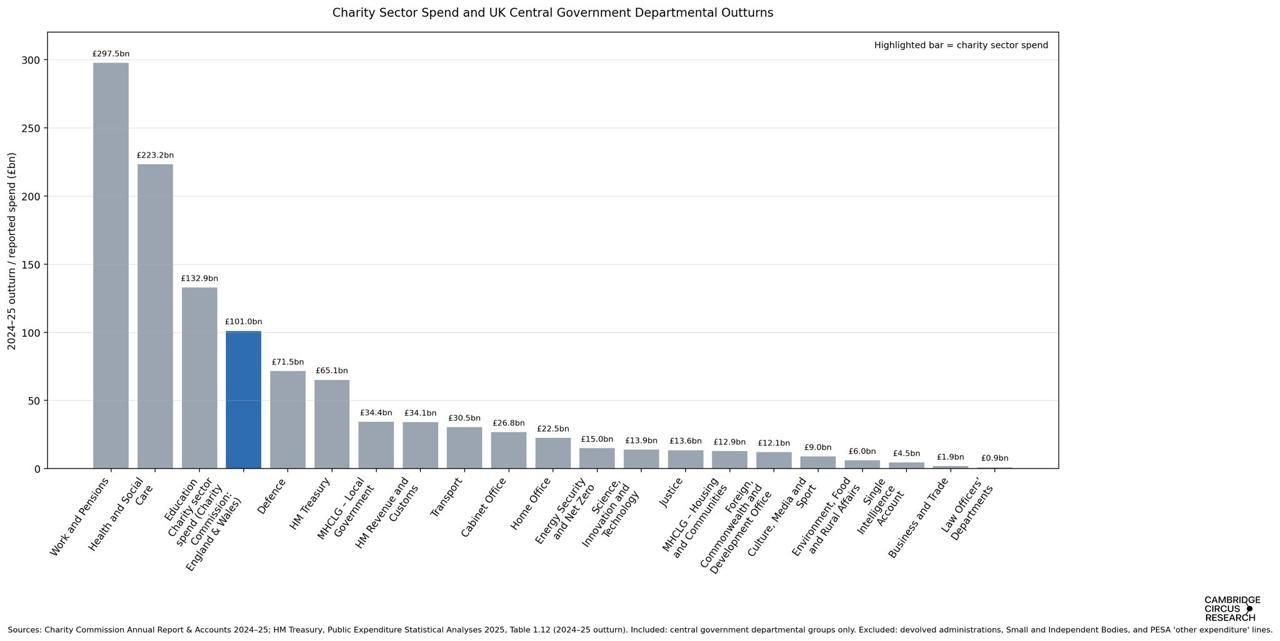
At the end of March 2025, the Charity Commission oversaw 170,862 registered charities, with combined annual income of £102 billion and spending of £101 billion. This is a substantial part of British public life, encompassing everything from a village hall committee to organisations with the resources to influence national policy.
It also enjoys considerable public confidence. The Commission’s 2026 research, summarised by Trethowans, found that 57 per cent of respondents had high trust in charities. Only doctors ranked higher among the institutions surveyed. Much of that trust is earned through services people know and use. The report asks what happens when the same standing attaches to organisations engaged in sustained political advocacy.
Funding and influence
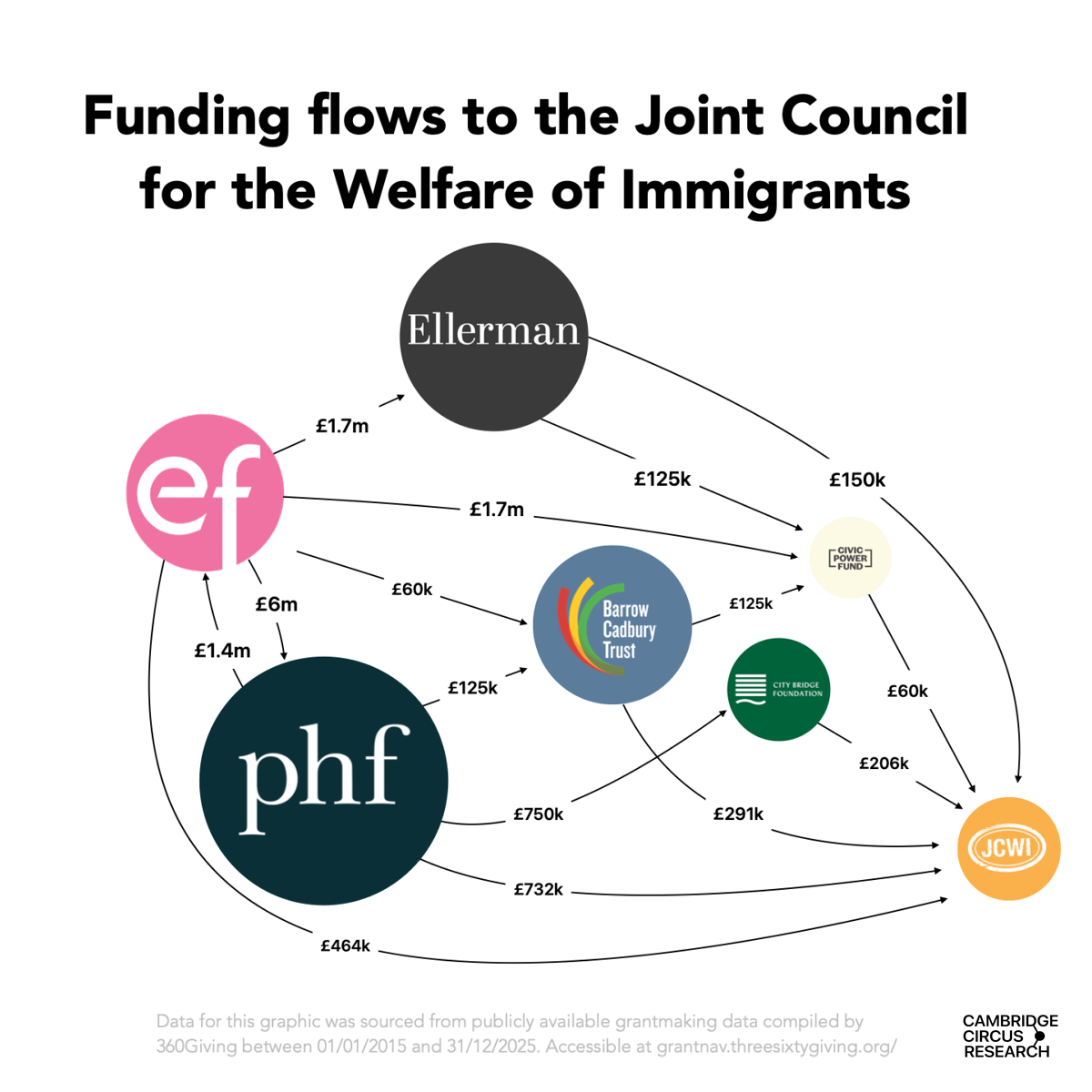
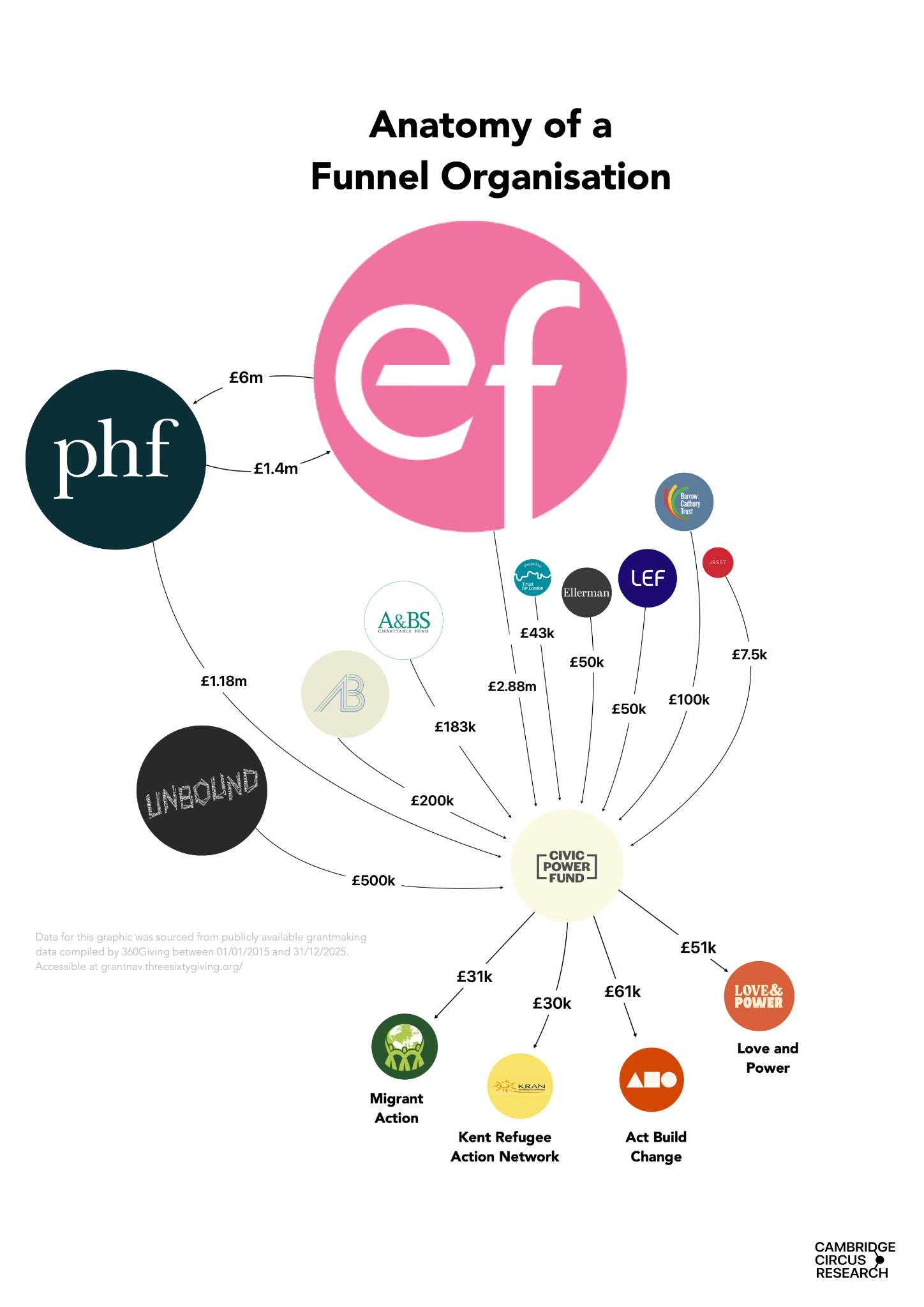
Cambridge Circus Research’s most useful contribution is to follow the connections between organisations. A foundation may fund a charity directly, support an intermediary which makes further grants, and finance other bodies working towards similar ends. The accounts of any one recipient reveal only part of the arrangement.
The report’s diagram of funding to the Joint Council for the Welfare of Immigrants illustrates this. So does its account of Civic Power Fund, which receives support from larger grantmakers and distributes money to smaller organisations. These arrangements help explain how campaigns acquire staff, legal advice and the means to sustain their work.
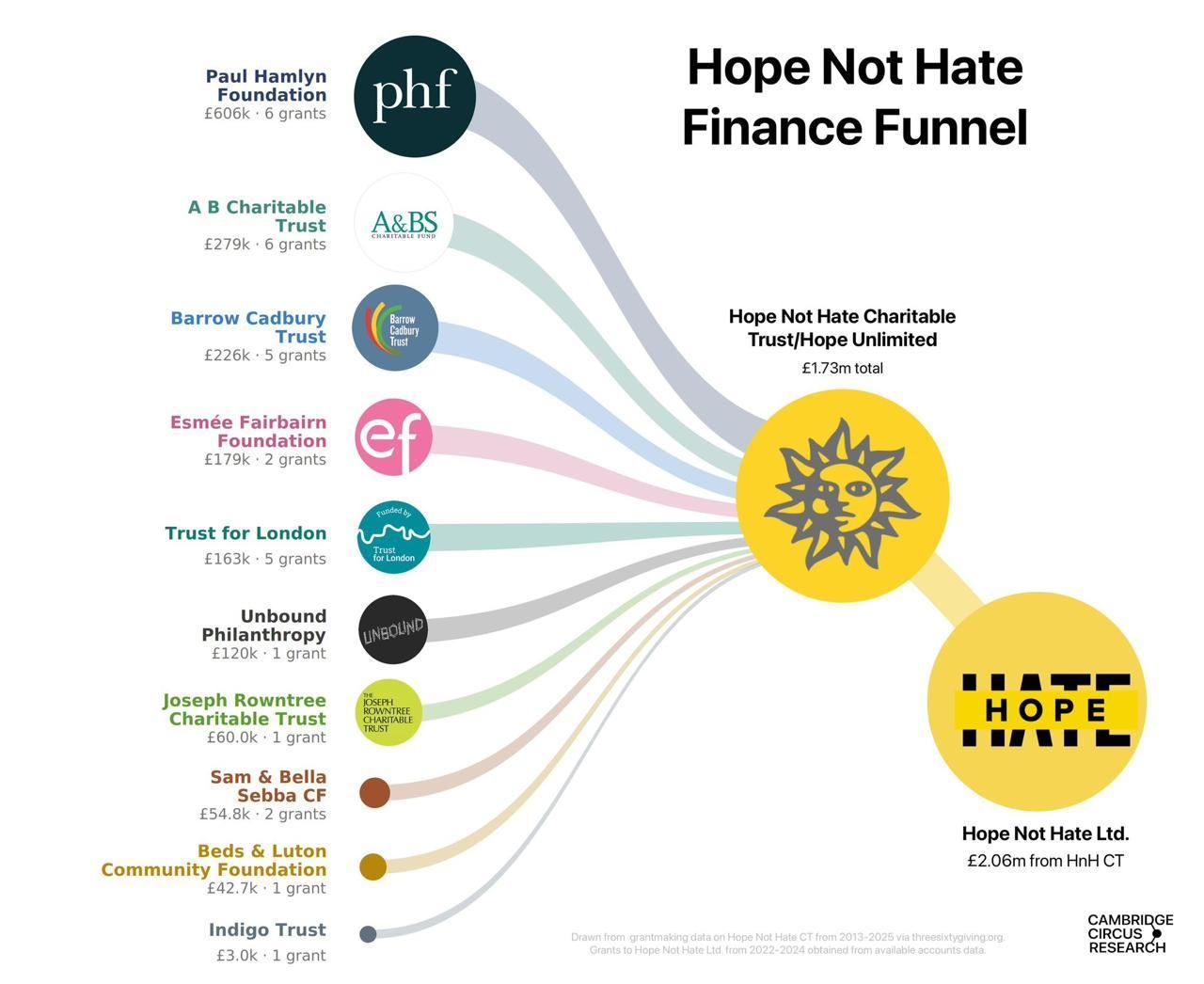
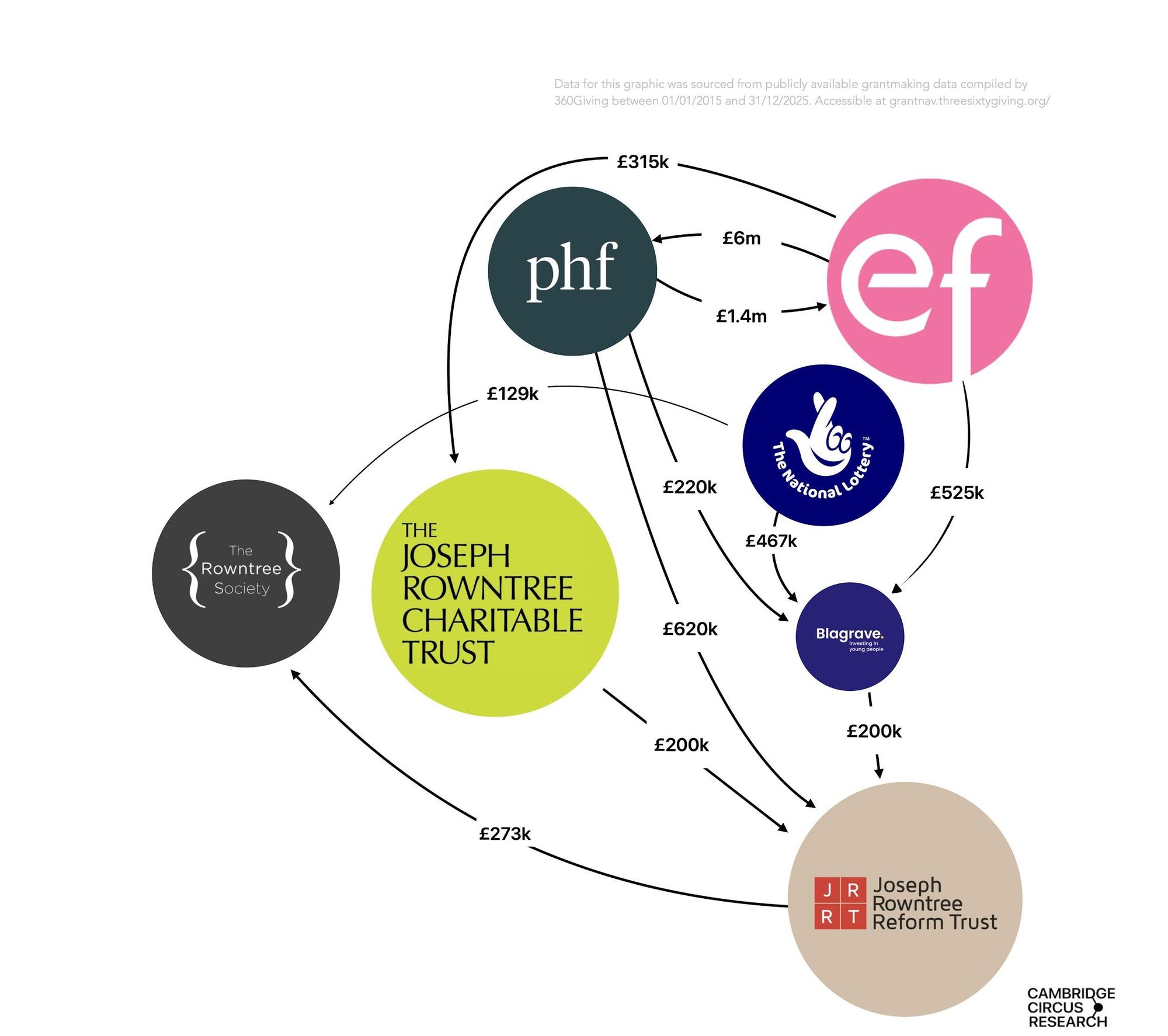
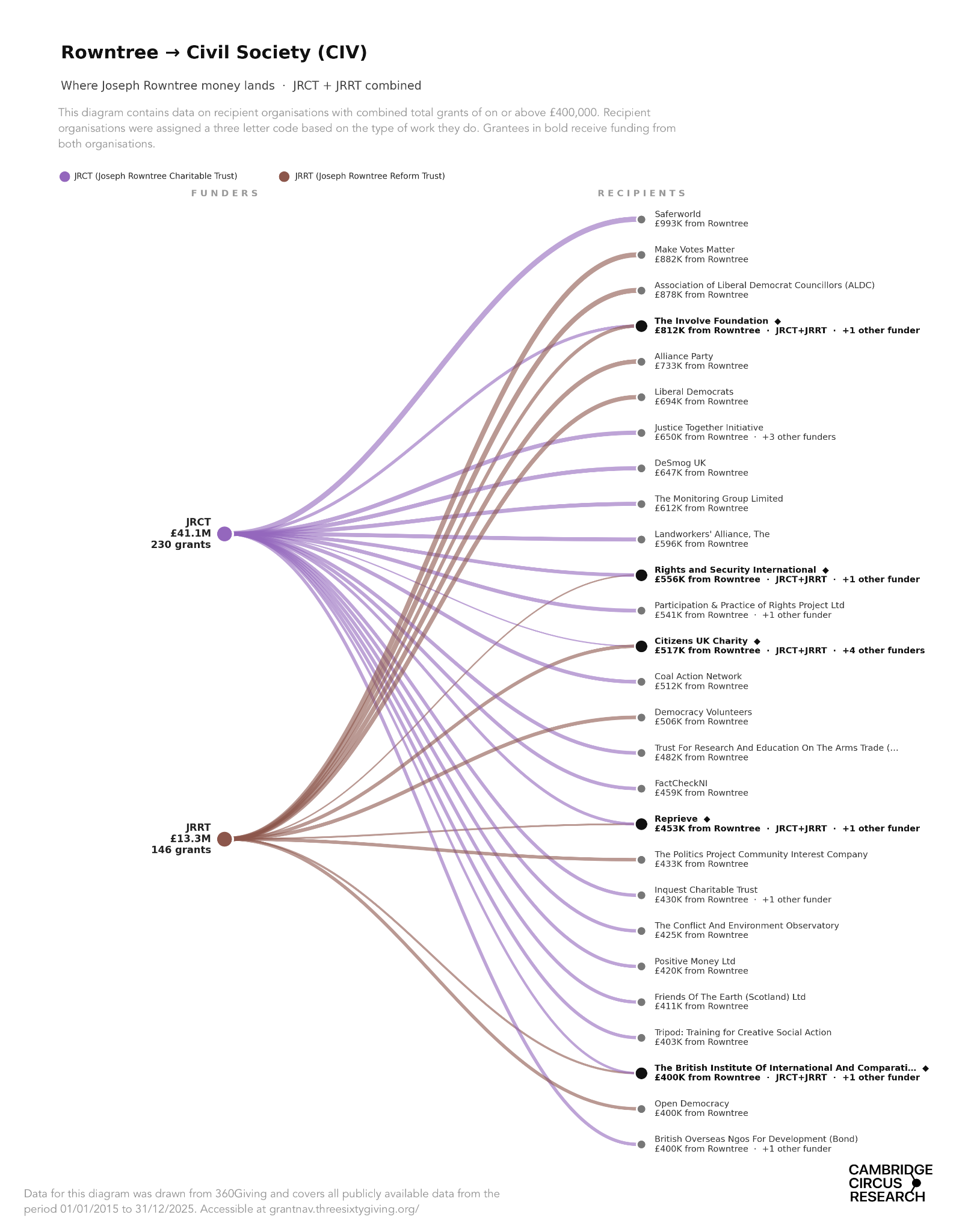
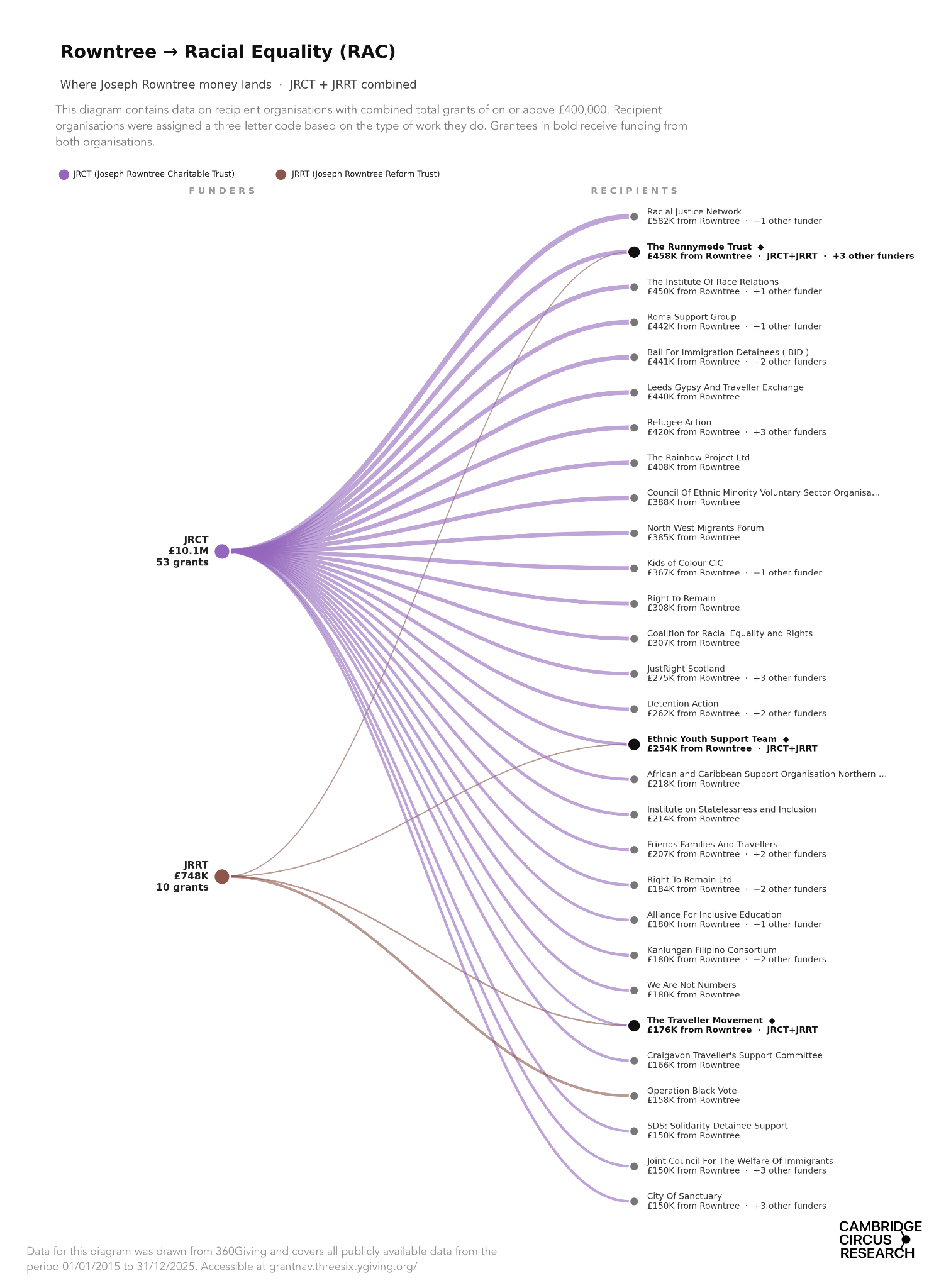
Other examples concern the relationship between charitable and non-charitable bodies. The authors trace grants through Hope Unlimited Charitable Trust to Hope not Hate Ltd, and examine funding around the Rowntree organisations. Their appendix extends the analysis across civil-society and racial-equality groups.
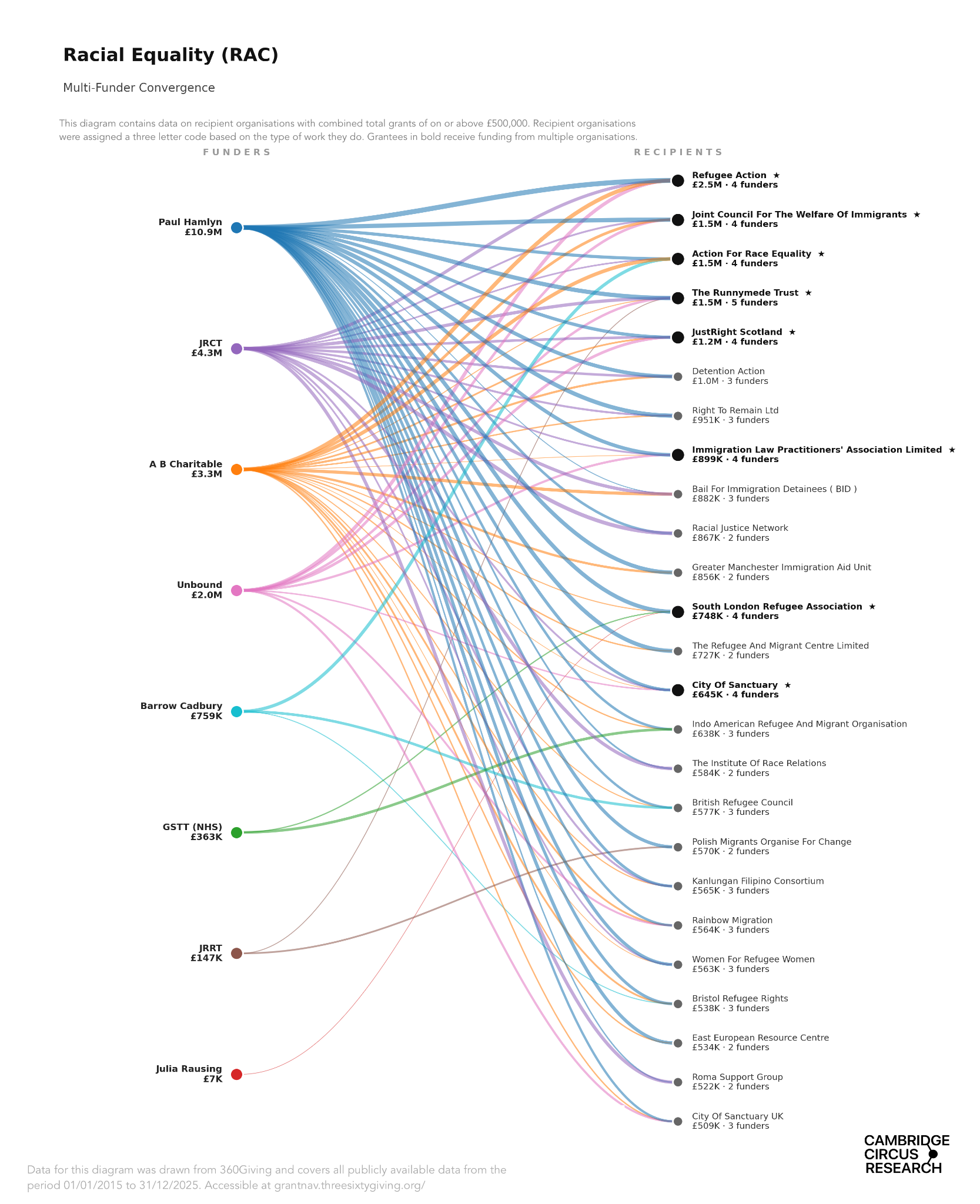
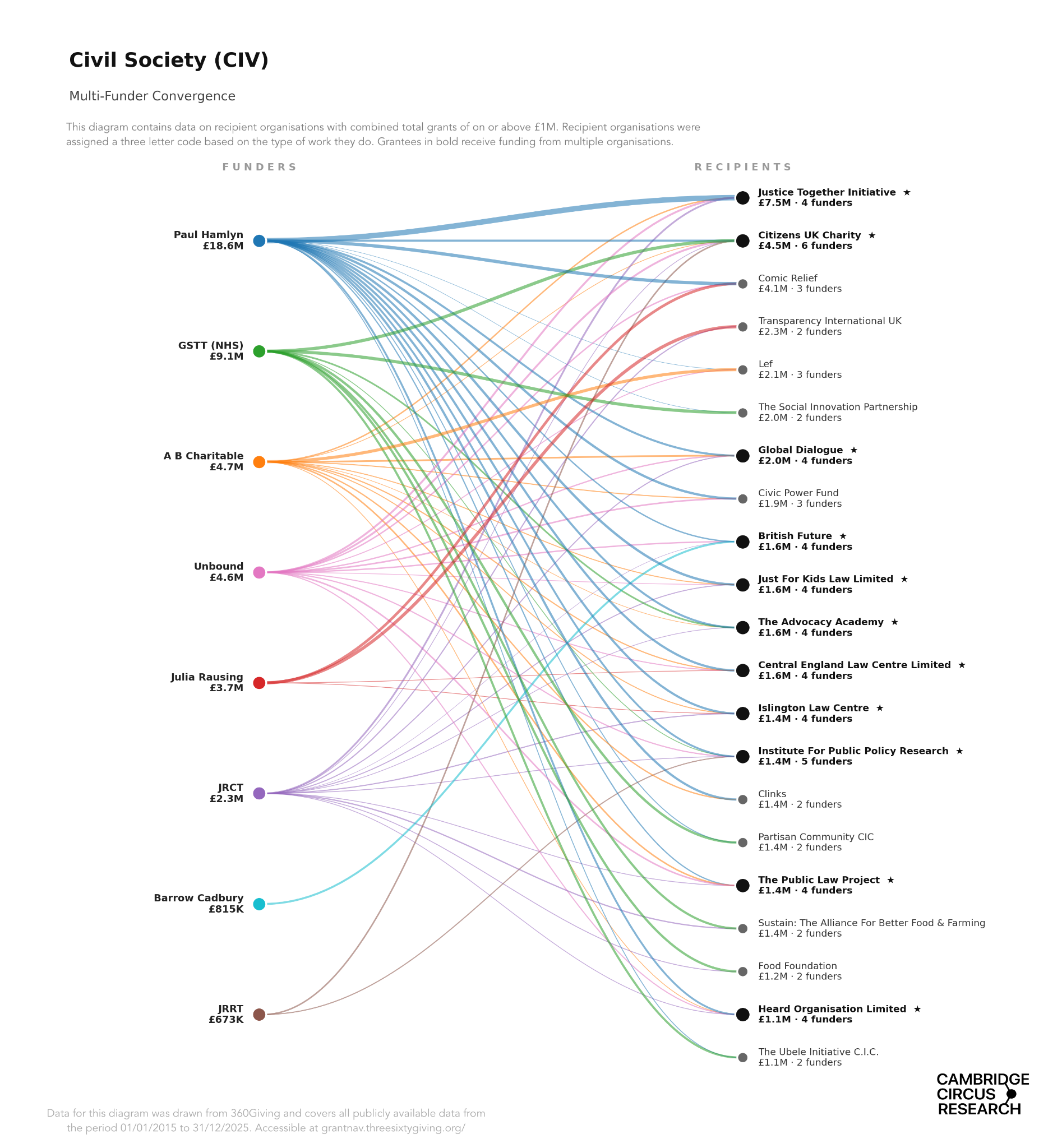
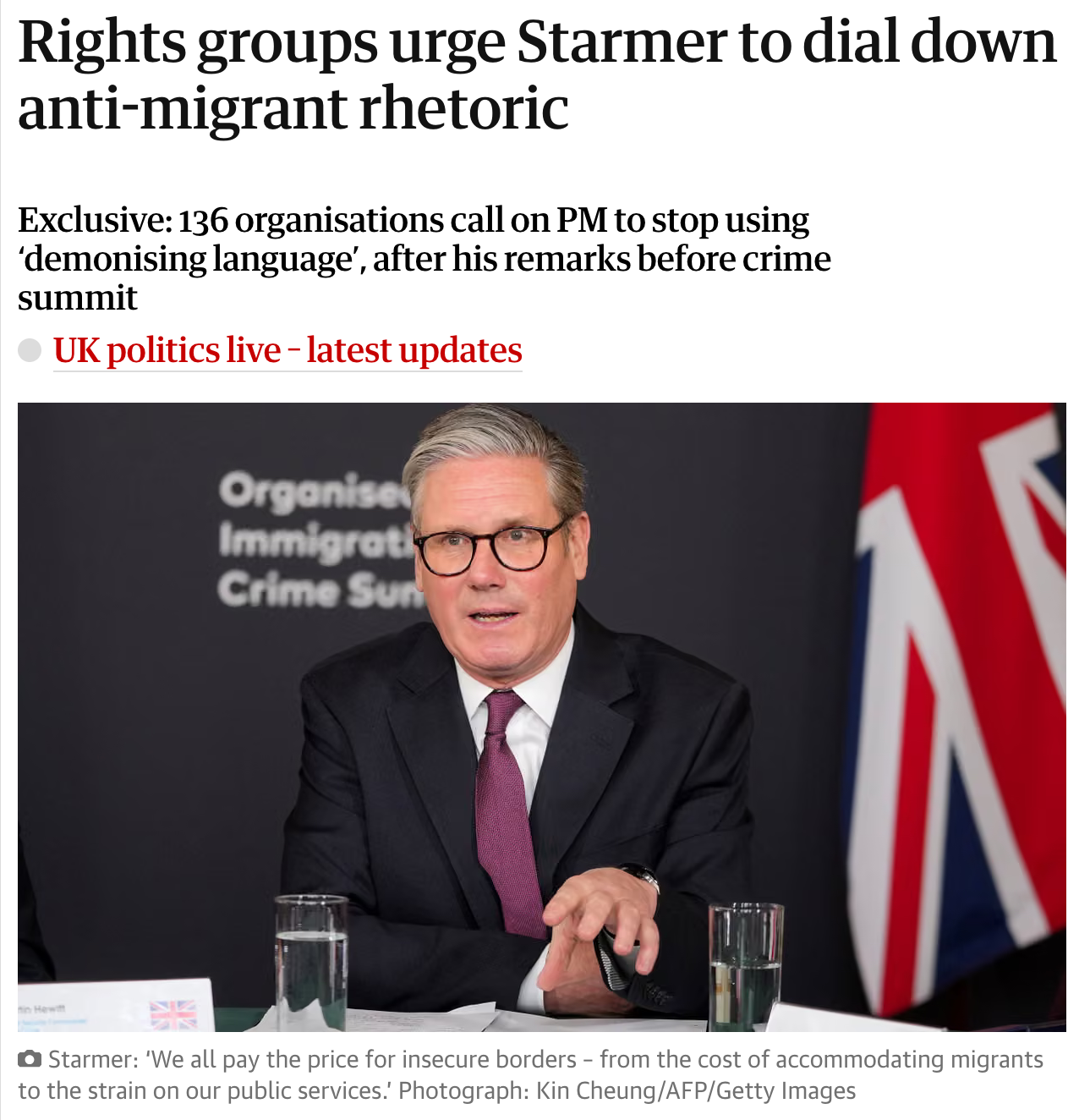
Common funding does not prove that recipients act on instructions. It does make their connections relevant when they present a joint position to ministers, Parliament or the press. A letter carrying a hundred organisational signatures may draw on a much smaller pool of funders and professional networks than its length suggests.
The report reproduces the following press examples to show how coalition letters and NGO spokespeople reach a wider audience. They are exhibits of coverage, rather than independent verification of every claim made in it.
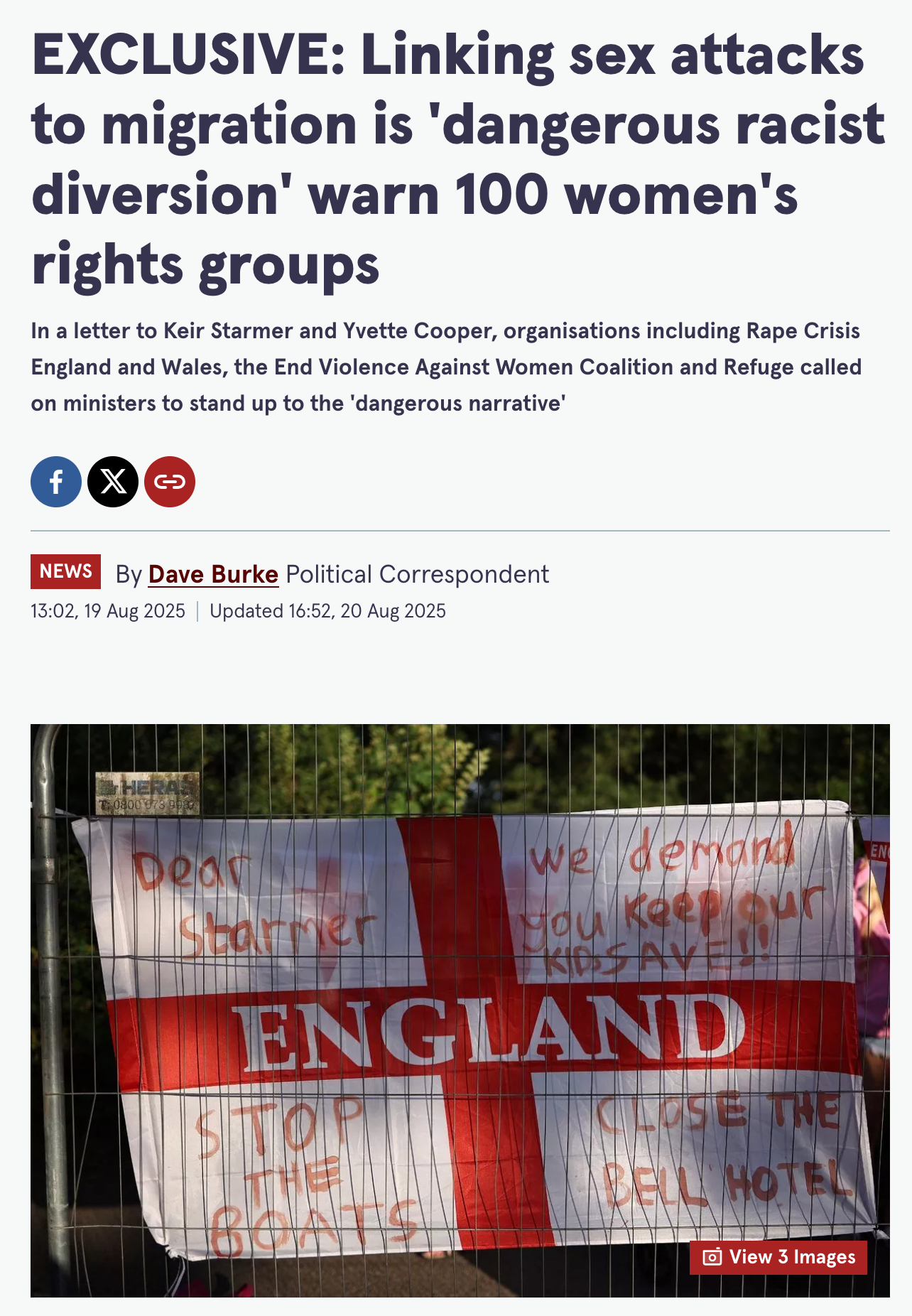
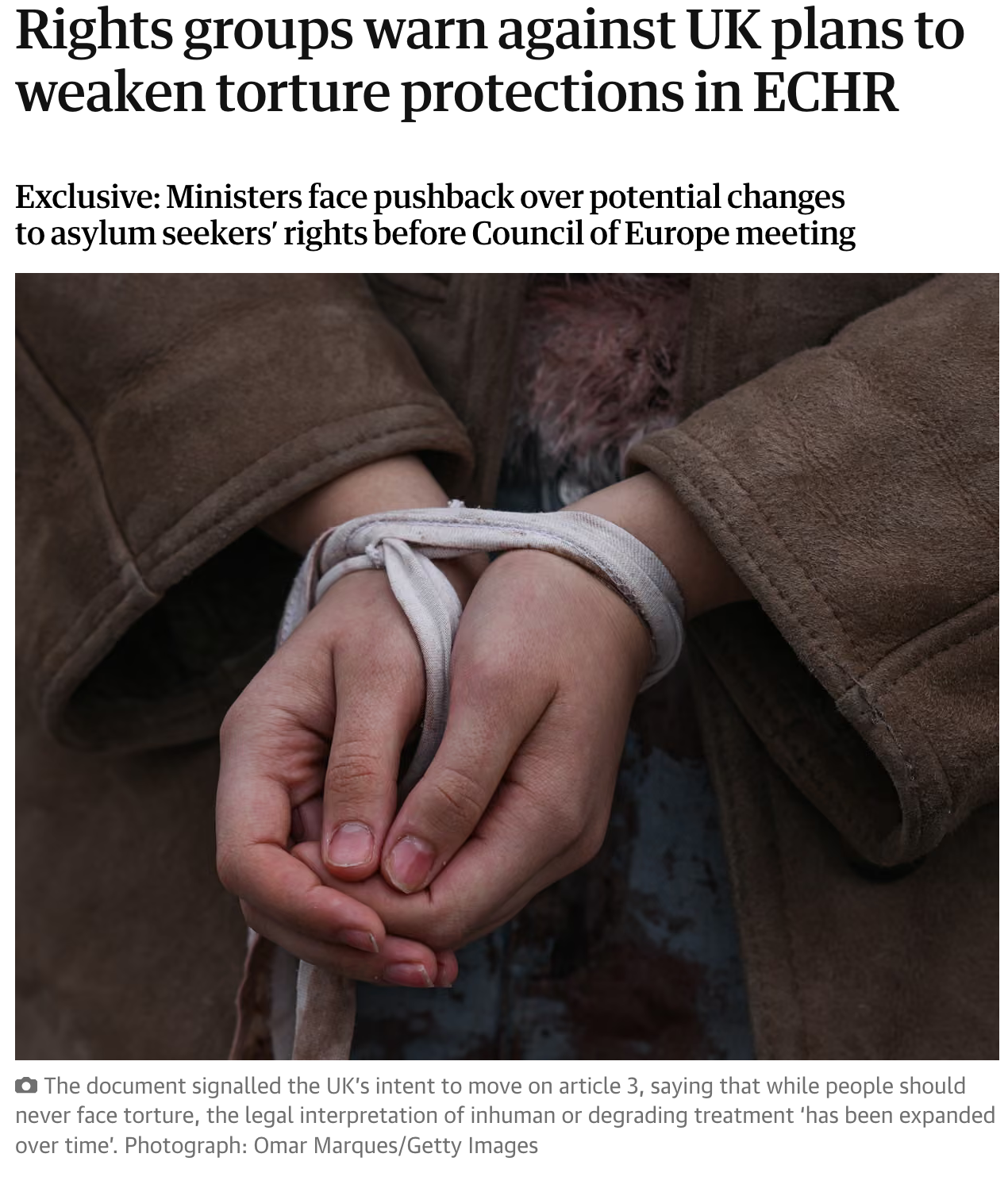
Asylum policy supplies some of the clearest examples of public funding alongside campaigning. The report records approximately £41.6 million in government contracts and grants for the Refugee Council during 2021–25, and £16.8 million for Refugee Action. The former opposed the Illegal Migration Act and Rwanda policy; the latter helped organise opposition to government asylum policy, including the letter supported by more than 100 charities. Those sums are public-income totals, not amounts established as having been spent on campaigning.
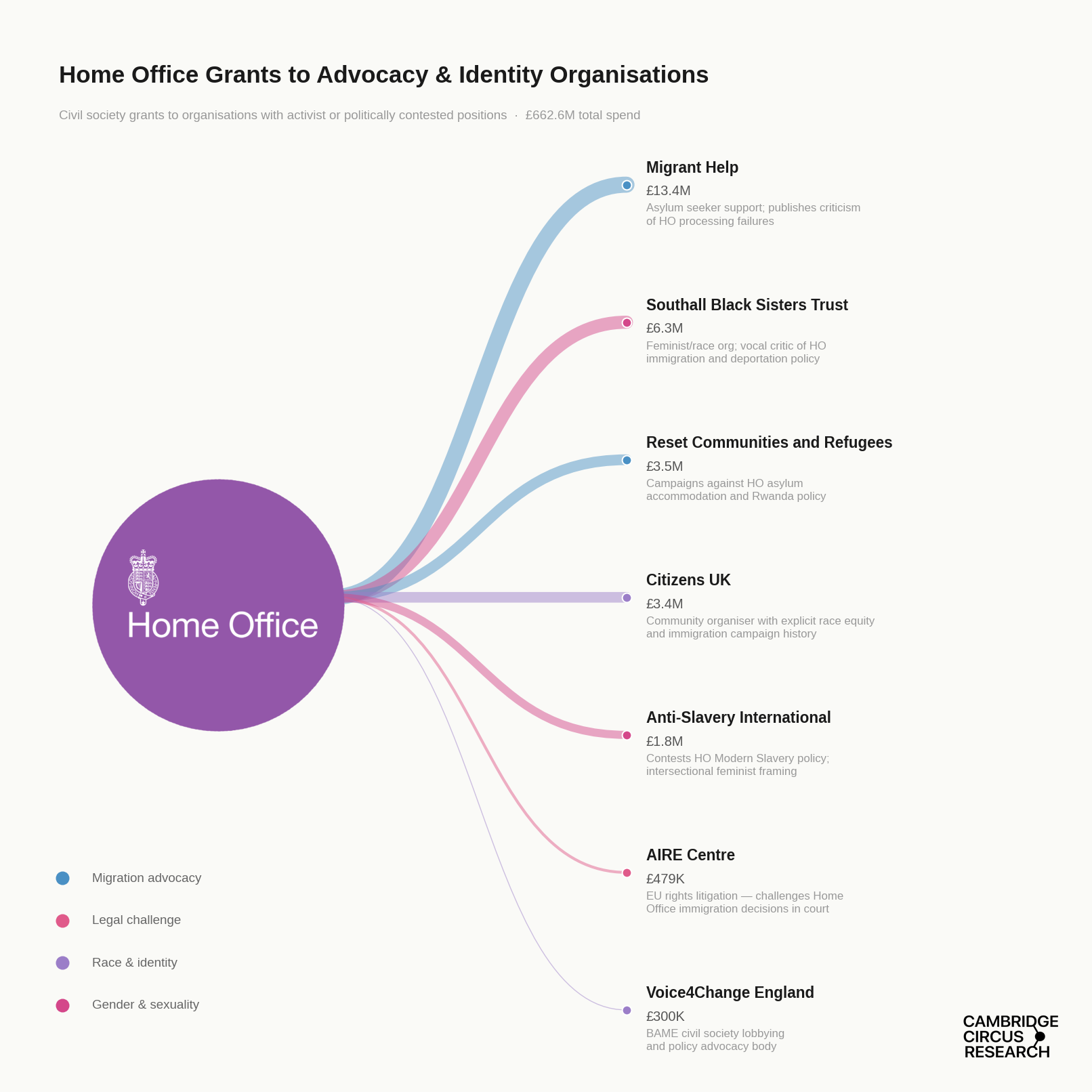
The Home Office announcement of 29 October gives a further example of charities’ involvement in migration policy. It invites applications to sponsor refugees through new, capped community sponsorship and study routes, with arrivals expected from autumn 2027. The department’s accompanying announcement carries endorsements from Citizens UK, the Community Sponsorship Alliance and Pathways International.
This opens applications rather than announcing a new grant. The report separately identifies £3.4 million in Home Office grants to Citizens UK, whose chief executive welcomes the new routes. It is a concrete example of an organisation both advocating refugee admission and working with government on its delivery.
The authors’ wider concern is that public funding can sustain organisations which also oppose government policy. A grant may be restricted to a particular service, while the organisation’s staff, premises and accumulated expertise support its other activities. The report argues that funding conditions need to account for that possibility.
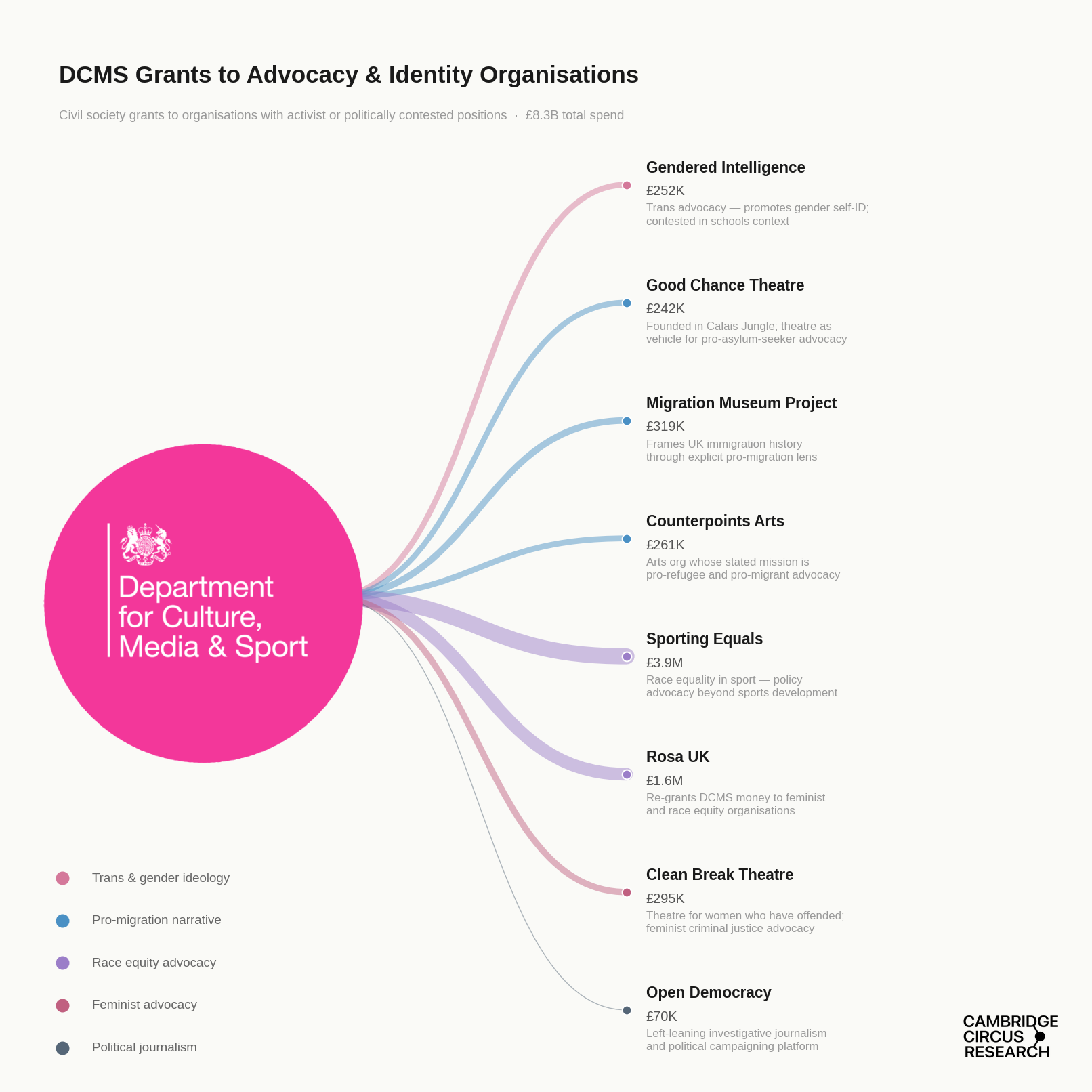
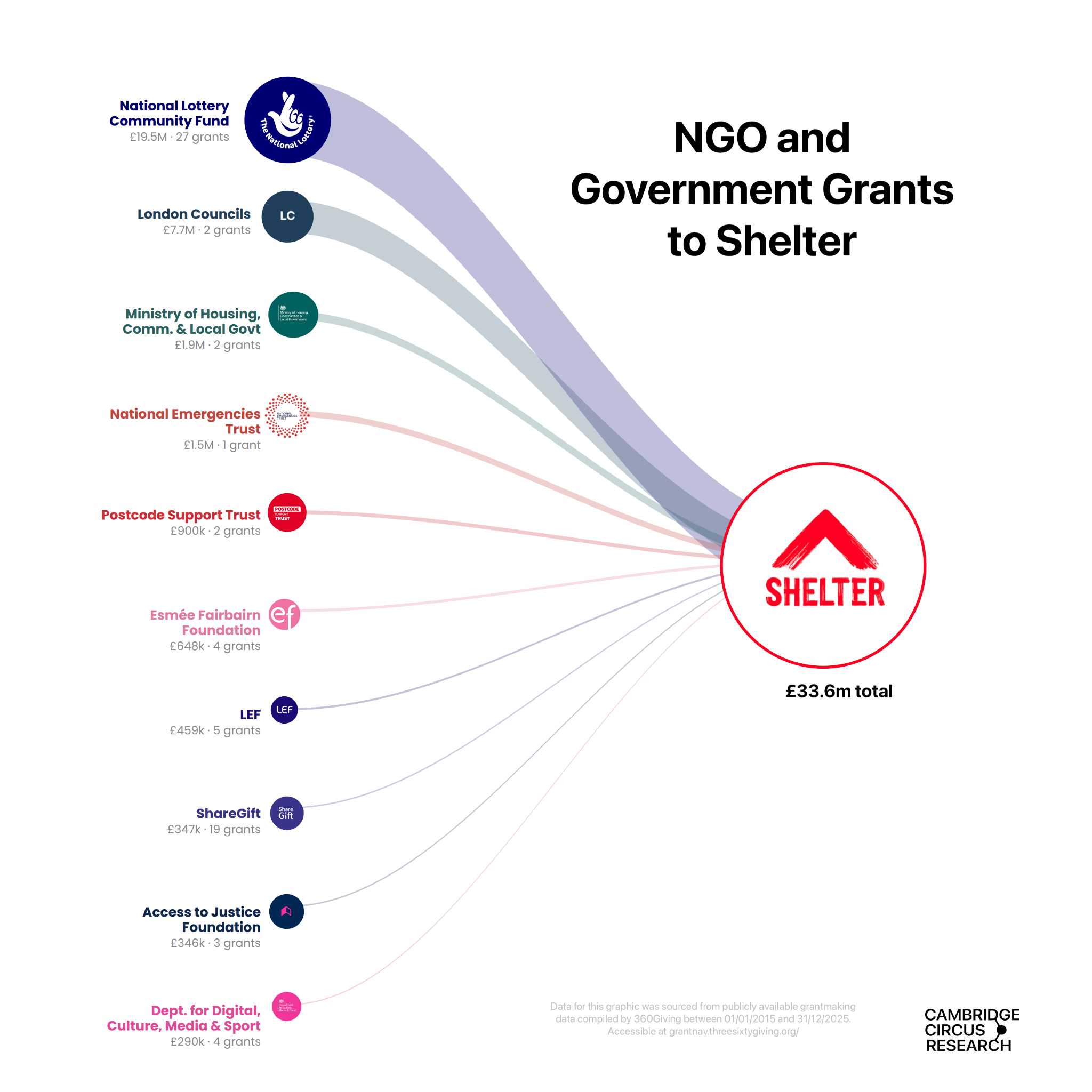
Its examples extend beyond migration. The DCMS diagram covers cultural and advocacy organisations; the Shelter case study examines the overlap between publicly funded housing advice and legal challenges to public authorities.
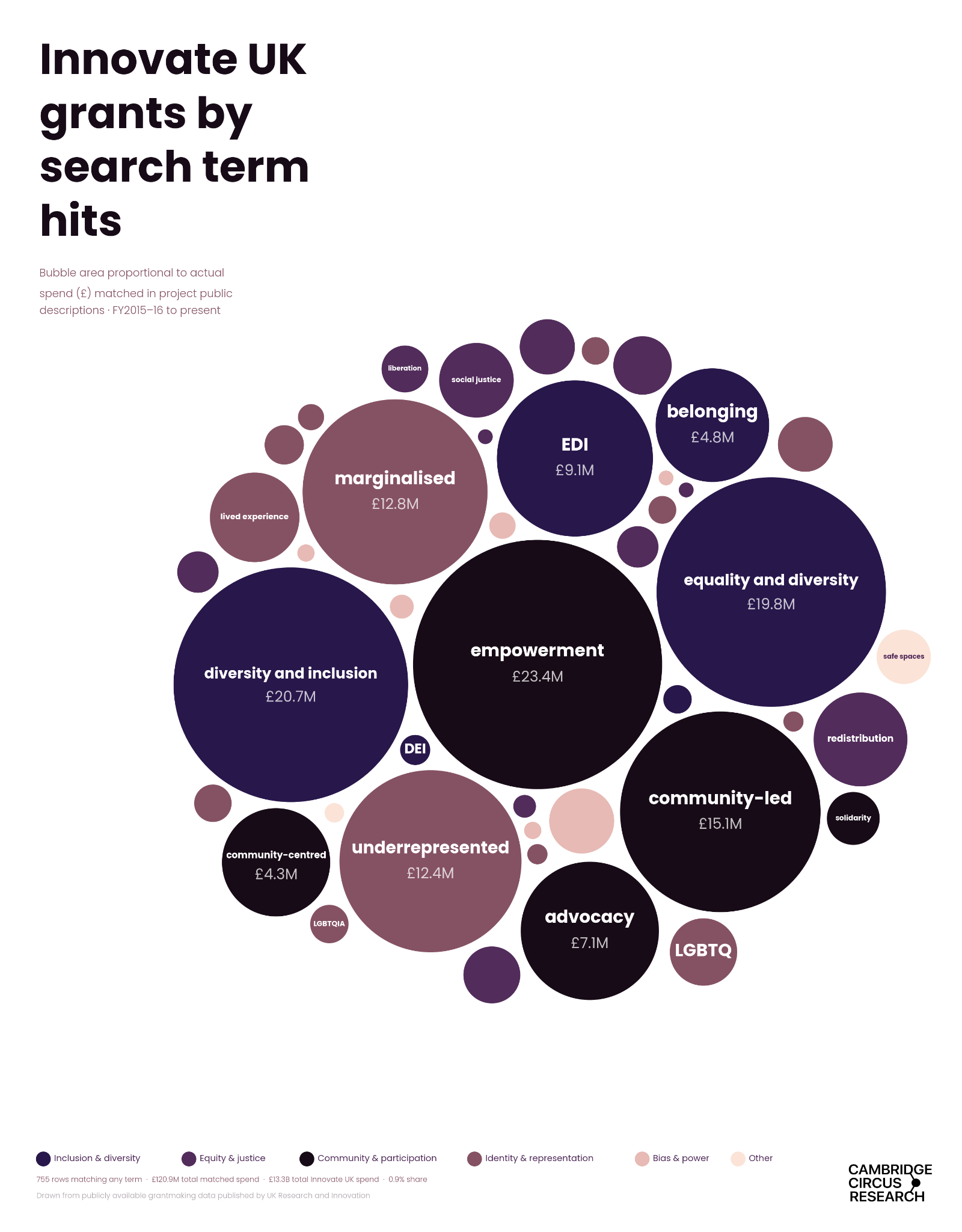
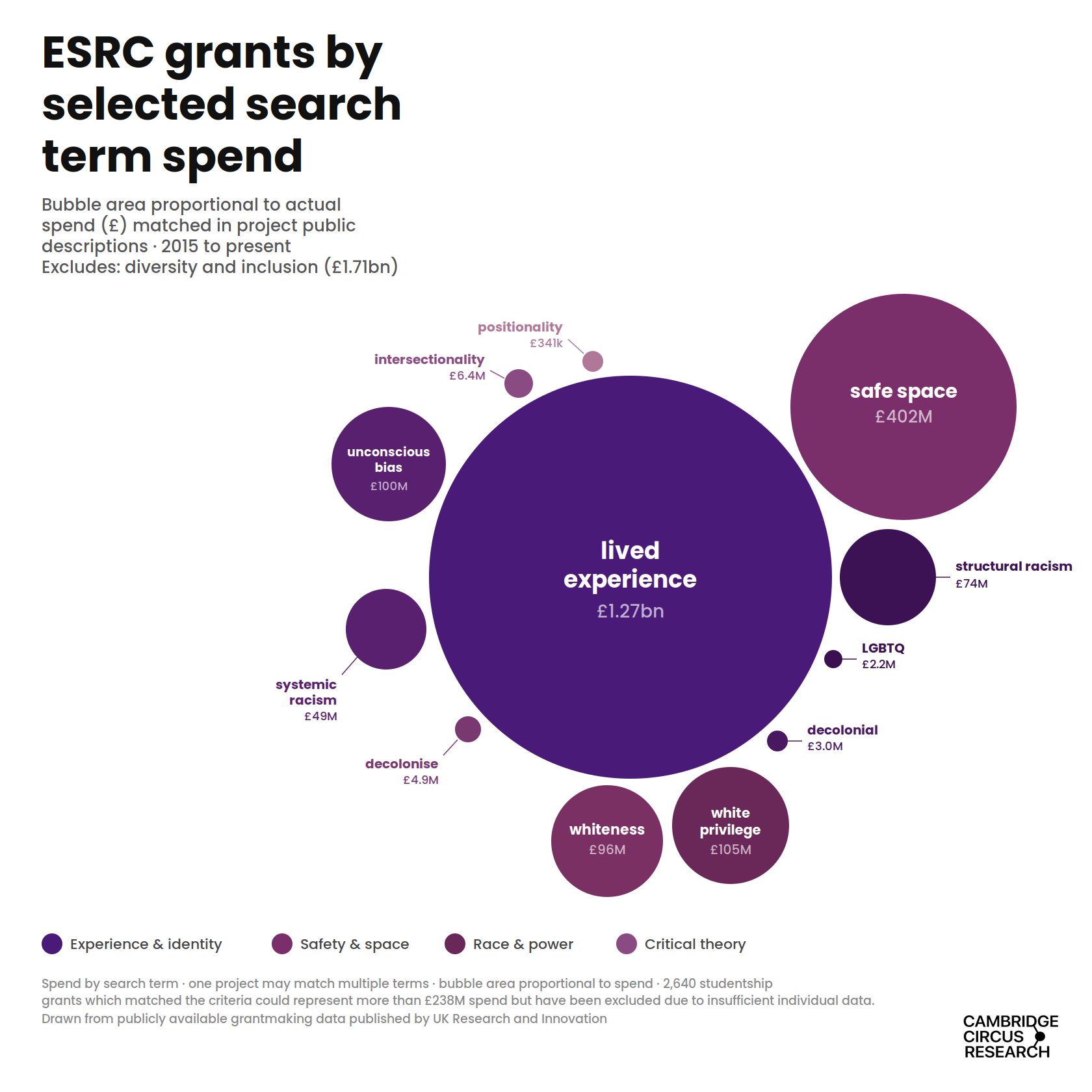
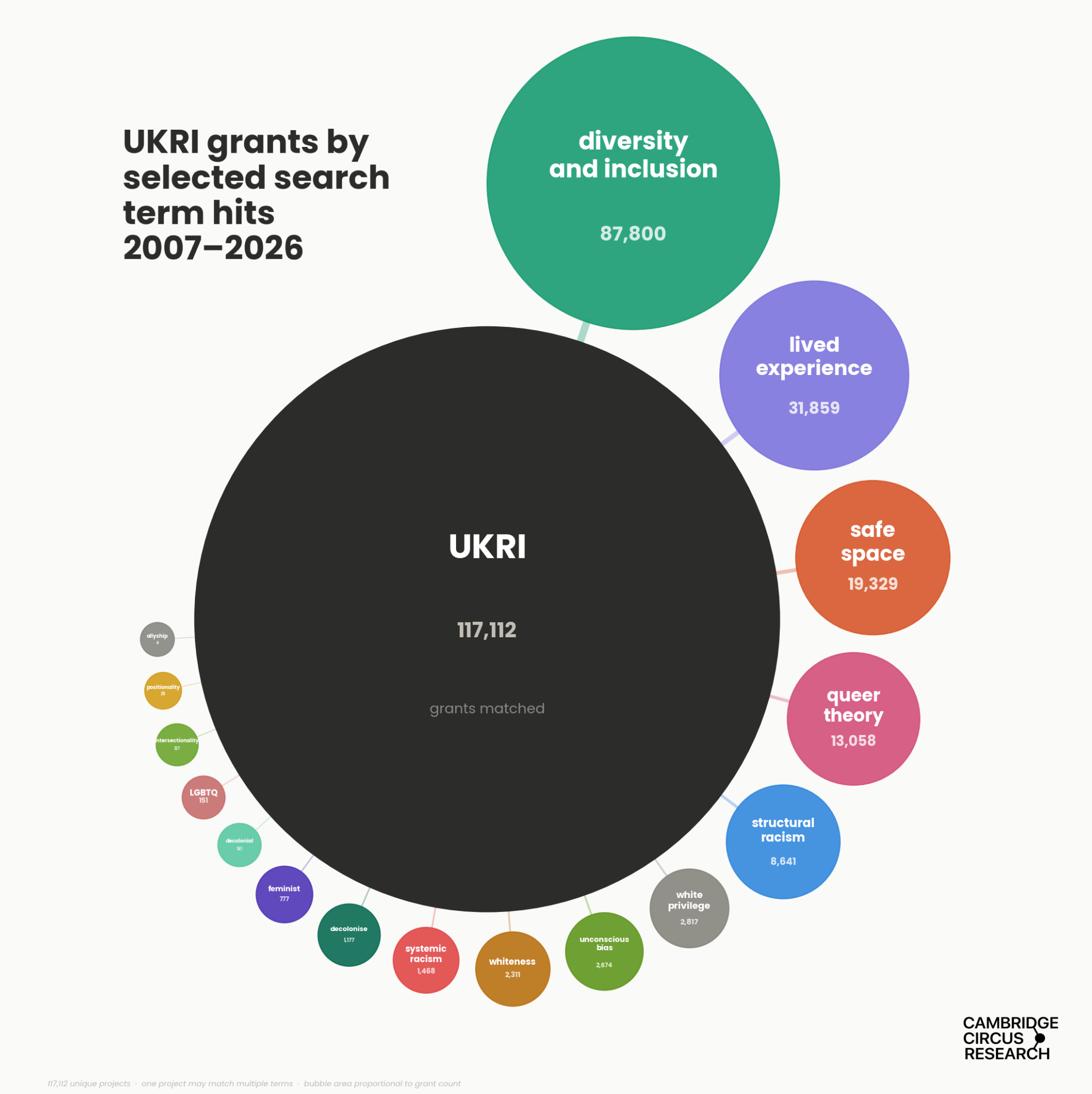
The appendix also questions priorities in research funding. These charts group grants by selected search terms, with categories that can overlap. They show what the authors searched for and found, but the presence of a term does not by itself establish that a research project is political or wasteful.
Regulating charities
The Charity Commission reported 457 staff on its payroll at the end of March 2025. Cambridge Circus Research doubts that a regulator of that size, working within the present statutory framework, can adequately scrutinise relationships across more than 170,000 charities.
Under the Commission’s CC9 guidance, charities may campaign in support of their purposes, but cannot exist for a political purpose or support a political party. The authors argue that this distinction leaves considerable room for sustained attempts to change government policy. Their objection is to the scale and financing of that activity, rather than the fact that charities sometimes disagree with ministers.
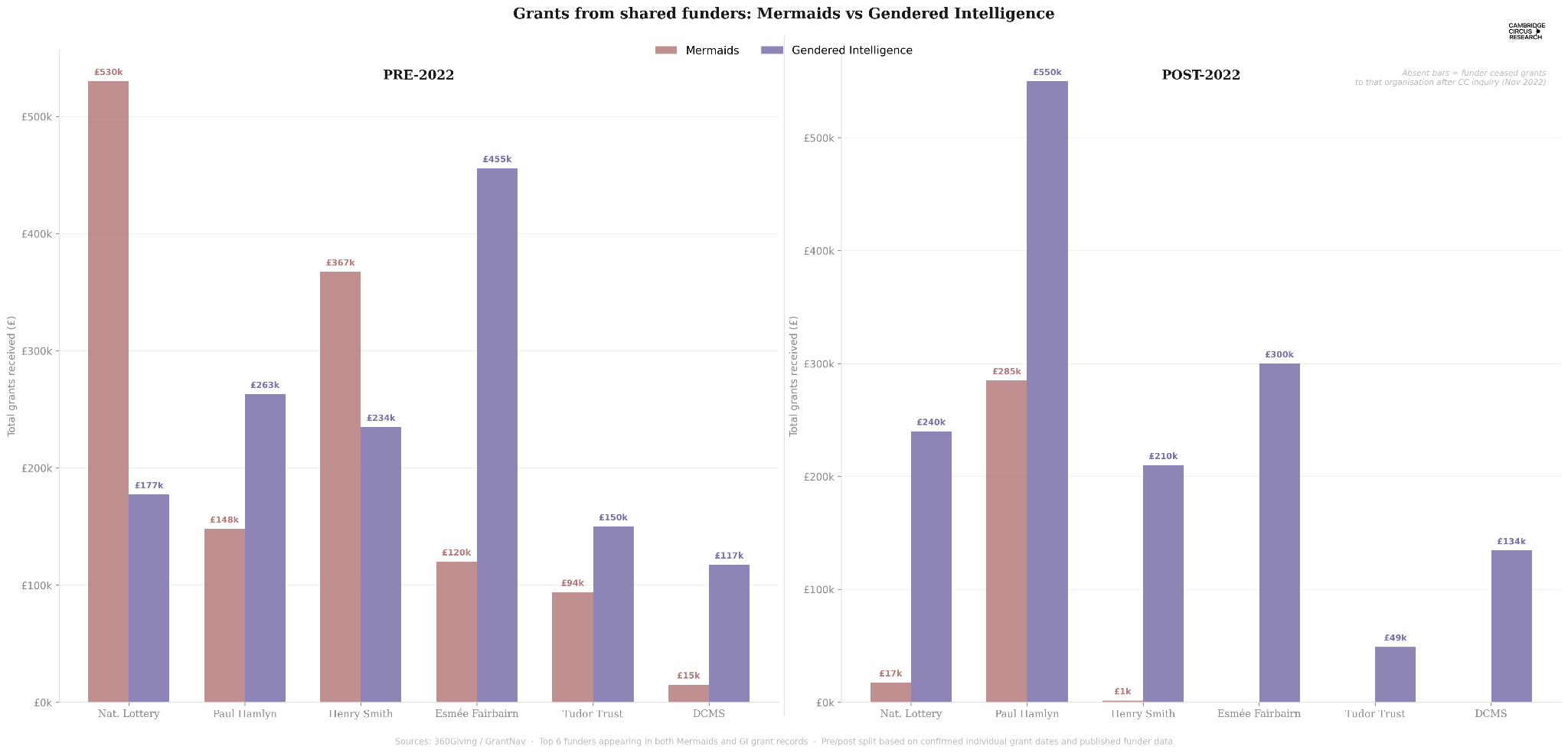
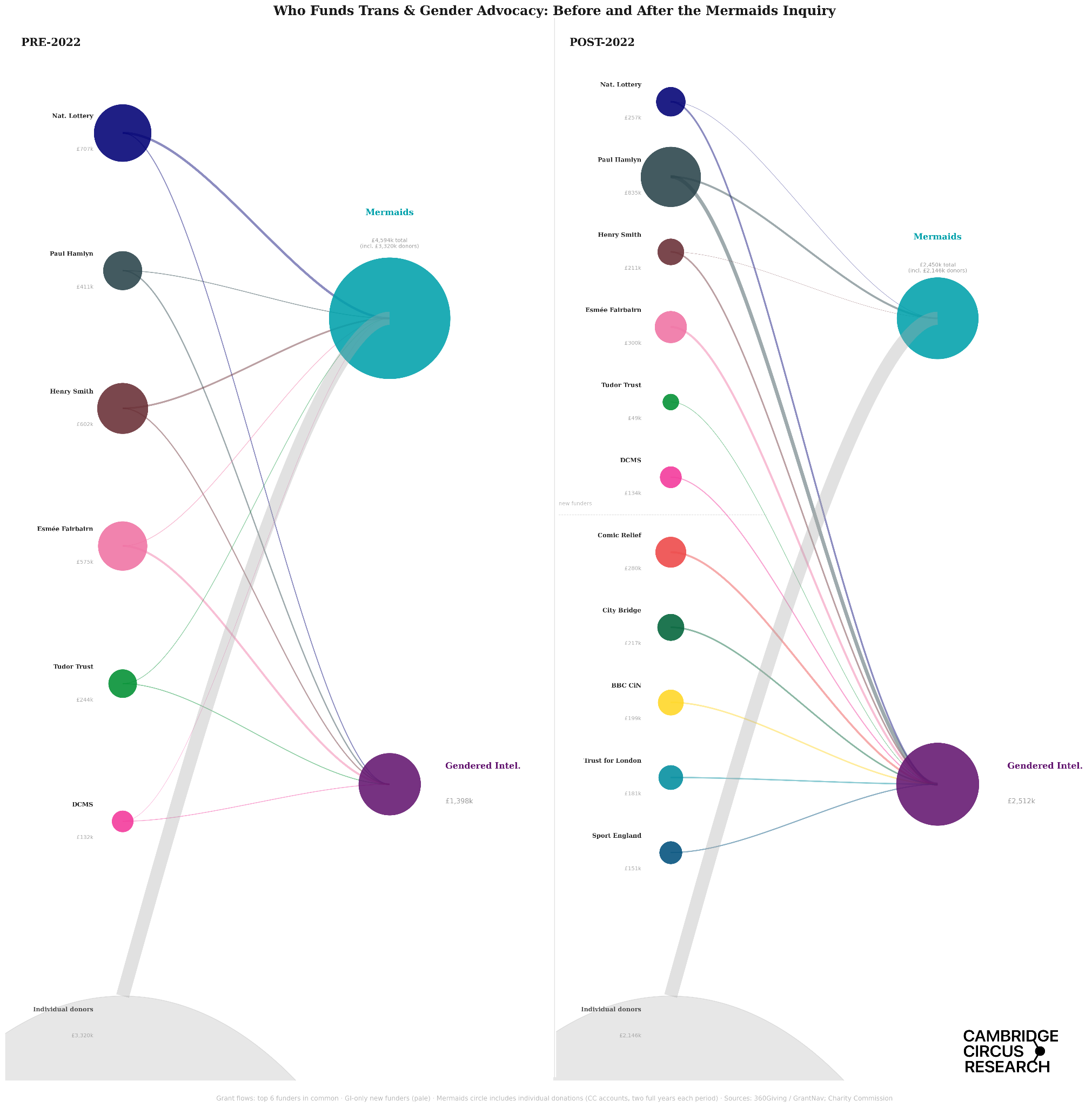
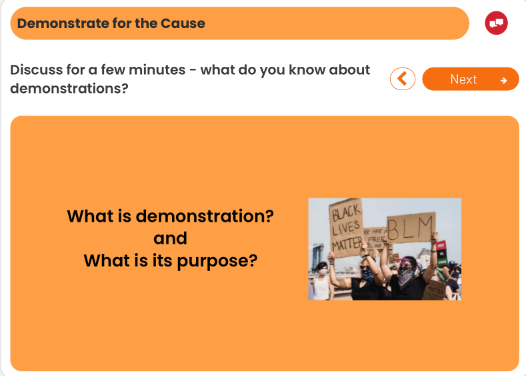
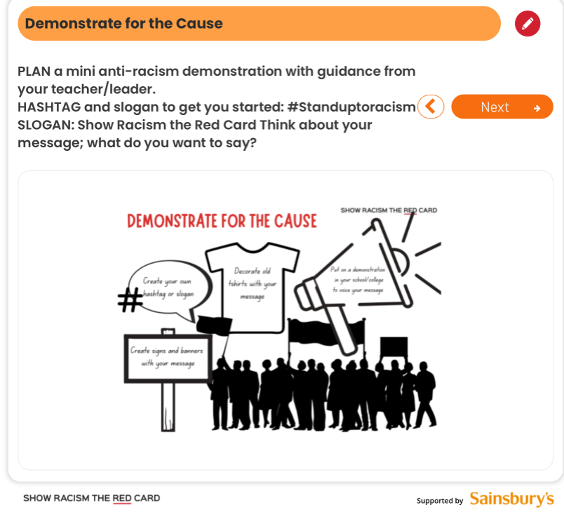
The case studies include funding around Mermaids and Gendered Intelligence before and after the opening of the 2022 Charity Commission inquiry, alongside educational material from Show Racism the Red Card. The authors use these to question whether scrutiny of individual organisations captures what is happening across the wider sector.
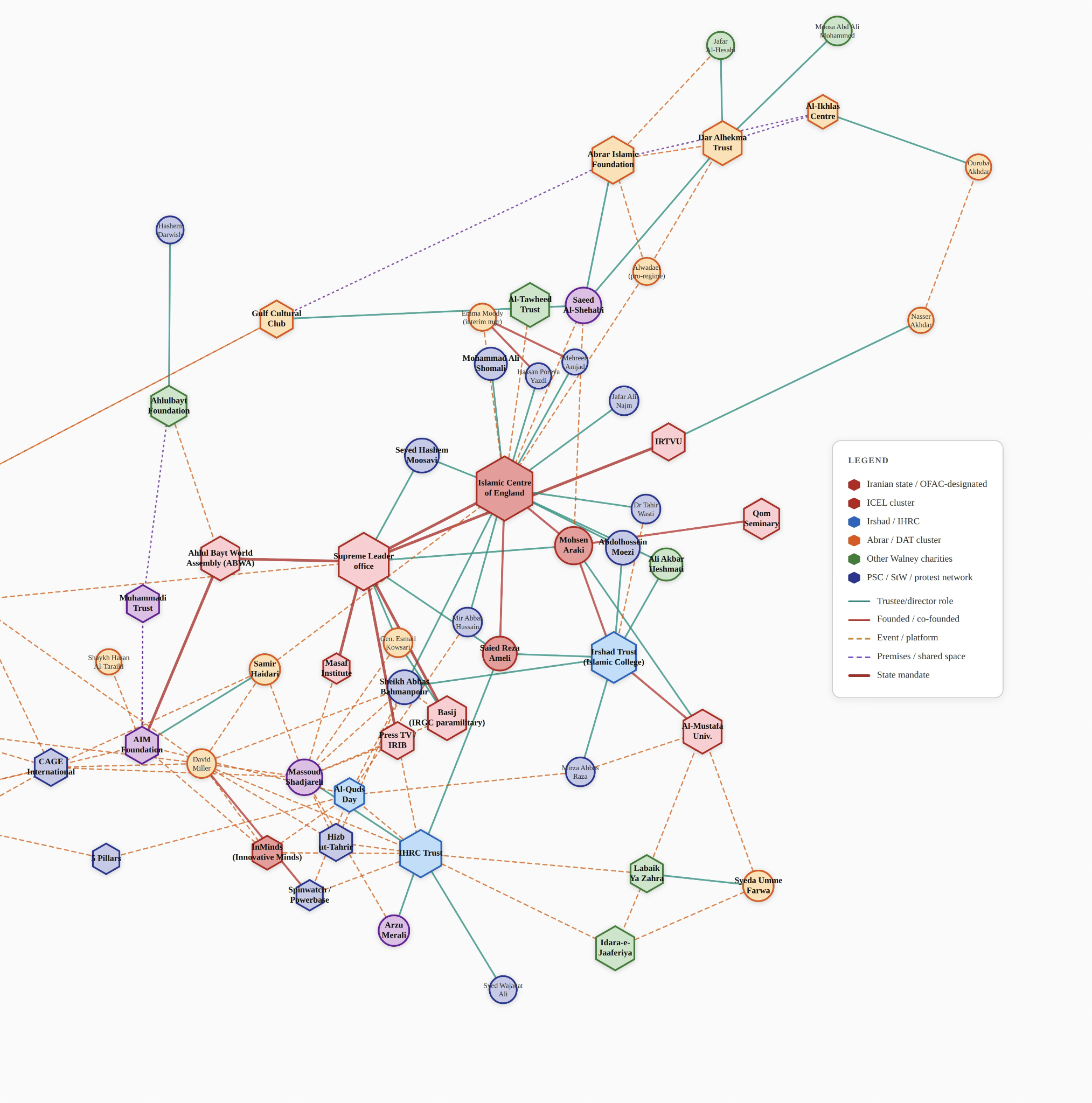
A separate section examines Iran-related institutional connections and the regulator’s powers where hostile-state influence is suspected. These allegations need to be assessed against evidence about particular bodies and transactions. A shared trustee or a place on a network diagram cannot, on its own, establish wrongdoing.
The proposed reforms
The report proposes confining public funding to specified, auditable services, with controls against its use to subsidise campaigning or strategic litigation. It favours tightly defined contracts over unrestricted institutional support.
The authors would also narrow eligibility for charitable status where political campaigning or policy obstruction has become an organisation’s sustained dominant activity. Transfers to associated non-charitable campaign bodies would face tighter controls, and campaigning expenditure would become taxable, subject to limited exemptions.
For charities undertaking policy advocacy, they propose a requirement that most advocacy income come from verifiable grassroots sources, including members and small donors. Alongside this would sit fuller disclosure of grants, onward grants, public funding, relevant leadership connections, litigation and coalition activity. Readers could then compare an organisation’s public claims with its financial backing.
Some of these measures would plainly be contentious. The disclosure proposals should be easier to defend. An organisation asking Parliament to change the law should be able to explain who funds its work and how it is connected to other bodies supporting its position. Restrictions on charitable status and the taxation of campaigning require further argument, which the report sets out for readers to assess.
Talbot and Salisbury’s central conclusion is that winning an election and passing legislation may achieve less than ministers expect if they have not understood the institutions capable of frustrating implementation. Their network maps, financial diagrams and case studies give that argument something specific to rest on, and something critics can examine. For anyone interested in the distance between promises made in Westminster and policies delivered, Breaking the Blob is a useful place to begin.
Images are reproduced directly from Cambridge Circus Research’s report, with its figure numbers and page references. News and workshop screenshots retain their original source credits.