Subverting the British People through language: “ethnic minorities”
James Stoker examines the language of ethnicity and national belonging, arguing that official terminology obscures the distinction he draws between ancestry and citizenship.

Since the Second World War, and particularly since 1997, British politicians and others have sought to subvert the British people, that is, the English, Scots, and Welsh. This is done physically by mass immigration, and technically by legislation, but it is also achieved via cultural and psychological methods.
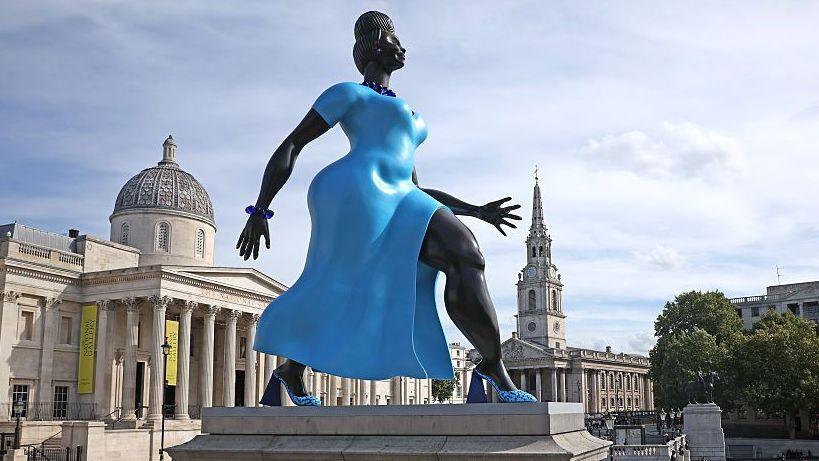
Cultural and psychological techniques include: telling schoolchildren Britain has always been multiracial; using black actors to play historic British characters on television; lionising black footballers; the Windrush statue at Waterloo railway station; and portraying the transatlantic slave trade as Britain’s founding event. All these examples act as grease on the physical and legal mechanics of demographic change.


The most important of these psychological techniques is the term “ethnic minorities”. The term “ethnic minorities” has become so pervasive that even people who are aware of Britain’s dismantling fall into the trap of using it.
The problem is this: referring to foreign groups in Britain as “minorities” implies the difference between them and the host nation is merely numerical; i.e. an ethnic minority as opposed to the ethnic majority. The effect is to deny the true distinction between the two, which is native and non-native – or, for those who prefer a constitutional perspective, sovereign and non-sovereign.
The misuse of the term “ethnic minorities” can be illustrated by reference to early colonial America; nobody describes, then or now, English settlers in Massachusetts in the 17th century as an “ethnic minority”; they were English settlers and the various Indian tribes were native Americans.
In the British context, the English, Scottish, and Welsh, who founded the nations that carry their names, have constituted “the British” since the Acts of Union in 1707. Applying the term “ethnic minority” to foreign peoples who have arrived subsequently obscures the fact that these newcomers do not possess the same relationship to Britain as the founding peoples, let alone to the founding nations of England, Scotland, and Wales.
“Ethnic minority” is at best a non sequitur; at worst, it is a loaded or weaponised term used to annul the founding population’s native status so foreign groups can be installed with equivalent status; in fact, immigrants are designated “ethnic minorities” as soon as they arrive.
Elsewhere in the world, “minority” typically means an indigenous group, on their own historical land, but caught within a national boundary set by a larger group, often by conquest. In Britain, “minority” means the reverse: a non-native group whose settlement is facilitated by the State to change Britain’s population.
Once the loaded nature of the term “ethnic minority” is understood, one can see any number of other terms that have a similar effect: “diversity”, “multiracial society”, and “multicultural Britain” all imply that the British people are just one component among others. Another relevant term is “decolonisation”, which implies British society is occupied by British settlers, and so needs to be decolonised by “ethnic minorities”; this inverts the actual relationship, which is that foreign settlers are colonising Britain.
The longstanding use of “ethnic minority” and its offshoots has brought about a corresponding replacement of the word “British” with “white British” or “white majority”. This affects public discourse, which feeds into policy and law; here are three examples.


In November 2022, Nigel Farage tweeted “London, Manchester and Birmingham are now all minority white cities”, to which former Conservative minister Sajid Javid replied, “So what?” By referring to “minority white”, rather than “minority British” or “minority English”, Farage allowed opponents to assume there were black and brown Britons (i.e. people of non-British descent). Farage’s point could not subsequently be pressed home, even if he had wanted to, because it was made at the expense of affirming who the British people are.
In July 2025, Conservative MP Nick Timothy asked the government about the impact of MI6’s diversity policy on the recruitment of “White Britons” to its Summer Intelligence Internship. The government replied that decisions to improve workforce diversity must comply with UK law and the Equality Act 2010, and described measures encouraging applications from underrepresented groups, including White minority backgrounds. By framing his question as a matter of colour (“white Britons”), Nick Timothy steered the issue away from it being native British people who are discriminated against; the government was thus able to respond in terms of racial inequality.
In August 2025, Conservative MP Robert Jenrick wrote to the Law Society regarding its use of terms such as “minoritised ethnic” and “racially minoritised”. Jenrick said the guidance “seeks to divide people on the basis of race and ethnicity”, and argued for a society that is “colour-blind and merit-based”. By seeking to curb the Law Society’s excesses, Jenrick validated the underlying notion that British people should have no specific status or identity.
Either the Conservatives and Reform do not understand the deconstructive effect of words like “white” and “ethnic minority”, or they are afraid of following the logic: that the issue is not “racism”, “inequality” or “division”, but subversion and betrayal of an ancestral population.
A new lexicon
To undo decades of mental conditioning, a new lexicon is required that is clear, catchy, and accurate. It is the word British that needs to be recaptured most of all, more so than English and Scottish which are, to a certain extent, able to fend for themselves.
The distinction is simple. The native British are those prior to “diversity”. Opponents cannot reject that definition without saying they don’t know what diversity is.
From that distinction, “British” can be clarified in the following ways: “native British”, “ethnic British”, “founding population”, “sovereign British”. These all avoid the trap of “white British” and “white majority”.
“Ancestral” is also useful, since it relates both to nation and family; everyone knows what a family ancestor is, and “ancestral” can extend this common understanding to the nation: the ancestral British. “Anglo-Celt” is accurate, but carries with it the risk of reducing the British to ethnic groups among others; the English, Scots, and Welsh should not lose their collective connection to the island of Britain.
The suitable term for foreigners, people born overseas, is exactly that: foreigners. For the foreign-descended population born in Britain, clarifying terms include: “non-native population”, “non-indigenous”, “non-sovereign”, etc. “Non-native British” is a non sequitur but is safe to use as it still acknowledges the distinction between the politically-defined “British”, and the native and sovereign British.
By recapturing language, those seeking restoration can rescue people’s minds, and build a new cultural and psychological framework to convey correct understandings of British nationhood and sovereignty.
Editor’s note. The modern legal definition of British citizenship rests principally on the British Nationality Act 1981. Given it is clearly insufficent to reflect reality, I propose replacing that framework with BINCA, the British Indigeneity, Nationality and Citizenship Act, as set out in A British Citizenship Reset – The BINCA Bill. – Michael C R Reiners
 Michael Reiners