
Why the West is Replacing Its Historic Population: The Post-Fordist Trap
Dr Ricardo Duchesne argues that mass immigration in the West is driven by the fusion of liberal universalism and post-Fordist capitalism, replacing historic nations with flexible labour markets, multicultural ideology, and managed demographic transformation.

Dr Duchesne provides commentary on X/Twitter, here. The following essay is a synthesis of two works by Dr Duchesne in 2026. The first, initially titled "Why the West is Replacing Its White Population: The Imperatives (and Fatal Flaws) of Post-Fordism" was published on 21st April 2026, to X, and can be found here. The second, titled "The Path-Dependent Civilizational Trap of the West", published to X on 7th May 2026, can be found here.
Editor's note: This essay is offered as an academic argument about political economy, immigration policy and demographic change. Re-publication of it does not imply endorsement of every formulation used – this disclaimer exists due to potential publisher liabilities under the laws of England & Wales – in particular, under the Public Order Act 1986 s.4a, 5, and Part III. It is the position of this website that these laws must be repealed, as discussed here, and here.
The Great Replacement is now almost locked in.
This is not because of a grand conspiracy, a secret “Kalergi Plan,” a deliberate plot by elites to destroy the West through “bio-Leninism,” an attempt to import a new electorate, or any single “demonic” scheme. Nor is it simply the result of excessive “suicidal empathy” or conservative elites refusing to accept race realism or the critique of the equality thesis.
My thesis is that the large-scale demographic replacement of White European populations is the logical and nearly inevitable outcome of the fusion between (i) liberal universalism, which delegitimizes ethnic particularism and prohibits state preference for one culture in favor of diversity and value pluralism, and (ii) post-Fordist (including limbic) capitalist optimization, which demands flexible, low-cost, compliant non-Western labor, expanding global markets, and short-to-medium-term gains. Together, these two self-reinforcing logics have created a dynamic, high-level equilibrium and path-dependent civilizational trap that is quite effective at delivering GDP growth, opportunities for elite status, rewards for loyalty, and moral validation, yet systematically undermines the long-term demographic and cultural foundations of European societies. This system exploits the historically peculiar "WEIRD" psychology of Whites (low ethnocentrism, impersonal trust, impartiality) while empowering groups operating on kin-selection and ethnic nepotism, transitioning from a Fordist order that broadly benefited native populations to a post-Fordist multicultural regime that undermines its own foundations.
The West is both a capitalist and a liberal civilization. This economic system and this ideology developed together and are now fused into a single, self-reinforcing system. In the Fordist phase (roughly 1945–1975), this fusion largely benefited native White populations, delivering broad-based affluence, rising real wages, high homeownership, and stable family-oriented communities within relatively homogeneous nations still anchored by pre-liberal norms. However, the crisis of Fordism in the 1970s activated a transition to a post-Fordist multicultural and limbic capitalist regime. In this new order, liberalism’s universalistic drive and capitalism’s optimizing logic reinforce each other: the former delegitimizes ethnic particularism and cultural continuity, while the latter demands flexible, low-cost non-Western labor to deal with structural shortages. The system thus favors both diversity as a moral good and certain immigrant personality traits that optimize post-Fordist production. Yet this regime harbors a deep structural contradiction: it rests upon the historically peculiar "weird" psychology of European peoples, including low ethnocentrism, high impersonal trust, and impartiality, while empowering non-Western groups that operate according to particularistic kin-selection and ethnic nepotism. The result is a system that is biologically and culturally incompatible with the long-term survival and civilizational creativity of European peoples in their homelands.
1. The Two Logics: Liberal Progressivism and Capitalist Optimization
Liberalism seeks a political and public sphere grounded in universal principles that apply equally to all humans, irrespective of ethnic ancestry, sexual identity, cultural background, or other ascriptive traits. Its foundational commitment is to the extension and maintenance of equal individual rights grounded on the ultimate moral principle that every person possesses the inalienable freedom to choose their own values, beliefs, religious convictions (or none), and personal identity. The role of government should be to safeguard and expand these rights, rather than to impose any substantive vision of the good life, a preferred lifestyle, or a particular metaphysical conception. Liberalism enables diverse individuals to pursue conflicting conceptions of the good within a framework of mutual tolerance and respect. This requires universalist (or impartial/neutral) principles and institutions, such as rule of law, merit-based careers, and voluntary civic associations.
Although liberal principles are framed as applying to humans as such, the underlying psychology that makes this liberal order functional is itself culturally evolved and historically peculiar to European peoples. This ideology is not rooted in the discovery by scientists of species-wide human natural dispositions. All human societies, including pre-liberal Western societies, were based on particularistic, kin-based ethics (in which kin members are treated differently from outsiders). A liberal setting, therefore, presupposes, as Joseph Henrich puts it, a population with a “weird” psychology, that is, one oriented toward impersonal trust and cooperation with strangers, abstract analytical thinking rather than ingroup “prejudicial” thinking, identification with self-chosen groups rather than kin or ethnic ties, and a universalistic moral outlook that evaluates individuals by their attributes and intentions rather than by inherited group membership.
Contrary to the common perception that liberalism is strictly a “relativist” or “neutral” ideology that does not seek to impose a particular way of life, this ideology is culturally or morally committed to the expansion of liberal values. Precisely because it elevates the autonomous individual and universal rights above all inherited constraints, it necessarily conflicts with traditionalist orders rooted in ethnic identities, patriarchal norms, kinship obligations, or any worldview that restricts personal choice in the name of collective custom or hierarchy.
Liberalism, in other words, contains an inherent progressive dynamic in its striving to “emancipate” the public sphere from what it deems “backward” customs, discriminatory policies, or inherited status hierarchies. It even seeks to emancipate individuals from whatever personal (xenophobic, sexist, homophobic) prejudices they may have. It socializes citizens into open-mindedness, tolerance, and value pluralism, while marginalizing or confining to the private sphere those perspectives, such as ethnic nationalism or cultural traditionalism, judged to be incompatible with equal rights. In practice, this means liberalism progressively works to dissolve ethnic preferences, ingroup cultural attachments, and sex-based differences in public life, replacing them with a regime of racial, cultural, and lifestyle pluralism.
Capitalism, on the other hand, does appear to be truly instrumental and value-neutral. Its logic is one of relentless optimization: the most efficient combination of inputs to produce the highest returns under competitive and technological pressure. Markets, contracts, and meritocracy presuppose the same underlying, seemingly neutralized, psychology as liberalism, namely, high impersonal trust, analytic judgement of individuals in terms of skills and effort rather than birth or loyalty, and a willingness to transact with strangers according to abstract, universal rules. Labor, capital, and consumers are treated as interchangeable units in the calculus of cost, innovation, and market expansion. There is no inherent capitalist preference for any particular people, culture, or long-term civilizational outcome. What matters is only the short-to-medium-term imperative to lower transaction costs, expand consumer bases, and eliminate any obstacle to growth.
However, precisely because capitalism optimizes through impersonal exchange, merit-based selection, and continuous innovation, it exhibits a powerful elective affinity with liberal institutions and produces progressive outcomes even though its motive is never ethical but purely calculative. By favoring individual talent over kin-based or ethnic loyalties, by drawing on universal rules rather than ingroup favoritism, and by systematically clearing away customs, beliefs, or institutions that raise costs or impede mobility, capitalism selects for and reinforces the non-tribal, universalistic psychology that liberalism endorses. Capitalism, as such, does not intend moral emancipation or the expansion of human freedom; it merely requires the social and psychological conditions that allow calculative rationality to flourish at ever-larger scales. In this sense, the two logics of liberal progressivism and capitalist optimization are distinct yet mutually sustaining.
2. The Crisis of Fordism and the Shift to Post-Fordism and Limbic Multicultural Capitalism
The replacement of Whites can’t be understood without an adequate grasp of the self-reinforcing logics of liberalism and capitalism, and the transition from a Fordist to a post-Fordist liberal capitalist regime. During the Fordist phase of capitalist accumulation (roughly the 1940s–1970s), the two logics operated in a way that was greatly beneficial to the native White populations of the West. Fordism was a regime of mass production of standardized goods for national markets, supported by high unionized wages (including the “male family wage”), strong labor unions, government investment, and Keynesian management policies designed to balance supply and demand. Within this regime of accumulation, the progressive logic of liberalism delivered general prosperity for Whites: expanding social safety nets, greater access to relatively cheap university education, high rates of homeownership, and stable family-oriented communities.
This Fordist liberal capitalist order did not require large-scale immigrant labor. The postwar Baby Boomer generation, with their large families and good incomes, supplied a sufficient working class and consumer population within relatively homogeneous nations. This order fostered national cohesion, cultural identity, and widespread social mobility while supporting major public infrastructure projects such as highways, schools, and universities. During this phase, in the unfolding of the progressive logic of liberalism, Western societies were still regulated by certain “pre-liberal” norms: the belief that a family consists of a father and mother with children, that premarital sex should be avoided, that marriage is sacrosanct and divorce to be shunned, that the man is primarily responsible for family provision, that Western societies are Christian or founded on Christian values and of European ancestry, and that they show some deference and attachment to established hierarchies, institutions, and governments.

By the early 1970s, however, the Fordist model began to break down. Fertility rates had started to decline sharply, domestic markets were becoming saturated, and Western economies faced stagflation, declining profitability, and intensifying global competition from newly industrializing Asian nations that could produce goods at far lower labor costs. Excessive union activism and rigid labor structures further undermined the competitiveness of Western businesses. Together with this structural crisis, multiculturalism began to take hold in the West. The liberal capitalist West adapted by transitioning to a post-Fordist multicultural regime (roughly from the 1980s onward). This new regime optimized for deracinated, atomized populations sustained by flexible immigrant labor rather than stable native White families.
During the post-Fordist phase, the progressive logic of liberalism finally eroded these residual pre-liberal norms. In an increasingly flexible, service-oriented, and globally competitive economy, the remaining attachments to traditional family structures, Christian-derived morality, ethnic cohesion, and deference to inherited hierarchies came to be viewed as obstacles to individual autonomy, labor mobility, and cultural openness. Liberalism’s universalistic drive thus advanced from economic redistribution and class-based fairness toward a cultural politics of identity, diversity, and the active dismantling of “oppressive” traditional norms, manifesting first as political correctness in the 1980s–1990s and later as woke ideology. This cultural shift supplied the ideological justification and social discipline needed for post-Fordist accumulation in its promotion of fluid personal identities, celebration of diversity as an intrinsic good, and pathologization of any remaining ethnic, sexual, or cultural particularism as bigotry, correlating thereby the public sphere with the demands of interchangeable labor, global markets, and perpetual optimization.
Western businesses pursued cheaper inputs, greater flexibility, and access to new markets by building global supply chains, outsourcing production overseas, and shifting toward “flexible accumulation.” Businesses moved away from rigid, unionized 9-to-5 labor toward part-time, temporary, and contract work, including decentralized production using “just-in-time” techniques and subcontracting [1]. During the 1990s the economic shift from manufacturing to services, finance, and high-tech industries intensified, leading to the dominance of financial capitalism, where profits increasingly derive from asset trading, debt, and speculation rather than material production. This came along with heavy reliance on information technology, automation, microelectronics, and digital tools.
The adoption of multiculturalism across the West was not a product of “cultural Marxists” taking control over the public sphere, but the direct institutional expression of the progressive pluralist logic of liberalism. Its central ideal is that, just as the state should not impose any religious beliefs upon its citizens, it should not mandate any dominant culture but should simply guarantee a public sphere in which individuals of diverse backgrounds enjoy equal rights to express their preferred values in a state of mutual respect. The intended aim is not to promote group-oriented non-Western cultures, but to overcome past discrimination against non-Western or non-White populations by leveling the playing field or creating greater (equalizing) opportunities for minorities.
The consolidation of liberal multiculturalism, the obsession with overcoming past “racism” and “xenophobia,” provided the perfect ideological justification for the requirements of post-Fordist accumulation. As native fertility rates fell and European populations came to be viewed as increasingly costly and inflexible labor inputs, businesses embraced mass immigration from high-fertility Third World nations. Immigration thus came to be framed as both an economic solution to the crisis of Fordism and as a new phase in the march to fulfill progressivist ideals.
Alongside this post-Fordist system emerged what David Courtwright calls “limbic capitalism.” In his 2019 book The Age of Addiction, Courtwright describes it as a technologically advanced business model in which global industries deliberately target the brain’s limbic system responsible for pleasure, craving, and quick emotional reactions, rather than appealing to rational decision-making. The goal is “addiction by design”: engineering products and experiences that deliver rapid dopamine bursts, triggering compulsive cravings without lasting satisfaction. Companies discovered that social media, streaming platforms, video games, online shopping, pornography, delivery apps, and ultra-processed foods could be optimized for endless engagement through infinite scrolling, personalized feeds, variable rewards, autoplay, and impulsive shopping.
This form of capitalism prefers jam-packed, deracinated megacities filled with atomized, unrooted, debt-ridden consumers, and addicted individuals (whether immigrants or native-born Whites) living in high-rent apartments and endlessly chasing the next dopamine hit. It thrives on overcrowded, urban environments with endless streams of new consumers, flexible cheap labor, and social or racial tensions justifying further state and corporate management. White frugal families raising children in suburbs or communities with strong cultural roots, ancestral ties, and homes to pass on to the next generation are far less useful, and, therefore, less preferable. Such families tend to demand higher living standards, stable neighbourhoods, respect for heritage, and green cities freed from uncontrolled commercialism.
3. Why Post-Fordism Capitalism Has a Preference for Asian Labor
Capitalism will strive to optimize in whatever political setting it is allowed to operate. This may lead some to assume that it has no inherent ethnic preference. There is no question, however, that in the post-Fordist era, liberal capitalism has shown a clear preference both for diversity and for certain cognitive and personality traits that are statistically more common among East Asians (particularly ethnic Chinese) and Indians. I am not thinking only of its obvious preference for the cheaper labor found in the non-Western world. In so-called large settler nations, Canada, Australia, New Zealand, and America, it has also shown a preference for high-tech workers who are “more goal-oriented” in their motives; more focused on pure careerism, repetitive technical tasks, strong compliance, and relatively low political inclinations or intellectual and cultural interests beyond one’s specialization and work requirements.
It views East Asians as exceptionally efficient (“low-friction inputs”) for post-Fordist technical tasks such as coding, algorithm design, lab work, and incremental optimization. White populations tend to be viewed as less efficient in this narrow respect because they exhibit greater personality differentiation, broader interests, higher openness to experience, and a stronger tendency toward political, philosophical, and societal engagement. While these White traits were historically crucial in driving revolutionary scientific breakthroughs, major innovations, and grand societal projects, they are less optimal for the narrow, high-volume, high-conformity demands of today’s hyperspecialized post-Fordist AI economy. Liberal capitalism is currently selecting for traits that optimize short-to-medium-term economic returns at the cost of the long-term civilizational creativity of the West and its cultural survival [2].
But some may rightfully ask, how could a nation as chaotic and dirty as India produce well-trained high-tech migrants? Claims that Indians are being imported as a “bio-weapon” to destroy the genetic makeup of Western nations misjudge the fundamental dynamic of Indian immigration in the post-Fordist age. The importation of skilled Indians is driven not only by the multicultural logic of liberalism but by capitalism’s drive for optimization of economic returns; markets tend to gravitate toward the highest returns and lowest-cost inputs for growth. India’s enormous population, to start with, generates a vast supply of technically trained workers ideally suited to the needs of our contemporary economy. The country produces approximately 2.5–2.6 million STEM graduates annually. In contrast, Canada’s total STEM graduates at the bachelor’s level or higher number only around 60,000–120,000 per year. Because equivalent skilled workers in India tend to command salaries amounting to one-third to one-fifth of Canadian or American levels, firms view them as an excellent reservoir of cheap yet skilled labor without the higher wage demands or family-community “baggage” that native workers typically bring. Indians actually dominate high-skill visa pathways, accounting for roughly 70–72% of H-1B visas in the United States. They also hold a disproportionate share (often 30–50% or more) of engineering and technical roles at major tech firms such as Amazon, Meta, and Google [3]. In Canada, immigrants (with Indians particularly prominent) comprise 35% of computer programmers, 43% of engineers, and 55% of software engineers and designers.
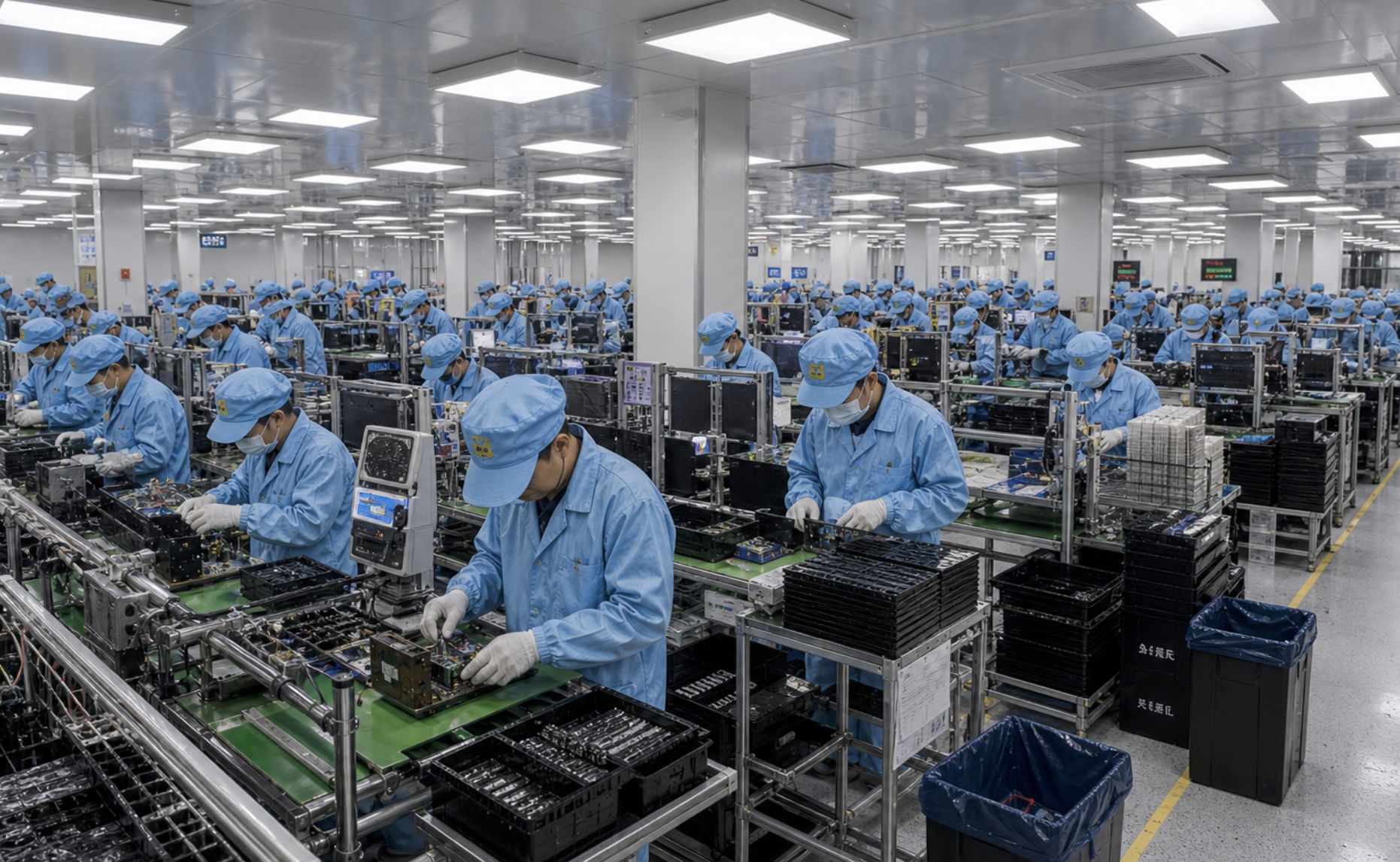
Secondly, Indian migrants are particularly attractive because they are more compliant and geographically mobile than native Whites with comparable education. Lacking deep community roots or established family ties in the West, they accept irregular and intense schedules more readily. There are no entrenched mortgages, local schools, or unions associated with the importation of fresh Indian migrants. This entails less political or social pushback when companies adjust to new market signals or replace workers with AI. The cost savings are substantial: firms can hire a senior Indian developer in the US or Canada on work visas for $30,000–$50,000 per year, in contrast to $150,000–$200,000 for a similarly qualified American worker. Their narrow education, total focus on STEM degrees, compliance, and one-dimensional desire for money have made Indians quite useful as employees in limbic capitalist sectors such as social media, e-commerce, gaming, streaming, and AI-driven engagement.
The socioeconomic success of Chinese and Indians reflects this selection. In the United States, according to data collected by the Pew Research Center (published 2025), the median income of Indian-headed households is about $145,000 – $156,000, which is significantly higher than the U.S. national median of $75,000–$83,000. The median income of Taiwanese Americans is $133,000 – $145,000, while that of Chinese Americans is $98,400 – $108,60. Chinese and Indian immigrants also show higher STEM educational attainment. This should not surprise us: Indian and Chinese immigrants to the U.S. are heavily filtered through H-1B visas, leading to employment. They don't “waste their time” with Liberal Arts, but focus on high-paying fields like computer science, medicine, engineering, and finance. In Australia, Canada, and New Zealand, second-generation Chinese and South Asians similarly demonstrate higher household median incomes and stronger representation in high-tech occupations.
But we can't forget that capitalism’s optimizing logic also requires cheap, flexible labor for services, retail, and delivery driving, hospitality, to keep consumer prices low and profits high. Working in tandem with this optimization, liberalism’s universalistic logic frames restrictions on low-skilled brown immigration as racist, while celebrating diversity in the public sphere. In Canada (especially from 2021 to 2024), low-skilled workers formed a very large part of Justin Trudeau's post-covid massive immigration surge. Their numbers far exceeded the inflow of high-tech workers. These immigrants constitute a reliable labor force for irregular shifts and jobs that are demanding in terms of working schedules and location. These are the Indians we see everywhere, fueling the complaints about driving habits, public littering, queuing etiquette, noise levels, large families in small apartments, etc. For the post-Fordist regime, however, these are relatively minor inconveniences compared to the optimizing returns and the creation of a racially “vibrant” reality.
4. The Dual Drivers: Capitalist Optimization and Liberal Universalism in Action
The main drivers of Europe’s immigration policy are not shadowy figures like Richard von Coudenhove-Kalergi, or some woman in a video named Barbara Lerner Spectre bragging about her accomplishments. It is the open, structural imperatives of the post-Fordist liberal-capitalist system itself. Although these two forces have their own rationale, they operate in tandem and reinforce one another. Let's start with the capitalist side: we have Europe’s largest and most influential employer organization, BusinessEurope, representing 42 national business federations, explicitly stating that “worker mobility and skilled migration are essential for economic growth” and that businesses require “favourable conditions for talent from outside the EU” to address labour shortages and sustain competitiveness. They explicitly argue that migration should be shaped by what companies need. They have a full policy page on “Diversity and equal opportunities”, where they state: “Embracing diversity and equal opportunities strengthens workplaces and boosts economic performance”. Contrary to common claims by those who blame woke ideas, BusinessEurope frames migration almost entirely in economic terms: filling vacancies, boosting competitiveness, sustaining growth, and addressing the consequences of low native birth rates and an aging population.
Similar positions are taken by many others business groups in Europe: Italy’s Confindustria (led by Emanuele Orsini), Germany’s BDI (led by figures such as Siegfried Russwurm and Peter Leibinger), France’s MEDEF, and Ireland's IBEC. These organizations, headed by Europeans, are all strongly in favour of expanded legal migration. They represent tens of thousands of European companies in manufacturing, construction, agriculture, hospitality, tourism, and elderly care, that is, the sectors that face chronic vacancies because there are either not enough native workers or they are unwilling to accept the low wages, conditions, and seasonal nature of the jobs. BDI (Bundesverband der Deutschen Industrie) is very pro-migration for skilled (and some semi-skilled) workers. BDI has repeatedly warned of "severe labour shortages" and strongly supports the "Skilled Immigration Act", which advocates for faster visa procedures, easier recognition of foreign qualifications, and more pathways for non-EU workers.
Likewise, France's MEDEF (Mouvement des Entreprises de France) is explicitly pro-immigration. In 2023, MEDEF president Patrick Martin stated that France will need 3.9 million foreign workers by 2050 to address labour shortages in construction, healthcare, hospitality, and industry overall. Ireland's largest and most influential employer organisation, Irish Business and Employers Confederation, or IBEC, consistently makes the same argument. The American Chamber of Commerce Ireland, in a publication entitled, "Ireland's Immigration Pathways - Driving Competitiveness and Economic Growth", categorically argues that "it is vital for Ireland's continued growth and competitiveness that companies based in Ireland have access to the best international talent". In 2024–2025, Confindustria, in Meloni's Italy, welcomed increases in legal work visas for 450,000–500,000 migrants for over several years. Their stated rationale fits directly with my argument that the optimization logic of capitalism in our post-Fordist age is a major structural driver of increased legal immigration across Europe.

The progressive logic of liberalism, for its part, supplies the universalistic and moral principles calling for a diverse Europe in which the ethnic divisions and xenophobia of the past will be transcended. Through a well-organized “humanitarian-industrial complex” of NGOs, churches, human-rights groups, and progressive foundations, liberalism actively facilitates, legitimises, and accelerates immigration replacement. SOS Méditerranée, Sea-Watch, Proactiva Open Arms, and Médecins Sans Frontières (MSF) operate large rescue vessels (Ocean Viking, Sea-Watch 3/4, Open Arms). They have conducted thousands of operations since 2014–2015, bringing hundreds of thousands of migrants to European ports (mainly Italy, Spain, Greece). They regularly issue public statements and open letters accusing the EU of “inaction,” “criminalizing solidarity,” and “hiding the dirt under the Mediterranean.”
Other large humanitarian and religious NGOs like Caritas (Catholic), Jesuit Refugee Service, and Oxfam provide legal aid, reception services, and advocacy inside Europe, and they consistently lobby for expanded legal pathways, family reunification, and against any “externalisation” deals (EU–Libya, EU–Tunisia, EU–Egypt). The Immigrant Council of Ireland, one of many similar groups in Ireland, actively pushes for broader legal rights for immigrants. The theme of this Council's 7th annual National Integration Conference to be held this June, 2026, will be "Vision for the Future: Building a Shared Home in Ireland, offering "a wide range of panels, breakout sessions and presentations on the challenges and opportunities for migrant integration in Ireland". Open Society Foundations (George Soros) has been one of the largest private funders of pro-migration civil society in Europe for decades. They support NGOs, think tanks, and advocacy groups that promote open borders and frame migration as a human-rights imperative. Many other smaller progressive groups are coordinated through platforms such as the Platform for International Cooperation on Undocumented Migrants (PICUM), EuroMed Rights, and Amnesty International.
These organizations delegitimize restrictions on non-Western immigration as racist, xenophobic, or a violation of human dignity. They provide material resources to facilitate migration, legal aid; and they lobby the European Commission, Parliament, and national governments through joint letters, reports, and media campaigns. In 2025, for instance, over 40 NGOs (including SOS Méditerranée and Sea-Watch) signed open letters demanding the EU reverse cooperation with Libya and expand legal migration routes. Since these groups operate in a European world where liberalism prevails, they have close relationships with mainstream media, academia, churches, and a variety of educational and legal institutions, sustaining the dominant liberal discourse that Europe has a moral duty to accept people from the Global South.
This universalist logic was on full display the other day when French President Emmanuel Macron declared that the epicenter of the French language is no longer on the banks of the Seine but in the Congo River basin, while noting that approximately 21% of Paris residents are now immigrants. In the liberal mind, French identity and language are detachable from the historic French people, and can thus be carried forward by African migrants as long as liberal values are formally adopted. This state of mind is inscribed in Article 1 of the 1958 French Constitution, which clearly states that "France shall...ensure the equality of all citizens before the law, without distinction of origin, race or religion." Across the West, culture and language are no longer rooted in blood or ethnicity, but in universal or “creedal” values belonging to humanity as such.
5. Who Profits? Who Loses? A Structural Flaw in the post-Fordist Liberal Capitalist Order
Engaging in an exhaustive assessment of the gains and losses associated with the post-Fordist regime is beyond the scope of this article. It goes without saying that millions of immigrants have gained; and state employees and academics have been incentivized (through multiple careers) to maintain and expand this multicultural order. The crisis of Fordism was overcome, from the perspective of the business world. Immigration has been a major factor of workforce expansion and overall economic growth. Canada's nominal GDP grew more than eightfold from $275 billion in 1980 to over $2.2 trillion in recent years (in current US dollars). Similar patterns appear across the West. In the United States, just as immigration was intensified, nominal GDP expanded dramatically from about $2.8 trillion in 1980 to roughly $29–31 trillion by the mid-2020s.
In a capitalist optimizing economy, aggregate GDP growth, returns to investors, and increasing wealth of the big owners of capital are the decisive metrics of success. In the U.S., the share of wealth of the top 1% rose substantially from around 23% in 1989 to nearly 31% by 2024. In Canada, the share of market income enjoyed by the top 1% rose considerably from around 8% in the early 1980s to 13–14% in the mid-2000s (stabilizing at about 10–12% in recent years). The top 10% saw a five percent increase of market income share between the 1970s and 2021. In the United Kingdom, nominal GDP grew from approximately $565 billion in 1980 to over $3.3 trillion in recent years, accompanied by a notable rise in the top 1% income share since the early 1980s.
Major costs have been incurred primarily by large segments of the native White population. These costs include near-stagnant or declining real GDP per capita (despite strong GDP increases), flat or falling real median wages, skyrocketing housing costs, overcrowding of hospitals, schools, and infrastructure, traffic congestion, loss of farmland and green spaces, and massive increases in government spending on welfare for immigrants. In Norway, for example, immigrants accounted for 56% of all social assistance recipients in 2024, despite comprising about 17–21% of the population. Similar discrepancies hold in other Western nations. Moreover, there is now well-documented empirical research consistently showing a negative association between higher ethnic diversity and key indicators of social cohesion such as generalized social trust, volunteering/civic participation, and community cooperation.
I like to focus, however, on what strikes me as a deep structural contradiction embedded in the logics of liberalism and capitalism in their current post-Fordist phase. This regime rests on a historically unique psychological profile: the disposition of Western, primarily White, populations to prioritize universal ethical principles over kin loyalty or ethnic tribalism. All human societies throughout history, until the rise of the modern West, relied on intensive kinship structures (clans, lineages, and cousin marriage) that fostered norms such as loyalty to kin and ingroup, shame-based social control, and favoritism in dealings. In contrast, for complex historical reasons we don’t need bring up here, Western peoples abolished their kinship networks in favor of civic or voluntary associations, creating urban communes, guilds, diocese of bishops, monasteries, universities, and corporations relatively open to everyone regardless of kinship lineage. Whites came to prefer societies and institutions in which the same rules are applied to all regardless of status or personal ties. They came to favor impartial analytic thinking, guilt over shame, and recognition of intentionality in moral judgment.
This is the orientation that sustains Western individual rights, value pluralism, and the logic of progressive liberalism itself. But there is an inherent weakness in this orientation: these principles have been framed as applying to humans as such, as rights that belong to humans everywhere, when the underlying psychology that makes them functional is a culturally evolved and historically peculiar attainment of Whites. Only White people are psychological wired to view nepotism as morally corrupt, to trust strangers more readily, to rely on impartial rules in their judgements of the merits of others, and to treat the public sphere as a setting where everyone regardless of ethnic identity or country of origin should have equal rights. This is why the liberal-capitalist fusion worked extremely well among native Europeans during the Fordist phase, because everyone could behave under the assumption that everyone else would reciprocate their individualism and their impartiality.
The non-Western immigrants continuously arriving in the West in the millions overwhelmingly do not share this psychology. Most originate from cultures in which ethnic ingroup bias is the norm and the way to achieve success. Nepotism is not looked down upon but is seen as a natural obligation. Exploiting birthright citizenship, pushing chain migration, creating ethnic enclaves and parallel economies for their ingroup members, including preferential hiring within co-ethnic networks, are seen as appropriate behaviors.
Contrary to the expectations of liberal multicultural theory, immigrants (even from the second and third generations) are not inclined to assimilate to the universalism of native Whites or to “neutralize” their own ethnic particularism. Instead, they exploit the neutralized public space precisely because the host society has been socialized to treat any assertion of its own ethnic interests as racist and morally unacceptable. They treat the multicultural liberal order as a resource to be exploited for the advancement of their kin networks. Game theory describes this as “strategic free-riding.” In Pierre van den Berghe’s terms (The Ethnic Phenomenon, 1981), what we are witnessing is adaptive kin selection: ethnic groups behaving as extended kin networks that favor co-ethnics in resource competition. This millennial human behavior is now operating inside societies where Whites have unilaterally disarmed themselves of any adaptive kin behaviors to fight back. We have a concrete illustration of this dynamic in a recent video of a Nigerian immigrant in Canada coaching her ethnic ingroup on how to obtain free food, free transportation, free furniture, free education, free daycare, free dental care, and other welfare services.
This asymmetric manipulation of White fairness and trust continues among so-called “assimilated” immigrants, nonwhites born in the West, and even elected officials operating inside the liberal democratic system. A clear illustration is New York City Mayor Zohran Mamdani’s Racial Equity Plan, released in April 2026. As a self-described democratic socialist in the Bernie Sanders mold, Mamdani works firmly within the progressive liberal order. His plan frames persistent disparities in housing, education, and income as the result of “decades of discrimination” and “systemic racism.” It requires dozens of city agencies to adopt a racial equity lens and prioritize resources and outcomes for “Black and brown” communities.
Mamdani’s approach is not “race communism” but a logical extension of progressive liberalism. It redirects the classical liberal commitment to equal rights toward the equalization of group disparities through state intervention. While classical liberalism (an ideology originated by Whites) prohibits Whites from pursuing their ingroup interests as a people, progressive liberalism simultaneously demands remedies for non-Whites. This creates a situation in which Whites have unilaterally disarmed themselves (culturally, psychologically, and legally) while arming others to advance particularistic group claims under the banner of “corrective justice”.
The post-Fordist model, moreover, is making a profound mistake in judging native White workers as less efficient than imported Asian laborers. By rewarding “Asian” traits such as compliant focus on repetitive tasks, and lack of interests outside one’s hyper-specialized role, it is optimizing for short-to-medium-term returns. Whites, with their higher variance in personality, greater openness to new ideas, experimentation, and adventurism, are better suited for long-term frontier innovation and disruptive thinking, which are the very qualities that built and sustained Western civilization. In devaluing these broader creative and civilizational strengths of Whites, the regime prioritizes immediate accumulation over long-term goals such as cultural continuity and grand technological vision.
Ultimately, the real cost of capitalism’s post-Fordist limbic fusion with progressive liberalism is the creation of a system that is biologically and culturally incompatible with the long-term survival of European peoples in their homelands.
6. The Path-Dependent Civilizational Trap of the West
The Great Replacement is now on a path-dependent trajectory that will be extremely difficult to reverse. Yes, liberalism and capitalism have fused to create a dynamic, high-level equilibrium trap that is highly effective at generating short-term economic growth, incentives and opportunities for elite status, rewards for loyalty, moral validation, yet systematically undermines the long-term demographic and cultural foundations of European societies.
We keep seeing the huge fiscal costs, disproportionate crime rates, collapsing social trust, skyrocketing housing prices, and falling living standards for native Europeans. Yet the diversity regime continues, even doubles down. From the standpoint of native European-descended peoples, the whole thing looks deeply irrational and self-destructive. So why does the system persist marching along the same path?

Because we're trapped.
I am drawing here on what historian Mark Elvin called a "high-level equilibrium trap" in late-imperial China. Chinese society had become highly efficient at feeding a huge population using sophisticated pre-industrial agriculture and institutions. But that very success locked them in. Labor was very cheap and abundant so there was little incentive to invent labor-saving machines. The system appeared to be "good enough," so it remained stuck, generating impressive total output, but with stagnant per-capita income and no breakthrough to modern science and industrialization.
The trap the West is experiencing is different. It is dynamic and optimizing. The West constantly innovates in technology, finance, consumer culture, and now AI. But that same dynamism is channeled through a liberal culture that makes reversal increasingly difficult. Even when elites privately sense that something has gone badly wrong, that the post-WWII promise of harmonious diversity and the transcendence of xenophobia has instead produced persistent racial tensions, and populist backlash, turning the ship around has become almost unfeasible. The system is now deeply path-dependent.
How exactly does this trap operate?
First, post-Fordist capitalism cares about quarterly profits, GDP numbers, the market value of financial and real assets, risk, expected returns, and cheap labor. The real costs we read about at X — welfare dependency, sexual assaults, nepotism, trust erosion — are spread out over wide populations and time periods. It is primarily ordinary native citizens who pay the price. The people who benefit right now (corporations, politicians, academics, entertainers, NGOs, and nonwhites) don’t feel those costs immediately, so they keep the system running.
Second, liberal universalism has turned diversity and non-discrimination into the most sacred values. It is extremely hard for someone to build a career or profession while advocating openly for remigration, race realism, and white identity. The elites would rather ignore the data than admit that culture and ethnicity matter, that blacks and many immigrant groups don't integrate well, that social trust has deteriorated, and that liberalism is therefore based on fundamentally flawed premises.
Third, whole industries and professions have been incentivized to support the status quo, diversity consultants, immigration lawyers, refugee organizations, corporate HR departments, and large parts of the welfare state, including schools and universities. Politicians get praised for looking compassionate, inclusive, tolerant. Businesses get lower wages and compliant laborers. NGOs and academics get funding and moral prestige. Changing this path would require dismantling entire institutions, overthrow powerful individuals, and eliminate the careers of millions heavily invested in the system.
Fourth, millions of non-Western immigrants and their children are already inside the West, with full legal rights, and rapidly growing political influence. Remigration would trigger enormous societal, legal, and political crises, such as court challenges, media hysteria, accusations of "ethnic cleansing," civil unrest, and massive short-term economic disruption. Demographically, the replacement has reached a point in which a future nonwhite majority has already been born.
It is getting worse. The trap is now being reinforced by the fusion of limbic capitalism and artificial intelligence. Limbic capitalism refers to businesses that deliberately target the "limbic" part of the brain responsible for pleasure and craving. This form of capitalism has indeed exploded with social media, video games, online shopping, pornography, gambling, and ultra-processed foods. These products deliver rapid dopamine hits that keep consumers compulsively engaged for maximum profit. Meta, TikTok, YouTube, X, Netflix, Amazon, and countless gaming and dating app developers have built multi-trillion-dollar limbic companies.
The combination of limbic capitalism with AI systems increasing in power at an exponential rate. AI will not merely add to the existing system: it will make escape from the trap harder than it already is. It will create a new world of consumerism, entertainment, and social interaction that does not require a high-trust society but thrives on uprooted, unmarried, and childless individuals. This order will give Western elites powerful new tools to manage the dysfunctional consequences of diversity through pervasive surveillance, algorithmic social control, and sophisticated brainwashing. In this respect, the West will be moving toward a model similar to China's, but without ethnic cohesion and nationalist policies.
It needs to be understood that this post-Fordist AI limbic system isn't irrational or malevolent. From its own point of view, it is acting rationally in meeting both the optimizing drive of capitalism in a post-Fordist age, achieving sustained GDP growth, higher short-term profits, and the enrichment of the top 1-5-10% of the population. It is also meeting the ideals of liberalism in enhancing racial and cultural pluralism.
This analysis is not intended to encourage defeatism. Its purpose is to clear away comforting illusions. Incremental reforms, such as attacking DEI, restoring merit in some institutions, limiting gender ideology, weakening particular parties and lobbies, or even electing a populist party, will not reverse the trajectory. Only a profound restructuring of Western societies, more radical in scope than any previous transformation in our history, combined with a deep cultural and psychological reorientation of European peoples away from universalist liberalism, offers any realistic hope of escape.
Bibliographic Notes
[1] The best sources on the transition from Fordism to post-Fordism are: David Harvey, The Condition of Postmodernity: An Enquiry into the Origins of Cultural Change (1989); Bob Jessop, “Fordism and Post-Fordism: A Critical Reformulation” in A. J. Scott & M. Storper (Eds.), Pathways to Industrialization and Regional Development (1992); and Erica Schoenberger’s “From Fordism to Flexible Accumulation: Technology, Competitive Strategies, and International Location.” Environment and Planning D: Society and Space (1988: Vol. 6, No. 3). None of these leftist/Marxist authors integrate immigration (or multiculturalism) into their analysis of post-Fordism, which is understandable since they were writing as the West was opening its borders (a feature of this regime they likely welcomed).
[2] I need hardly say that post-Fordist capitalism has not always found liberal progressivism to be a congenial partner, particularly as it takes on an “extremist” direction in the pursuit of “wokeness”. Initiatives such as DEI have undoubtedly imposed some hiring quotas and bureaucratic regulations that conflict with the merit-based optimization capitalism prefers.
[3] The following articles explain labor flexibility of Indians, cost advantages, and why firms prefer Indian labor: Gaurav Khanna and Nicolas Morales, “The IT Boom and Other Unintended Consequences of Chasing the American Dream” (2021); William F. Lincoln, “The Supply Side of Innovation: H-1B Visa Reforms and U.S. Ethnic Invention,” Journal of Labor Economics, 2010; and John Bound, Gaurav Khanna, and Nicolas Morales, “Understanding the Economic Impact of the H-1B Program on the U.S.” NBER Working Paper No. 23153, 2017.