
UKGovScan: making the British state searchable
UKGovScan makes the British state searchable. It pulls public contracts, political donations, MPs’ and Lords’ interests, lobbying, council spending, aid, schools and company data into one place, giving journalists and citizens a faster way to follow public money and ask sharper questions.


While the British state, EU and wider Anglosphere appear intent on collecting as much data about the individual as possible (digital ID), a newly-launched project has been returning the favour to the British state. UKGovScan is one of the more useful things one could find on X (formerly Twitter) – it is a new independent transparency project which is making information on government spending, contracts, donations, interests and lobbying searchable in one place for ease of research by the public, researches and journalists alike. Tools like this often go under-utilised, under-explained and escape the notice of the researchers and journalists who ought be using them (but for one reason or another, are not). This article aims to explain what is offered by this project, to avoid that fate.
The creator’s pitch is admirably blunt. UKGovScan, he says:
“aggregates UK public spending data into one searchable platform. Every procurement contract, every political donation, every MP and Lord’s declared interest, lobbying data, foreign aid, NHS/police/transport spending, and granular council spending down to £500.”
The site is not an official government portal, though one might be fooled by the tongue in cheek use of the government portals' aesthetics – down to the typeface. UKGovScan's about page describes it as an independent transparency project, unaffiliated with government, using public records from sources such as Contracts Finder, Find a Tender, Public Contracts Scotland, Sell2Wales, the Electoral Commission, Companies House, Parliament, IPSA and the lobbying register. It also gives the sensible warning that material should be checked against the original source, because aggregated public data can contain errors, gaps or mismatches. The sections of the website are as follows:
Contracts
Perhaps the obvious starting point is government Contracts. This lets users search and filter public procurement by supplier, public body, country, procurement method, award date, value and expiry window. It also marks contracts which appear to have cross-references with political donations, lobbying registrations or MP links. In plain English, it helps answer the first question in almost every public-money story: who got paid, by whom, and for what?
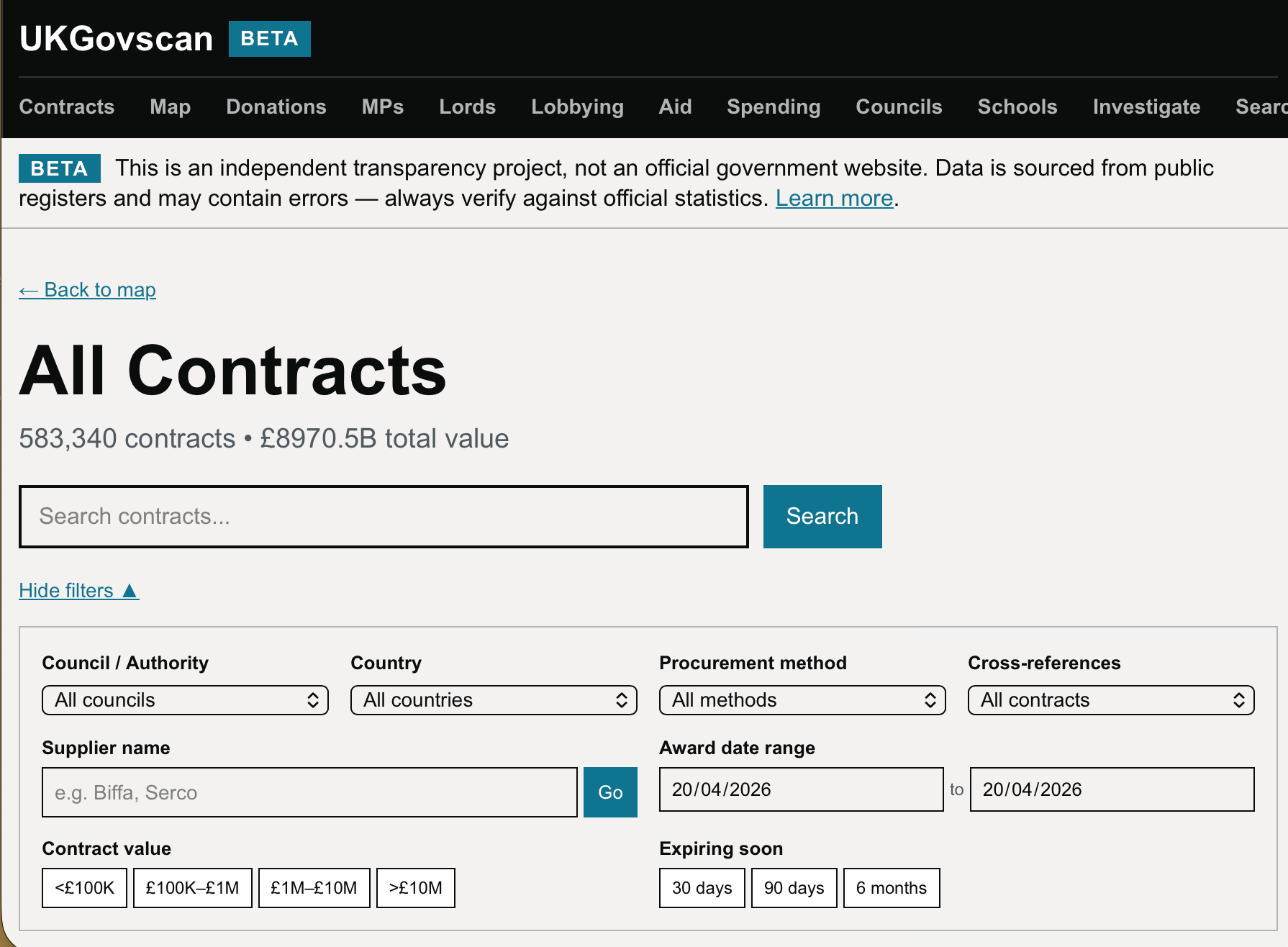
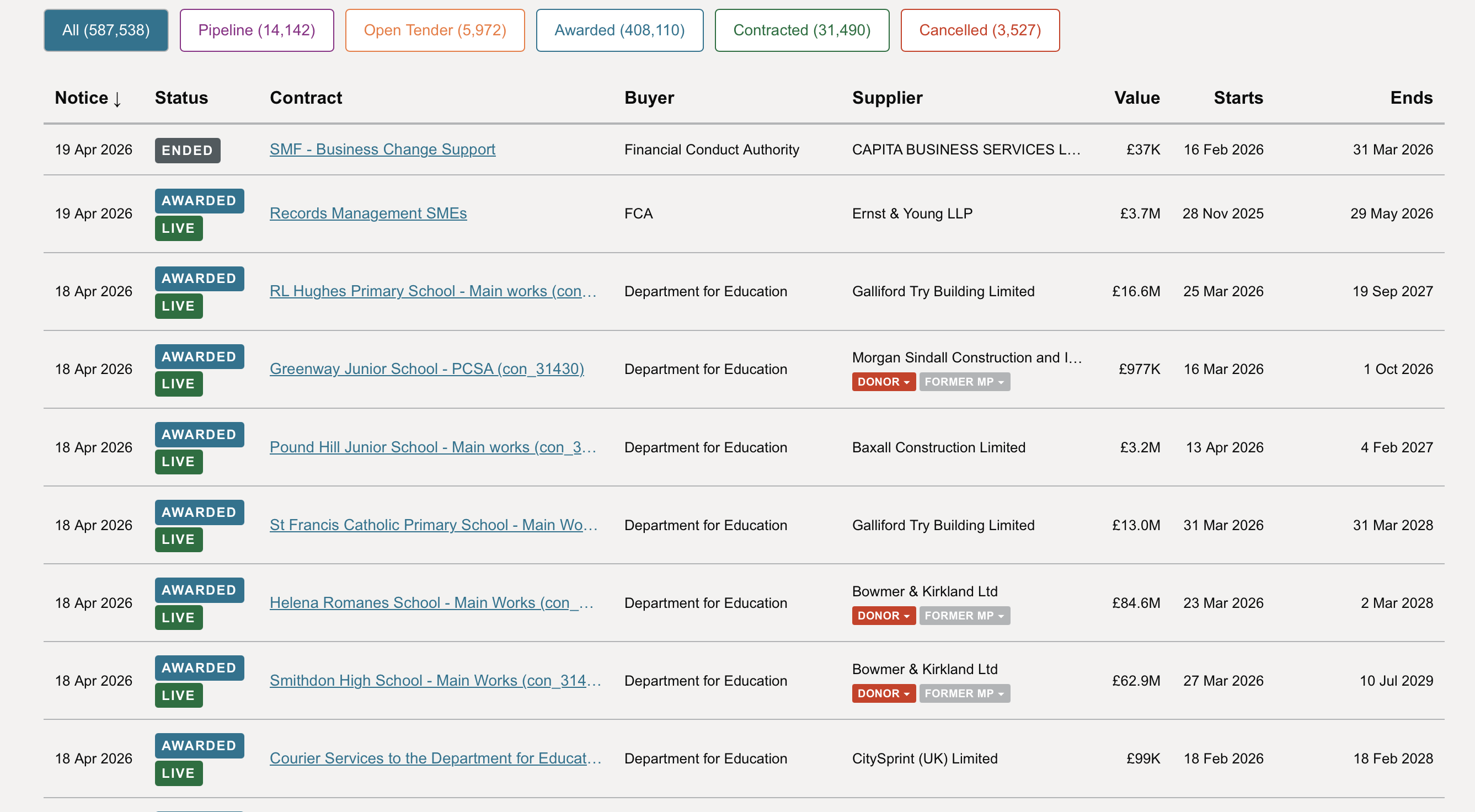
Government Contracts search feature, as seen here: https://ukgovscan.com/contracts
Map
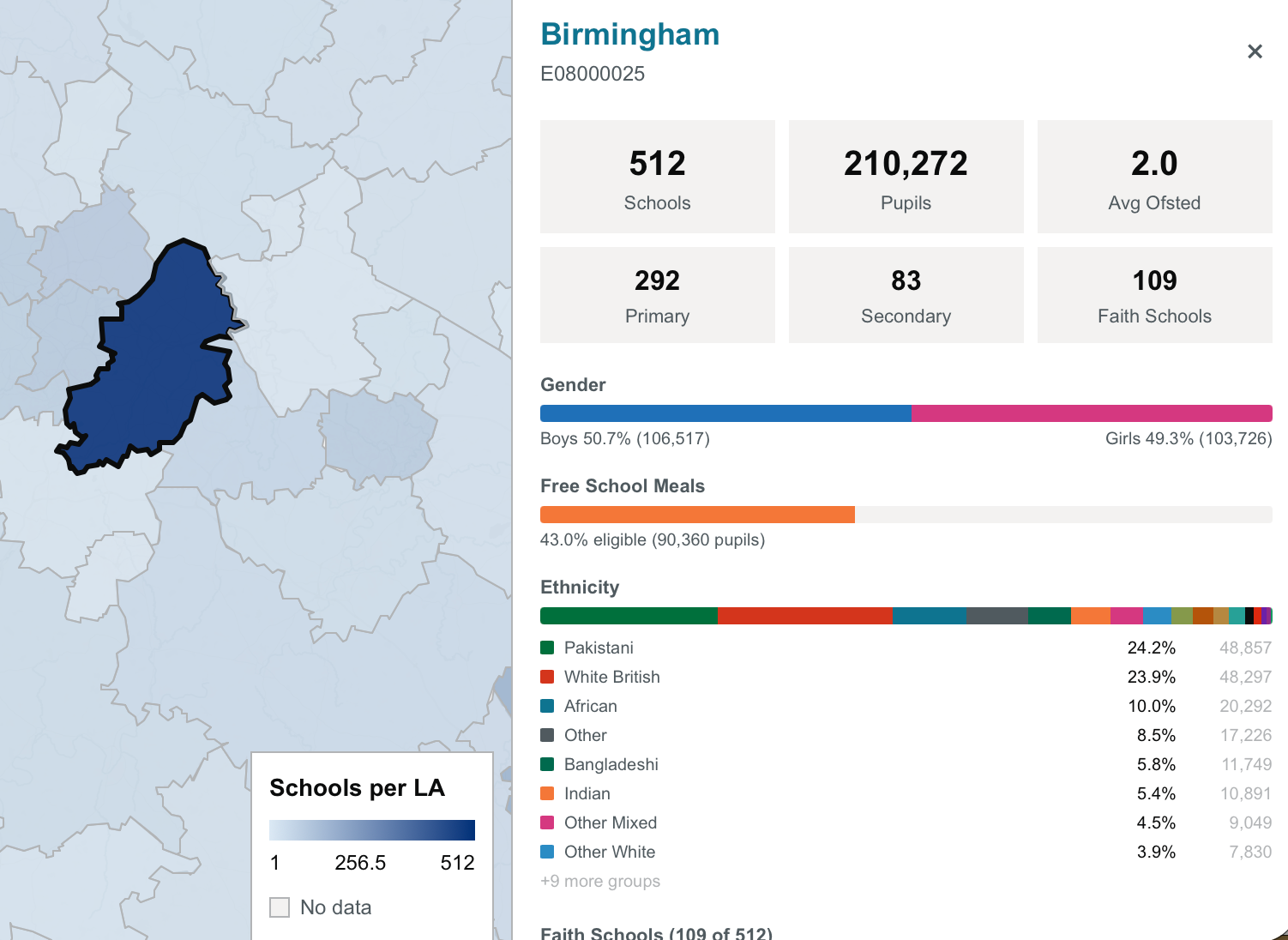
The Map gives a geographic route into the same world, allowing contracts to be explored by area. That is particularly useful for local reporting, where the question is often less abstract than national procurement and much more immediate: what is my council, police force, NHS body or local public authority buying, and from whom? The site also has a Councils section for local authority material, and a LA Leaderboard page which is currently marked as coming soon, intended for rankings by contract value, spending patterns and supplier diversity.
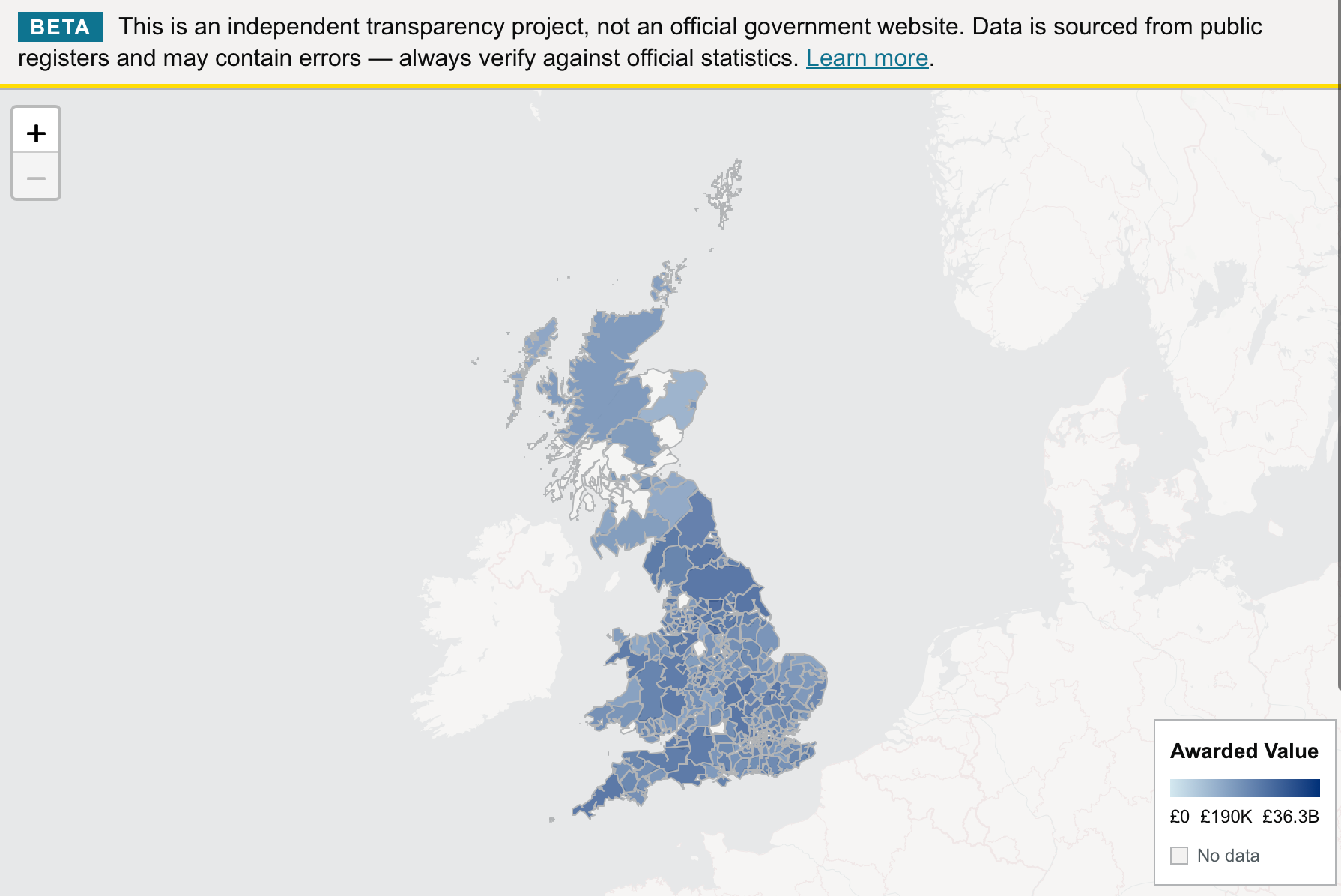
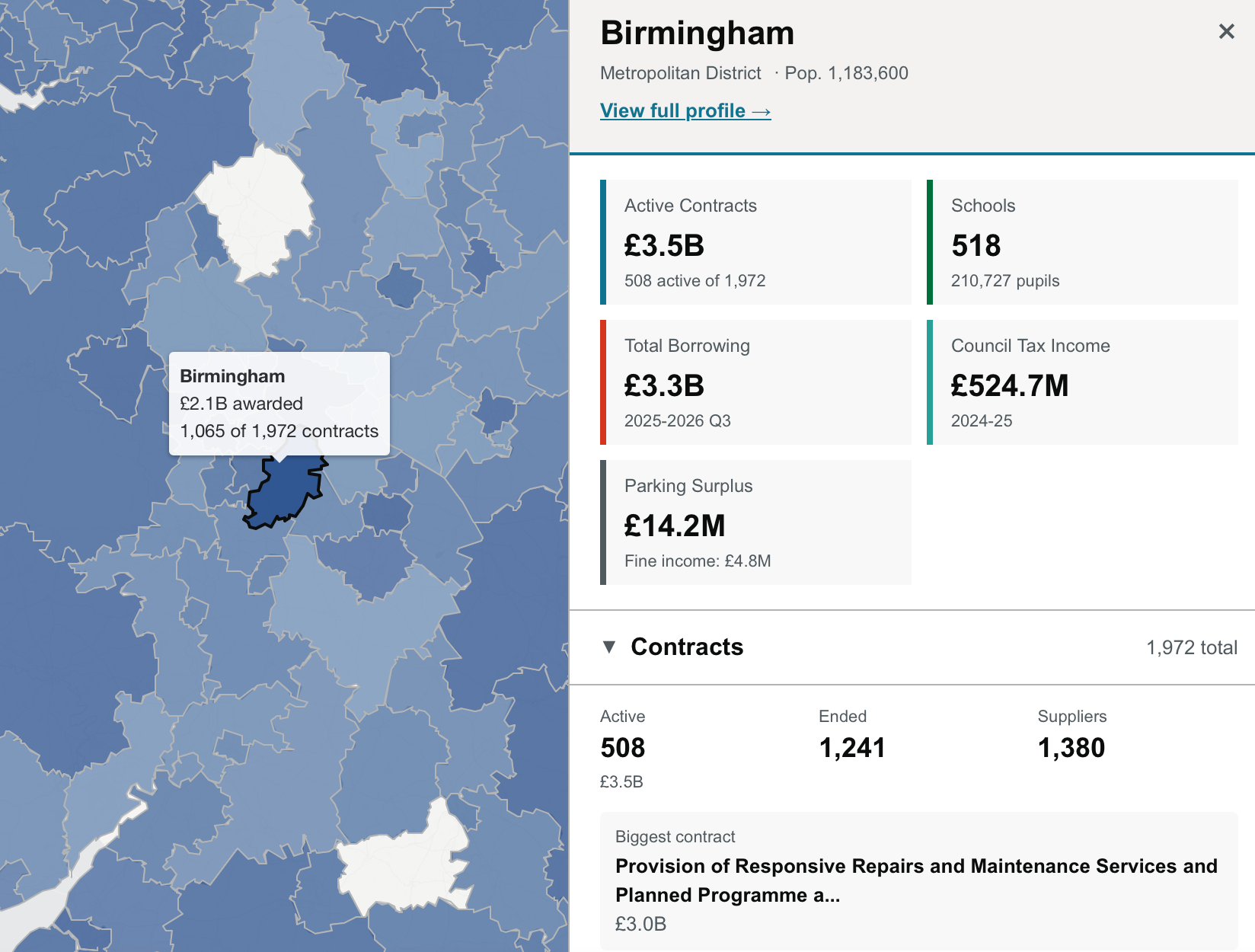
Contracts and spending map, in this instance for Birmhimgham (right): https://ukgovscan.com/map
Donations
The Donations section tracks political donations using Electoral Commission data. Its particular value is not simply that it shows donations, since those records already exist. It is that donations can be read alongside contracts, companies and public bodies, which is where the journalism begins. The point is not to assume impropriety. It is to make the pattern visible enough that questions can be asked.
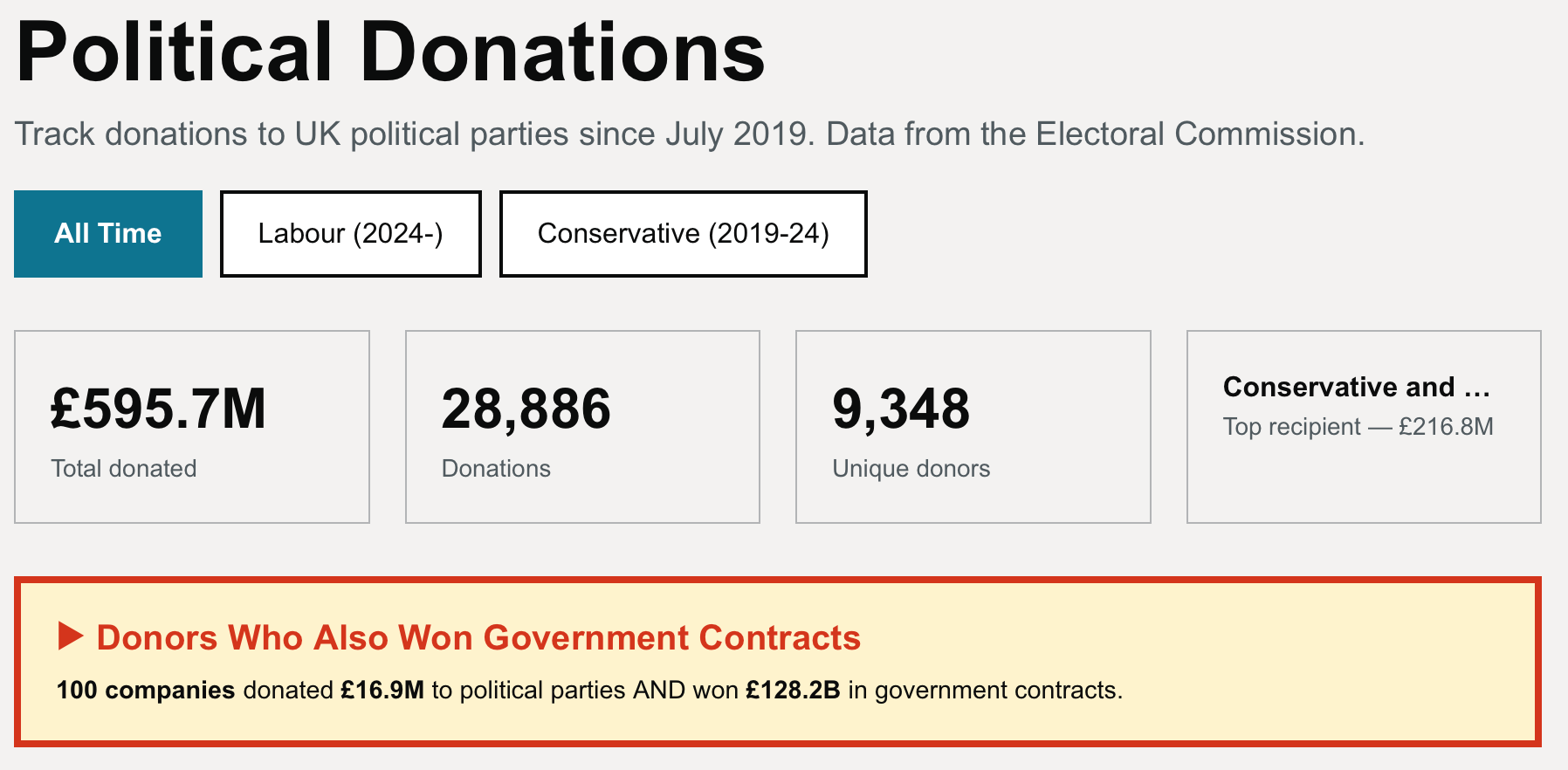
The site provides a detailed breakdown, by unique donor.
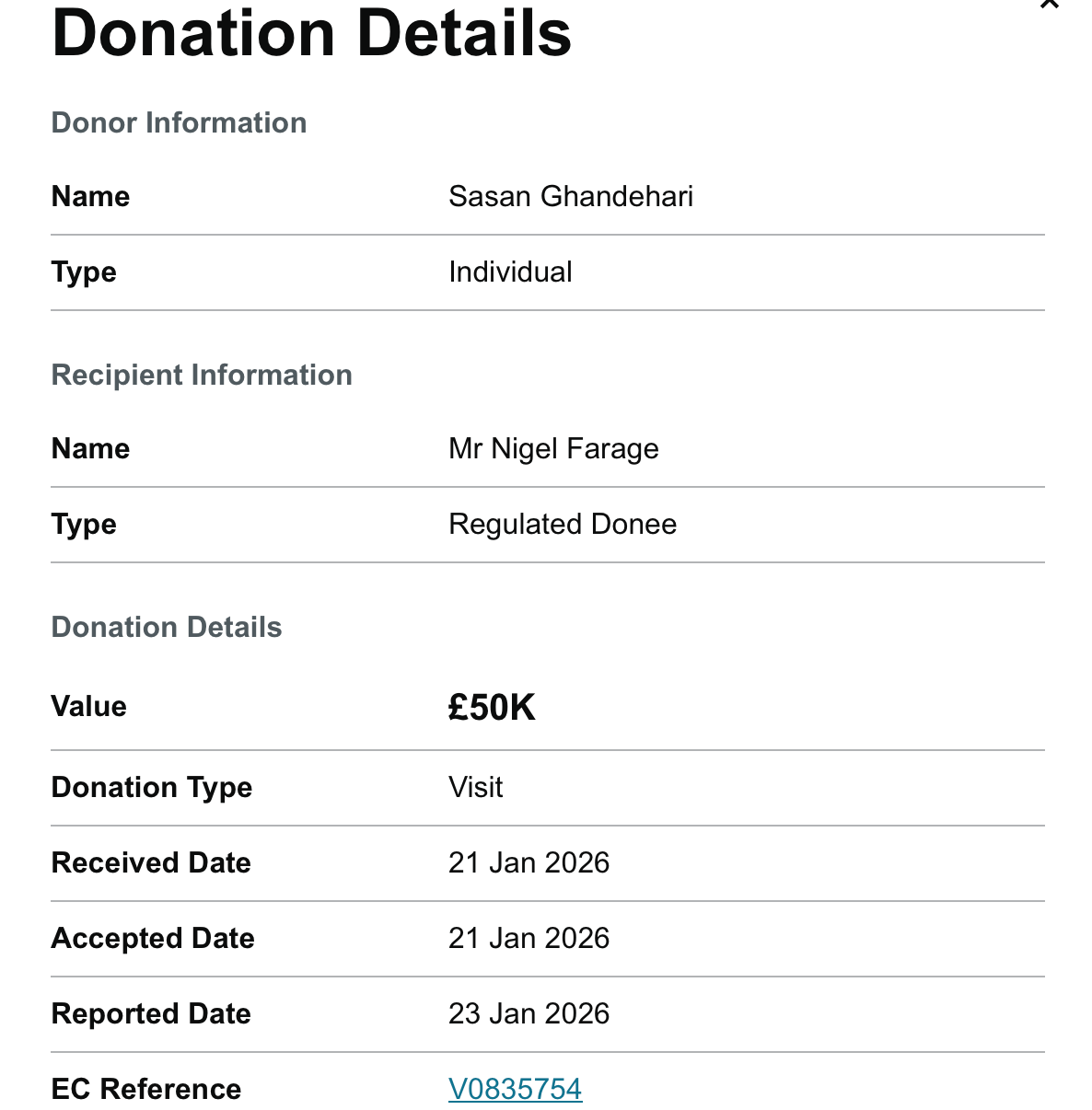
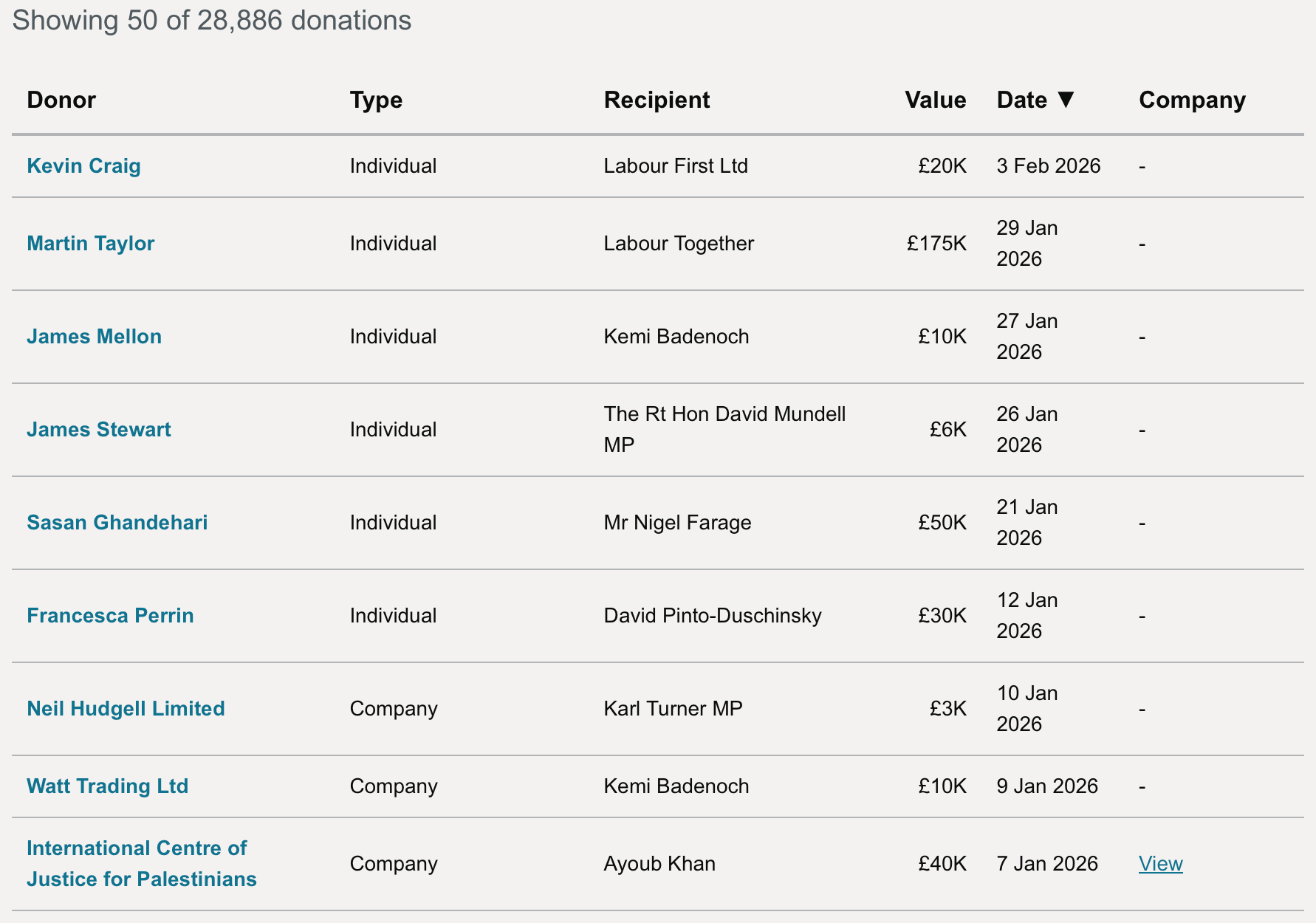
Donations breakdown.
MPs and Lords
The MPs and Lords sections are the parts most likely to irritate Westminster. The MPs tracker brings together outside income, gifts, expenses and donations for Members of Parliament. The Lords tracker covers declared interests, allowances, attendance, gifts and property, with a contract-links view. This is the sort of thing newspapers used to do with some relish, before discovering that the true emergency in public life was somebody saying something unpleasant online.
For journalists, if they were actually doing their jobs, rather than committed to covering their eyes and ears, the uses are obvious. One could look up a supplier on Search, move to its public contracts, examine its officers, check whether it appears in donations or lobbying data, and then see whether any parliamentarian has declared a relevant interest. One could take a local authority, look at its larger awards, compare suppliers, follow repeat winners, and ask why the same names recur. One could examine whether a peer’s declared commercial interests sit awkwardly beside the public contracts landscape. None of that proves wrongdoing. It does something more basic, and more valuable. It creates the next question.
Lobbying
The Lobbying section covers registered consultant lobbyists, their clients and links to government contracts and political donations. The site’s methodology page is careful here. It says its lobbying cross-reference works by matching Companies House numbers, and it warns that this shows correlation, not causation. That is exactly the right posture. Lobbying and contracting are both lawful activities. The question is not whether their overlap is automatically scandalous. The question is whether the public should be able to see that overlap without spending three days in a spreadsheet stupor.
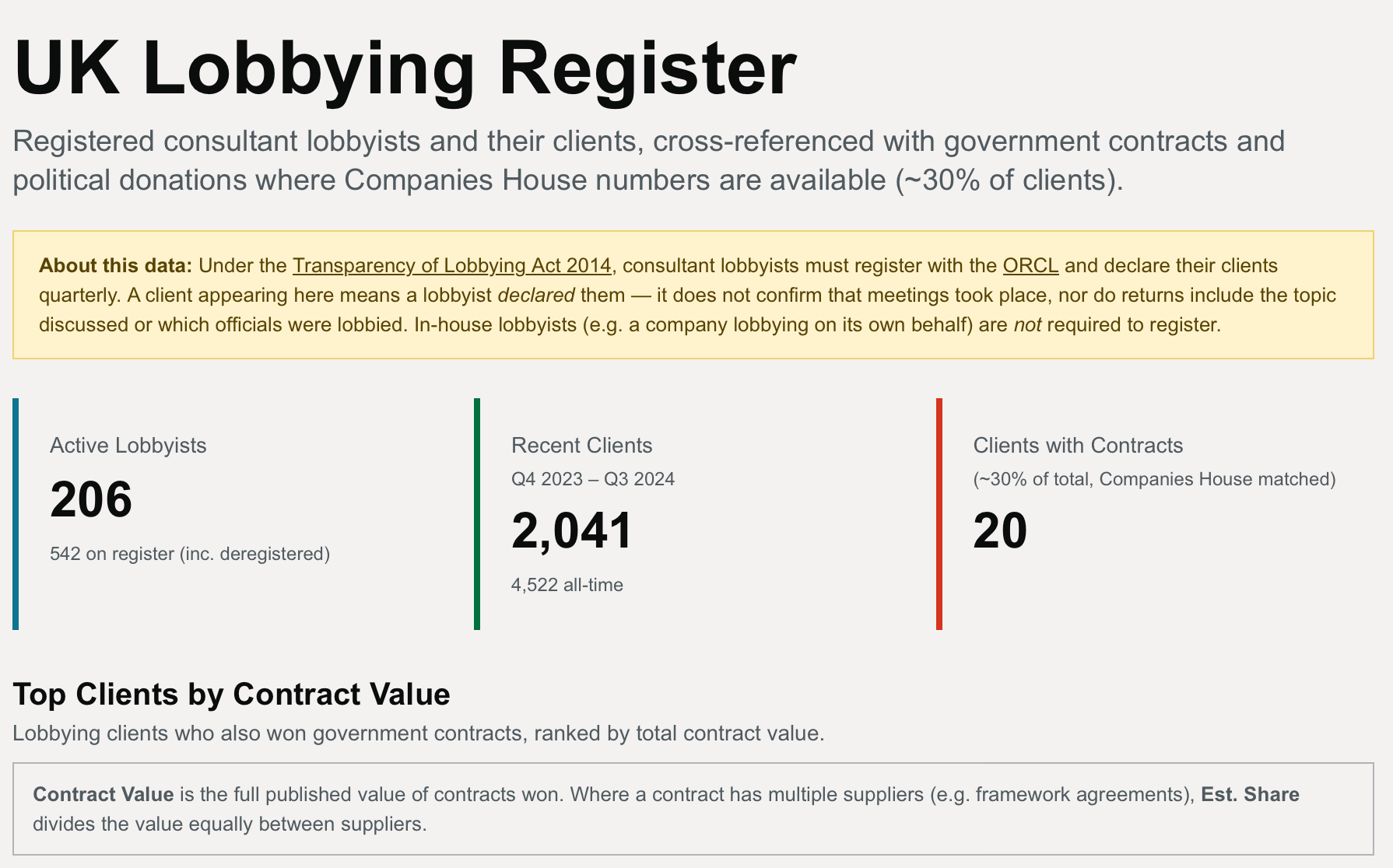
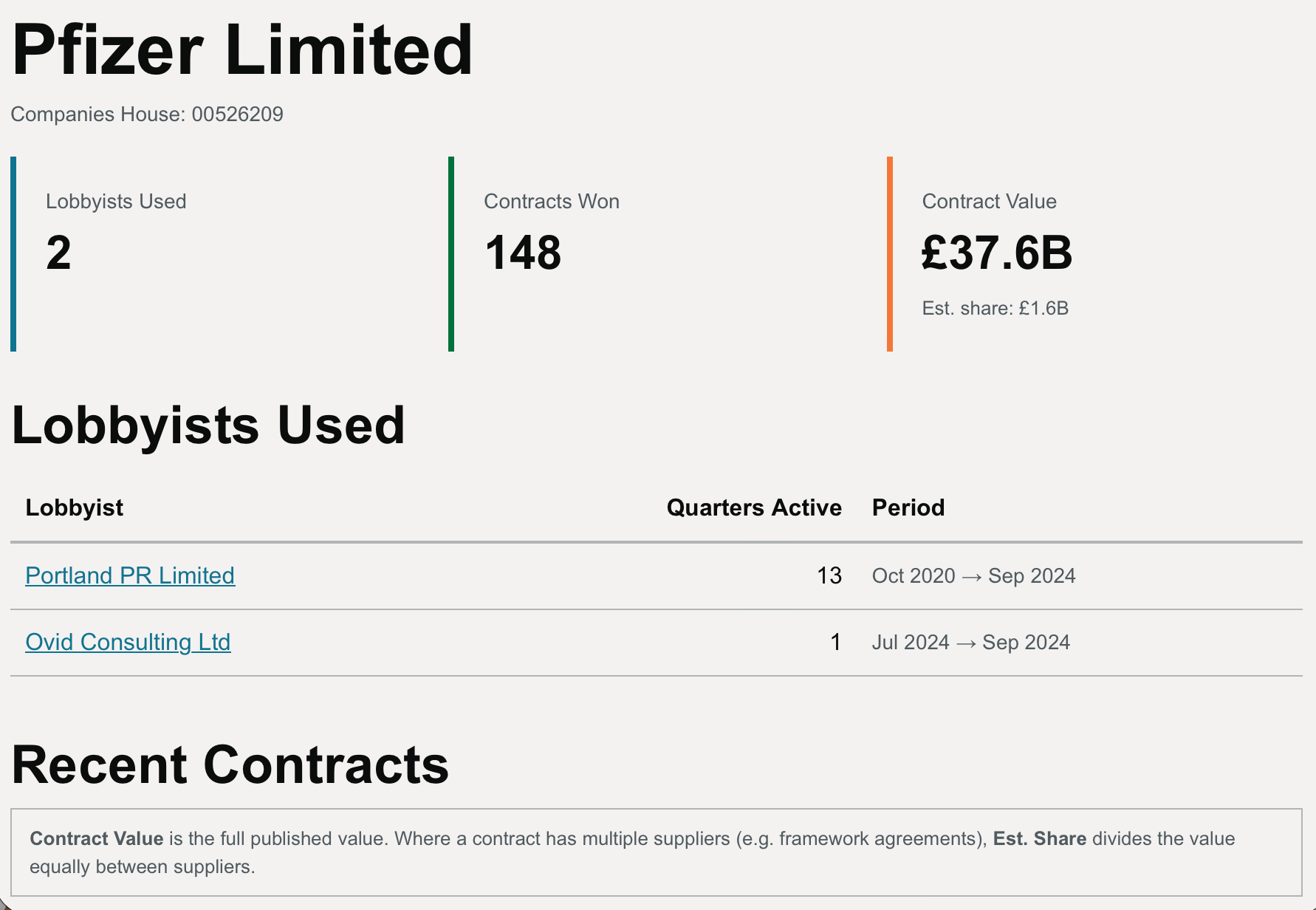
Lobbying Register: https://ukgovscan.com/lobbying
Foreign Aid
Foreign Aid section broadens the search beyond domestic spending, letting users explore UK overseas development projects by country, sector and department. The Spending section deals with government payment data, including departmental payments.
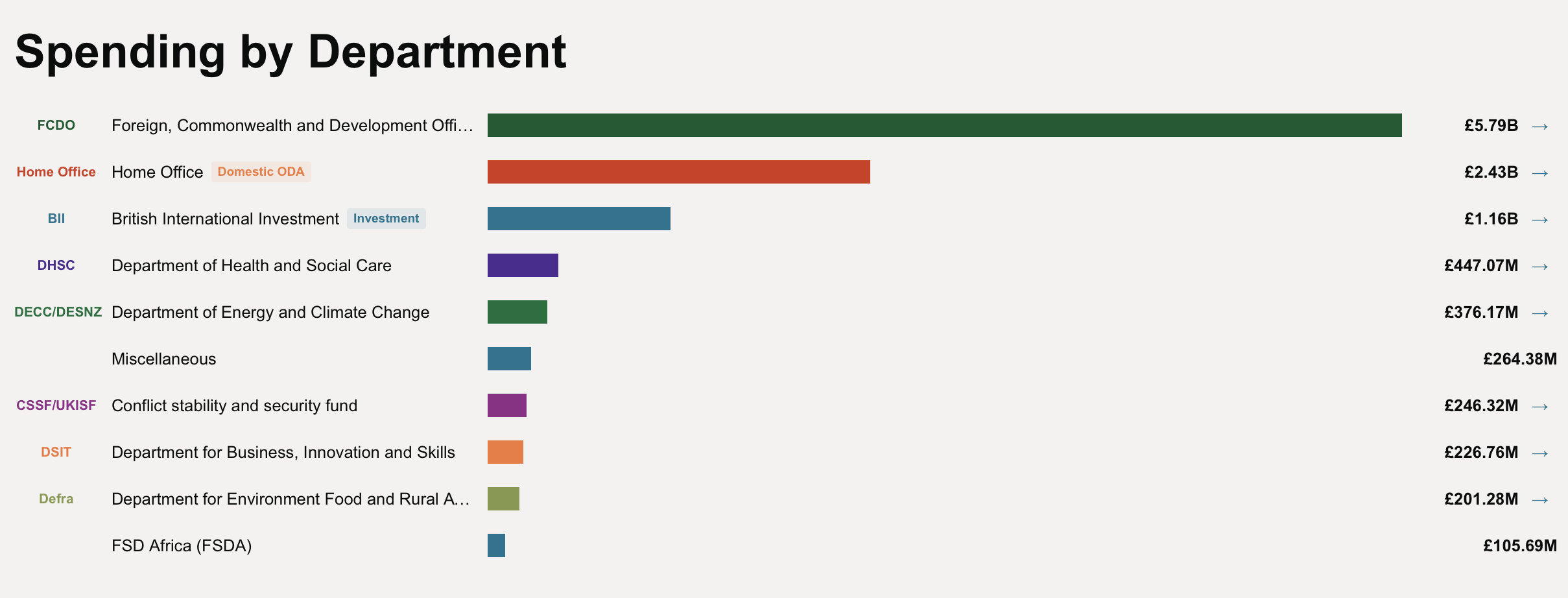
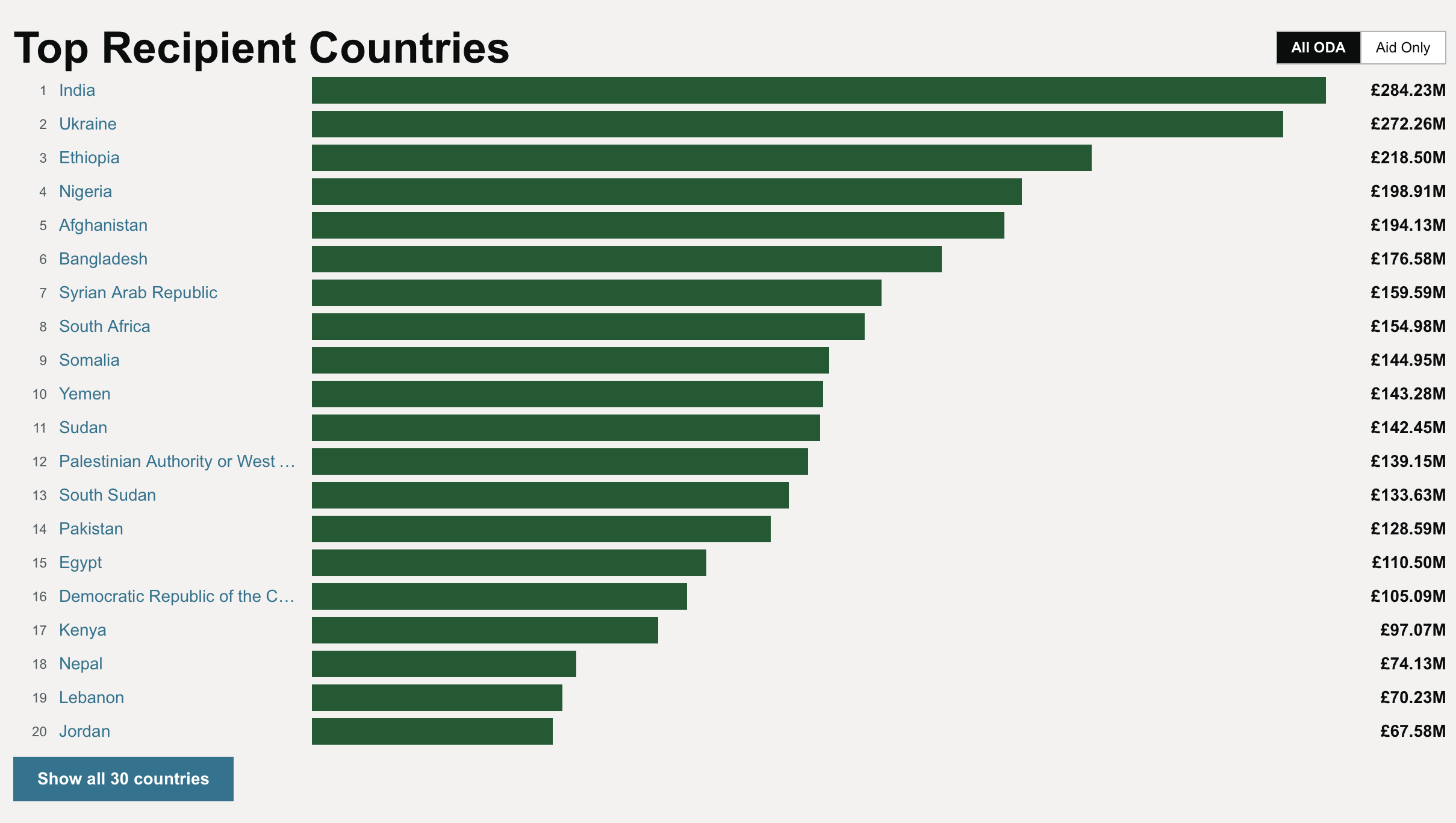
The Schools section brings education into the same frame, with school funding, expenditure, Ofsted, pupil data and academy trust cross-references. These are not glamorous datasets, which is precisely why they matter. Public money often hides best in boredom.
One rather interesting promised feature is Investigate. The homepage advertises it as a way to explore red flags, supplier concentration, payment spikes and Companies House cross-checks, although the page was not live when checked. The creator describes the intended direction as a tool allowing users to cross-reference payments and build “your own picture and spider web of connections.” That is the natural next step for a project like this. Britain does not lack public records. It lacks connective tissue.
UKGovScan’s X account is also worth following, because the project is still being built in public. The creator is right to say this is:
“not a dashboard thats been spun up over a weekend.”
Having seen my fair share of those, I can confirm this is not that. It is much closer to a public-interest search engine for the administrative state. Its value is not that it makes scandal easy – rather – it makes scrutiny available to all, and, less dependent on insider access.
The British state publishes an enormous amount, but it publishes much of it in ways that almost guarantee ordinary people will never use it. UKGovScan turns disparate records into a searchable system, and in doing so gives journalists, councillors, researchers, campaigners and citizens a sharper instrument for asking who receives public money, who influences government, and where the two worlds touch. Perhaps the journalists will regain some of our trust, and the think-tanks will resume the business of thinking. Thanks to projects like this, they have all the tools required to do so.