
From Sport to Social Engineering: The Five Stages of DEI in British Horseracing
John Gardner argues that DEI was imposed on British horseracing without evidence, mandate, or anything resembling a public consultation — these changes transformed an unlikely sport's governing body into an instrument of ideological social engineering.


The First Stage: Installation, May 2017
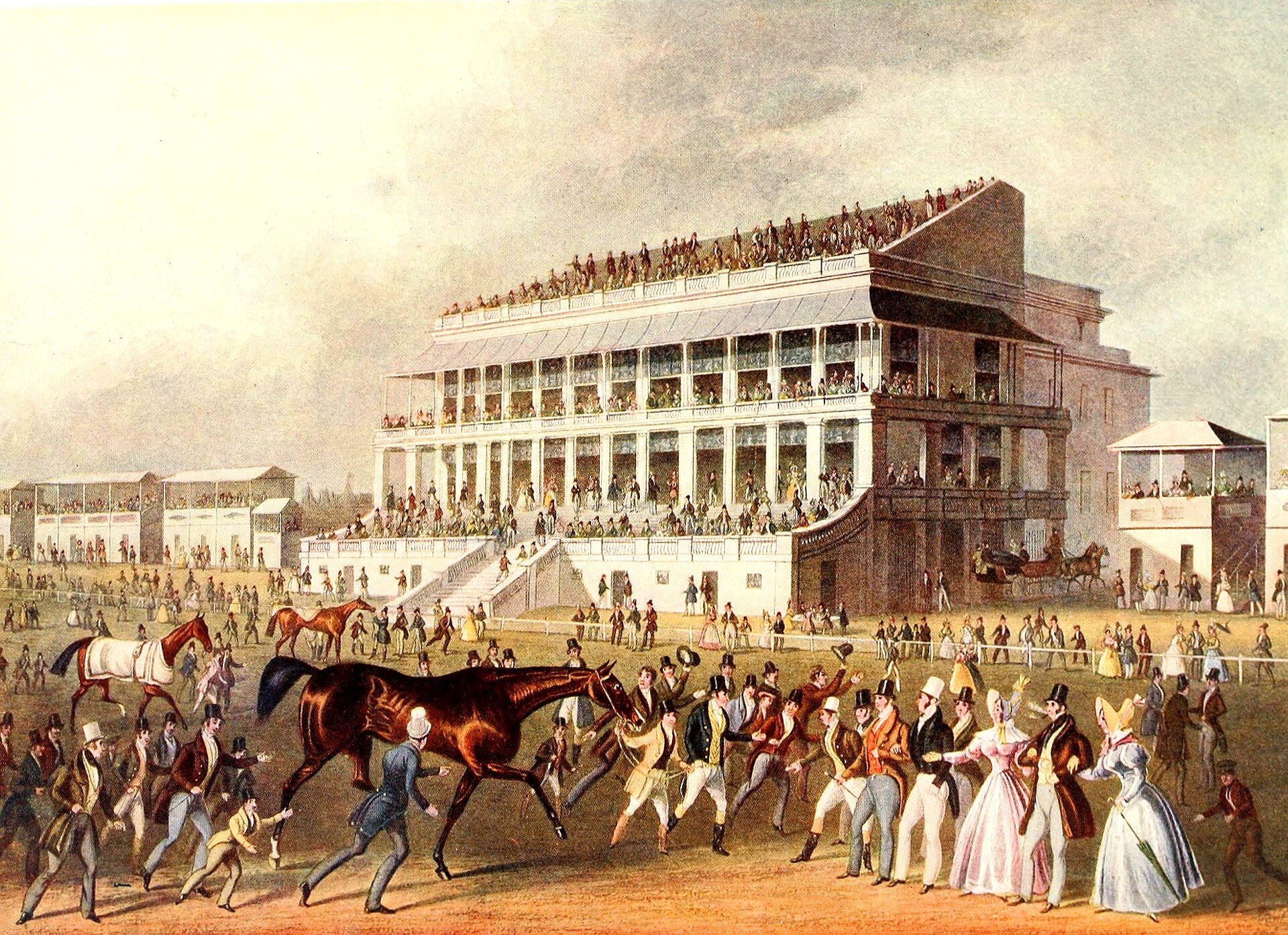
Prior to 2017, horseracing was a free association of men and women; the role of horseracing organisations was to manage people and resources in racing, while advertising and media were the link to the rest of society. In May 2017, however, this changed. Free association was replaced with Diversity and Inclusion — a mission of making horseracing "representative" of society. The trigger was a report by academics at Oxford Brookes University into women's representation in the industry, commissioned by Women in Racing — a group seeking more female senior executive positions — and supported by the British Horseracing Authority's chief executive, Nick Rust. On the day of its public release, the report was used as a Trojan horse to announce a much wider diversity agenda, including race, with LGBTQ added shortly afterwards.
The BHA claimed a business case and said that "study after study has shown that organisations take better decisions and perform better with diverse teams". This statement was not backed up by the Government's 2013 survey of 112 studies and articles, cited by the Diversity in Racing Steering Group. The Government survey said in relation to ethnicity:
"… no studies were identified that attempt to capture the causal impact of ethnic diversity on business outcomes." (p18)
Regarding LGBTQ and other categories, the same Government survey said:
"There are very few workplace studies that attempt to quantify the impacts of diversity on business outcomes when considering disability, religion and sexual orientation … There are studies of sexual orientation in the field of economics, but these do not investigate the business benefits of such diversity." (p18/19)
On horseracing, no research existed at all. The "study after study" claim was not only baseless, but entirely speculative as applied to the racing industry. But it provided the pretext to extend the diversity policy from women's representation to include race and LGBTQ.
The Second Stage: Escalation, June 2020
The death of George Floyd facilitated the second phase in mid-2020. With Nick Rust's support, the BHA posted a Black Lives Matter square logo on the staff intranet, referring to "systemic racism" and telling staff "we all have a responsibility to educate ourselves".
Among the recommended reading was How to be Anti-Racist by Ibram X. Kendi. There followed a profound change in language surrounding the diversity and inclusion discourse. Where in 2017–2019 diversity had been described as "an exciting opportunity for the sport", making sure "fans of all communities feel welcome", and a desire to "thrive and grow as a sport", from 2020 onwards the discourse involved words like "racism", "systemic racism", "unconscious bias", "lived experience", "white privilege", and ubiquitous "barriers".
The BHA leadership had brought Critical Theory into horseracing, also known as "anti-racism", which works in the following way. Diversity advocates look for white people doing something — such as having a bet — draw an imaginary circle around them, look inside the circle they have just drawn, and declare racism because there are no black people in the same circle. Thus, having a bet becomes a racism event that perpetuates "white privilege". The white privilege, in this framework, is whatever white people are doing. In this case, having a bet.
In this framework, "anti-racism" replaces anti-discrimination. Previously, wrongdoing was regarded as unfair treatment of individuals; now, demographic imbalance within a chosen scene is regarded as the wrongdoing itself. This shift was illustrated in the Diversity in Racing Steering Group's 2020 Annual Update:
"In striving for inclusion, we must stamp out all discriminatory behaviour."
"Inequalities and injustices can be tackled efficiently only once they become statistically visible."
"… develop activity to raise awareness and understanding of the imbalance, barriers and issues faced by ethnic minority people."
Note the word association: absence of "inclusion" is taken to imply discriminatory behaviour; "imbalance" is associated with barriers; "inequality" is associated with injustice. No actual discrimination need exist for these words to be applied. This thinking denies that differences in participation can occur naturally across diverse groups, and creates a rationale for artificial or coercive measures to eliminate those differences – now referred to as "inequality", "injustice", and "racism". What was previously regarded as normal and good – British people engaging with racing – now puts horseracing in the crosshairs, because its existence, or any part thereof, can be defined as "racism" at the drop of a hat.
.jpg?ref=reiners.org.uk)
The Third Stage: Systemisation, November 2020
Whereas prior to 2020 diversity appeared to be the preoccupation of Nick Rust and chairwoman Annamarie Phelps, in November of that year the policy was formalised by the BHA Board and chief executives of seven racing bodies – the British Horseracing Authority, Racecourse Association, Racehorse Owners Association, National Trainers Federation, Professional Jockeys Association, National Association of Racing Staff, and Thoroughbred Breeders Association – announced as the "unified diversity commitment".
That announcement was a response to hostile public reaction to the televised but unsupported claim by TV presenter Rishi Persad that horseracing had put people "by the wayside because of their colour", plus his criticism of the sport for not supporting Black Lives Matter. Furious objections on Facebook, YouTube, and Twitter were described as "bile and bigotry" by Lee Mottershead, senior writer at the Racing Post – who was also, it should be noted, a member of the Diversity in Racing Steering Group.
Nine days later, the "unified commitment" to diversity was announced, yet there was no indication that horseracing's leaders asked even the most basic questions — such as whether Persad's claims warranted investigation before being tacitly accepted, or whether surveys of staff, participants, and the public might be appropriate before acting on their behalf.
The online reaction to Persad represented a spontaneous mini-insurgency, not only against his remarks but against the wider events of 2020. Statues had been vandalised, British history rewritten, white people routinely portrayed as "racists"; now these narratives were gaining footholds in horseracing. Given the strength of the public reaction, one might have expected horseracing's leadership to pause, to reconsider, to consult. Instead, they implemented the "unified commitment" without delay, systemising diversity in a way that made future dissent impossible to entertain.
The Fourth Stage: A Founding Myth for Horseracing's Diversity?
The founding myth of Britain's multiculturalism is that West Indians came after the Second World War at the request of the government to rebuild Britain. This story is false; the British government made no such request and did not know about the Windrush and other such ships until after they had docked. But the legend is spread via Black History Month, and few institutions question it.
Diversity in racing's own founding myth started with the claim that "study after study" had shown that organisations perform better with diverse teams, and the Diversity in Racing Steering Group's 2020 Annual Update foreshadowed what may be a development of this. Referring to Covid, it said:
"Diversity and inclusion is referenced as a key contributor to sustainable prosperity in racing's Recovery Plan … Being diverse and inclusive … is an absolute necessity to ensure the future recovery and success of British racing."
This idea was incorporated into the aforementioned "unified commitment" and lays the groundwork for a narrative that, prior to 2020, horseracing was exclusionary with barriers but, following Covid, diversity saved horseracing. Such stories have a way of capturing minds thirty years on, thus providing diversity with its own foundational myth. Time will tell.
The Fifth Stage: Part of the Horseracing Landscape, January 2021
Nick Rust left the BHA at the end of 2020 and received an OBE for "services to the sport of horse racing"; according to chairwoman Annamarie Phelps, "The award also reflects the leadership Nick has shown in areas such as diversity and inclusion."
New chief executive Julie Harrington took over in January 2021 and said right at the outset: "Another big area is around how inclusive racing is as a sport and how do we make it more diverse, both the BHA as an employer, but also across the entirety of racing." A diversity policy started out of the blue by her predecessor was not questioned or reviewed, but simply reiterated; "diversity and inclusion" had become part of the institutional landscape.
In May 2021, the BHA marked the anniversary of the death of George Floyd with social media posts and a "race and ethnicity" event via Zoom. I wrote an email to Harrington arguing that so long as people are free to exercise consumer choices, and job applicants protected under employment law, the BHA has no reason to be interested in demographic representation — that any demographic changes in horseracing should occur organically, and the pace determined by individual choice.
Harrington replied: "Leaving matters to existing rules, regulations, laws etc. and as a matter for Parliament will not progress positive change. Without people and organisations taking individual responsibility and pushing for change, women still wouldn't have the vote and gay relationships would still be illegal."
She said this was a "personal view", but diversity and inclusion was official policy. Her response drew analogies to women's suffrage and the decriminalisation of homosexuality, yet no comparable discriminatory laws exist to bar black people from horseracing. In doing so, Harrington sidestepped the issue in hand — whether a sports governing body should be adopting views on matters unrelated to its proper remit.
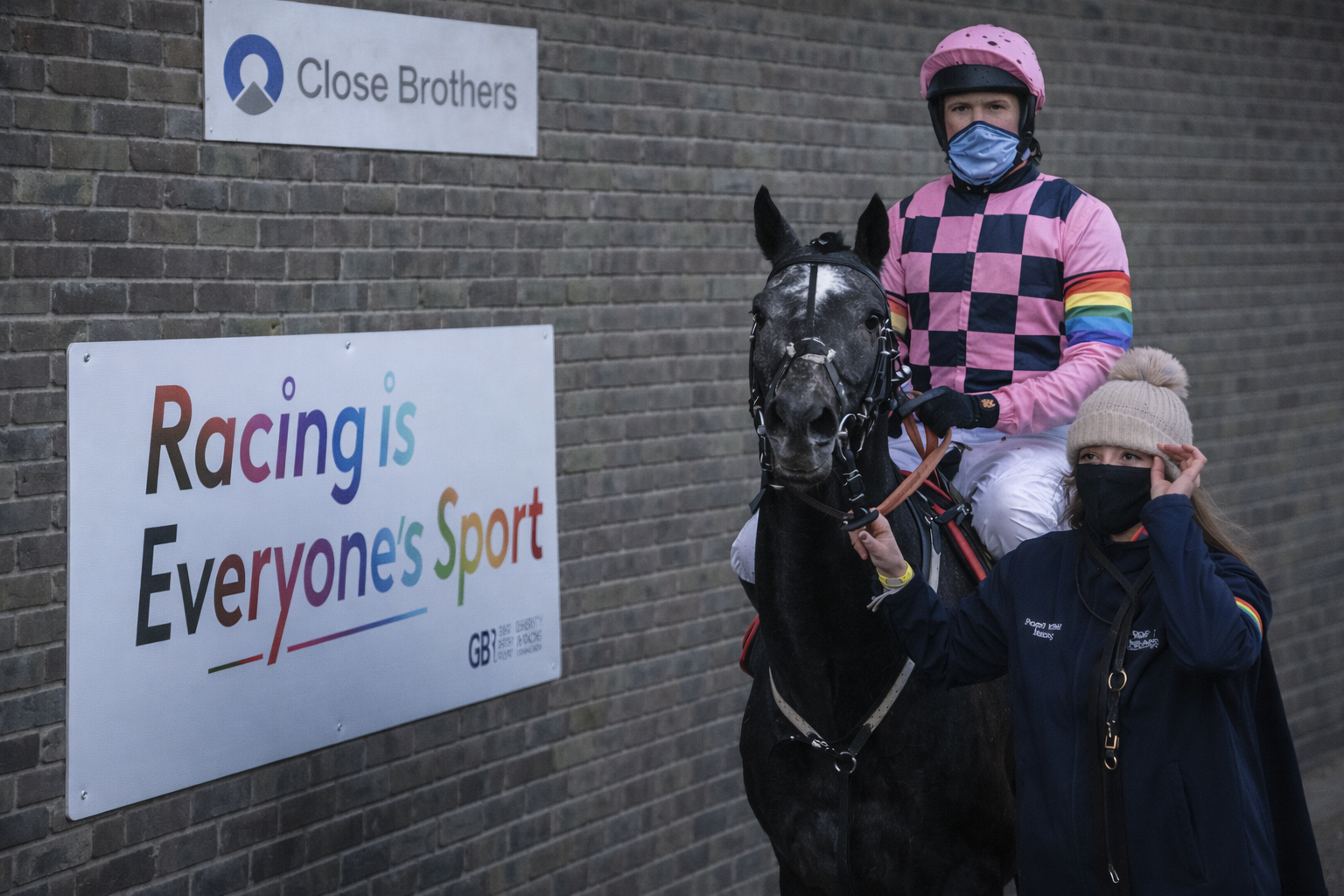
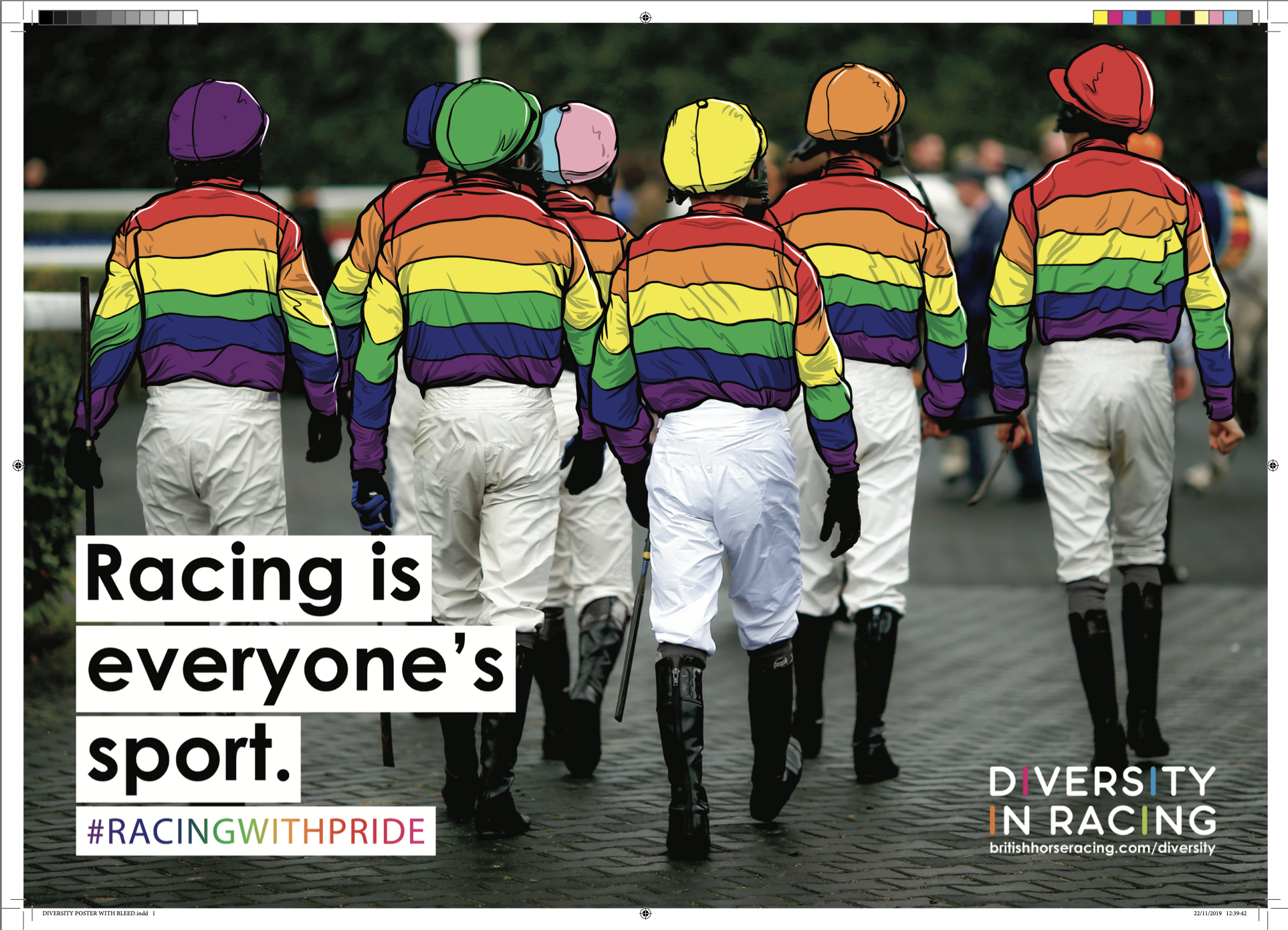
Relationships within the industry had changed too; people who joined horseracing bodies were now part of a political and ideological movement which framed group differences in participation as "exclusion" and "barriers" to be dismantled. This has taken many forms – a calendar of Pride celebrations, LGBTQ and diversity staff training modules, social media campaigns, webinars, taking the knee, and hired "experts", all alongside a sustained push to change the demographics. This changed the BHA's relationship to horseracing, and the aim of making horseracing demographically and culturally "representative" changed the industry's relationship to society at large.
The notion that horseracing must reflect society also overlooks something else: horseracing is not society, nor is it the only sport or entertainment. People express preferences across a vast array of pursuits — sports and games, theatre and cinema, arts and crafts, music and dance, festivals and exhibitions, community and church, and much more. Why, then, should horseracing internalise a representation of people, when people are represented in their choices across society's activities as a whole? This question has never been satisfactorily addressed.
John Gardner writes on DEI in horseracing at deiexamined.com.