
The Coronation Oath and Mass Immigration
James Stoker argues that mass immigration in Britain is unconstitutional per the Coronation Oath of 1688, which establishes the English people, and descendants, as the constitutional sovereign. The relationship between monarch, Parliament, and people constrains changes in population composition.

Mass immigration is commonly regarded in public discussion as either 'legal' or 'illegal'. This is a red-herring; mass immigration is better understood as merely wanted or unwanted, that is, by those in power.
This is because all mass immigration that entrenches foreigners within British life (citizenship, permanent residence, voting rights, etc.) is unlawful, regardless of whether legislated for. That may sound contradictory, but all Parliamentary legislation rests upon a foundation of constitutional law and must be compatible with it.
Understanding mass immigration does not, in the first instance, concern the relationship between British and foreign people, but rather that between British people and their own institutions. The Glorious Revolution established that political authority flows upward from people to representatives, not downward from divine right; people vote for candidates who reflect their views, and the elected Parliament implements those views via legislation.
Parliament can tax people, subsidise people, even punish people, but it cannot replace people, i.e. with people from outside Britain. Such an act offends the common sense understanding of the relationship between politicians and people; a population can choose its politicians, but politicians cannot choose their own population.
Yet, since 1948, and particularly since 1997, this is what British politicians have been doing; they have been changing the population and its habits via mass immigration and multiculturalism. The purpose of this paper is to explain why this process is unconstitutional, and so provide a legal (i.e. constitutional) basis for ending, and ultimately reversing, this process.
As a caveat, it should be noted there is no possibility of Courts striking down unconstitutional legislation at the present time, because mass immigration has been legitimised culturally; until the culture changes, no amount of legal objection will restore constitutional law and with it the lawful British population. Nonetheless, the constitutional position should be understood now, so the necessary knowledge is in place for when the culture does change.
The Coronation Oath
The relationship between Monarch, Parliament and people is governed by the Coronation Oath. The Coronation Oath of 1688 made the monarch subject to the will of Parliament by the inclusion of the words
"Governe … according to the Statutes in Parlyament".
The Bill of Rights 1689 shows Parliament takes its form and power from the people, not on given basis, but on a loaned basis through elections:
"the said Lords Spiritual and Temporal and Commons, pursuant to their respective letters and elections … declare: Election of Members of Parlyament ought to be free".
Therefore, the people, and not Monarch or Parliament, are the constitutional sovereign. Parliament can exercise power loaned to it, but powers that exceed the scope of that loan — such as altering the people that loaned the power in the first place — are beyond Parliament's constitutional scope.
How then are "the people" defined? To quote the Oath of 1688:
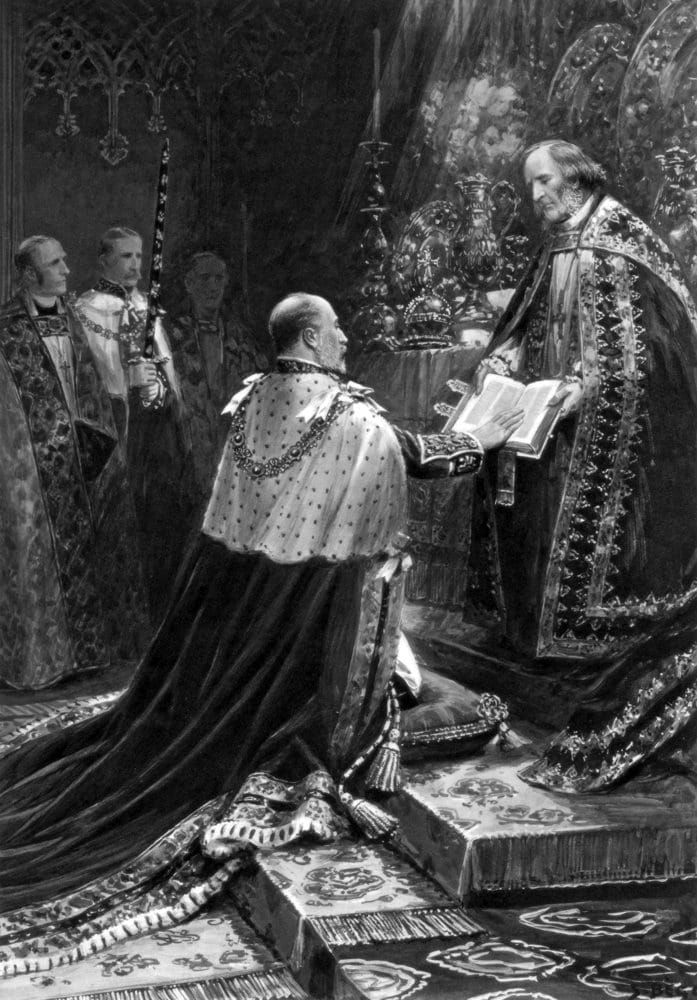
[ArchBishop] Will You solemnely Promise and Sweare to Governe the People of this Kingdome of England and the Dominions thereto belonging according to the Statutes in Parlyament Agreed on and the Laws and Customs of the same?
[Monarch] I solemnly Promise soe to doe.
The Coronation Oath identifies "the People of this Kingdome of England". The Oath does not refer to people inEngland, but to the People of England. This indicates belonging, and does not refer to people of another land who are "in" England.
The above also specifies "the People of England", indicating a unified or identifiable entity. The wording leaves no doubt whom the framers of the Oath had in mind: the English people. Therefore, the constitutional sovereign was identified in 1688 as the English People, a status which extended automatically to the Welsh and Scots, via the Union of Crowns.
Succession
The next question to consider is the succession of that people, from 1688 to the present day. Who, today, inherits the role of constitutional sovereign? All nations, including the English, Scots, and Welsh, continue by children; the English today are the descendants of the English in 1688. Sovereignty passes from generation to generation within the nation; children of the nation are the nation in perpetuity.
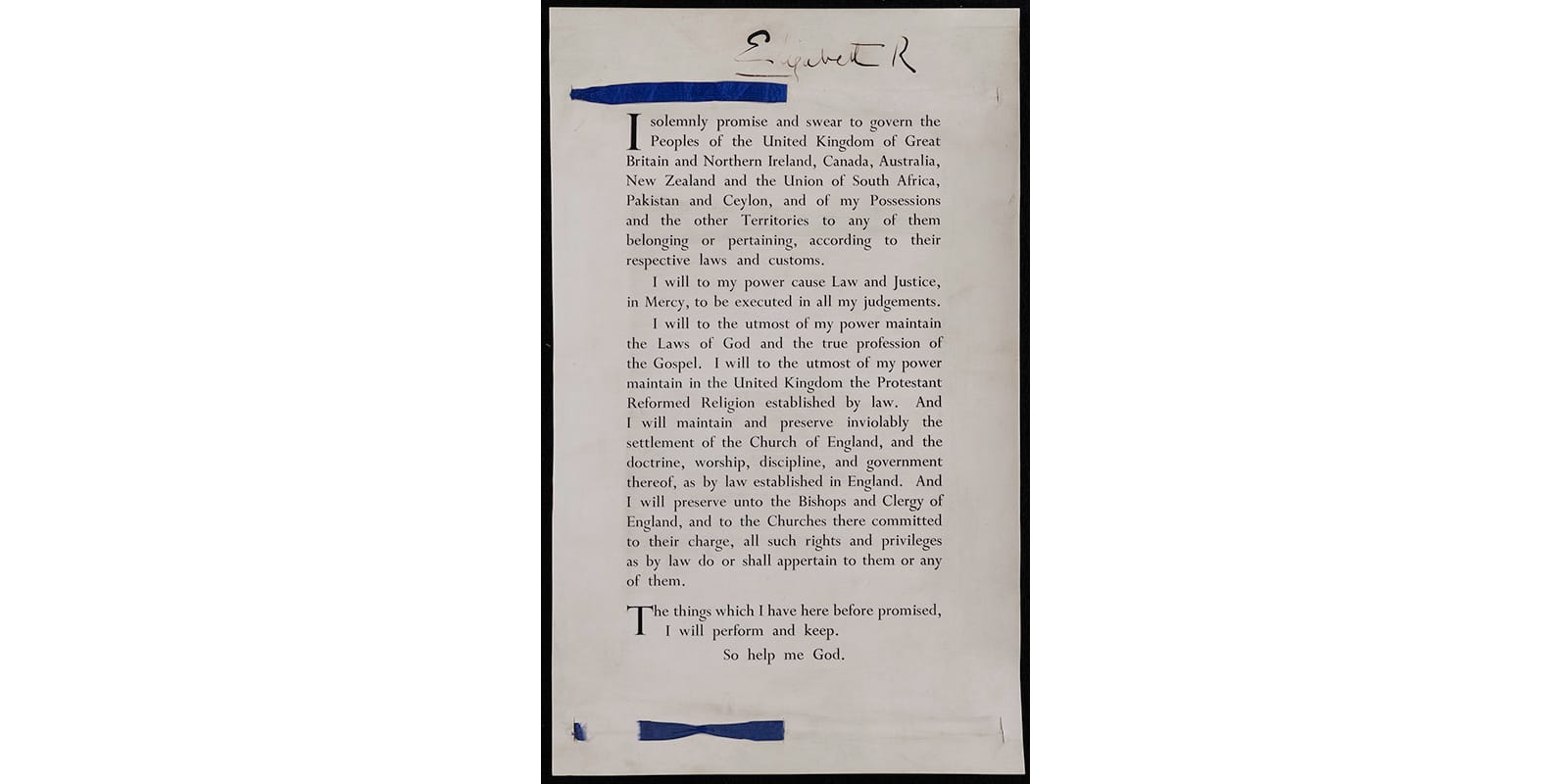
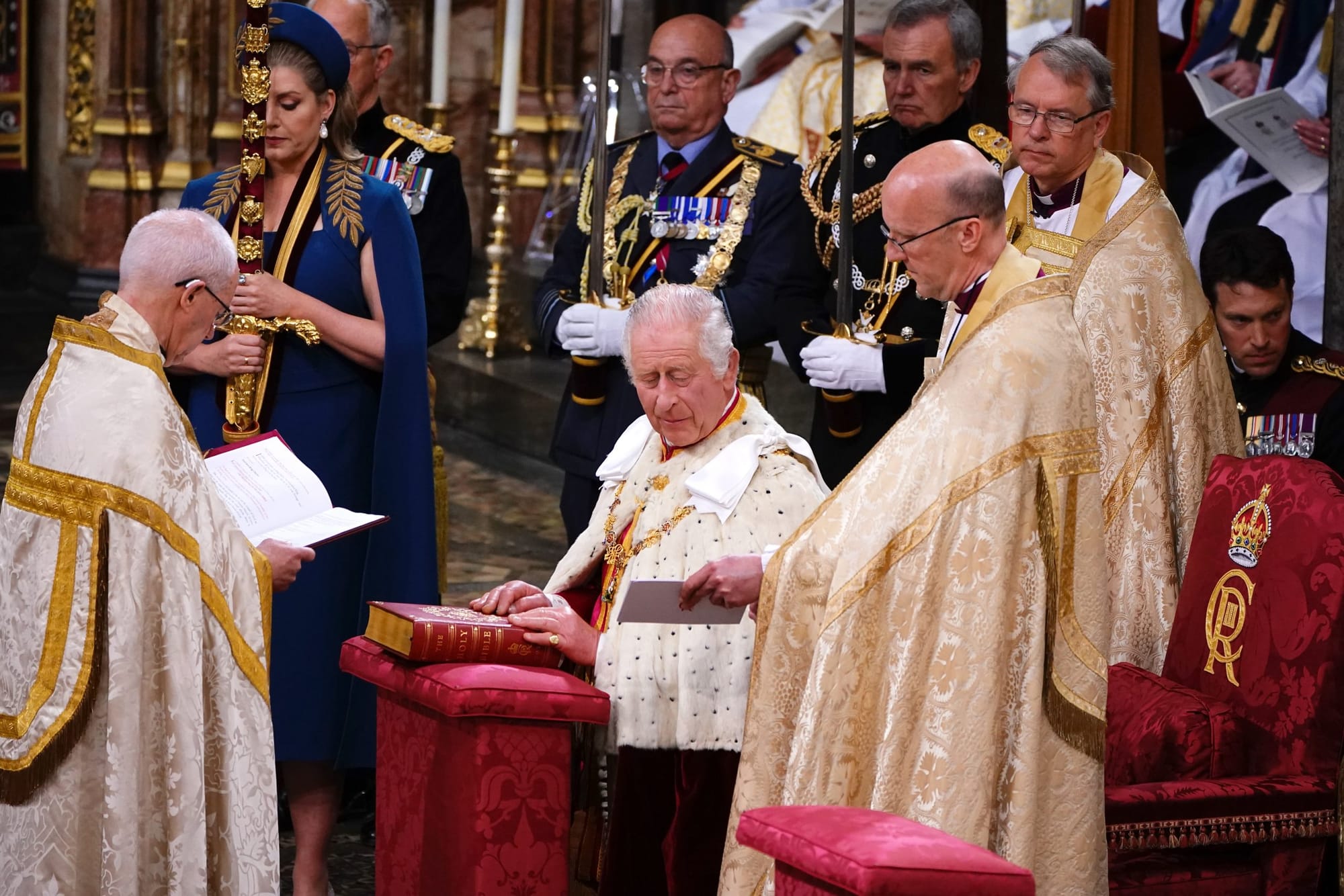
The People to whom the Coronation Oath refers today, as sworn by King Charles in 2023, cannot be any other than the descendants of 1688:
"Will you solemnly promise and swear to govern the Peoples of the United Kingdom of Great Britain and Northern Ireland, your other Realms and the Territories to any of them belonging or pertaining, according to their respective laws and customs?"
There are two other words in the Oath that require attention:
Govern. The Oath doesn't entitle the monarch to "choose", "replace", or "define" the People. The obligation is to govern; this indicates the Oath is a bond with an existing entity.
Customs. Creating a "multicultural" Britain, derived from foreign cultures, contravenes the Oath.
Conclusion
The Coronation Oath was written to preserve the English and British People and their ways, and it identifies the British People themselves as the constitutional sovereign. No institution, be it Parliament, Monarch, executive, or judiciary, has the power to deny the British People their sovereignty, or exchange them for another people, or add another people to them. Only births, deaths, and marriages can determine the sovereign population.
The distinction between Britons and immigrant settlers can be removed only if the constitution itself, including the Coronation Oath, is dissolved. No such constitutional change was made by New Labour when it came to power in 1997, nor by subsequent governments.
Changes enacted by those governments to change the British population by mass immigration, and to make immigrants and their descendants indistinguishable from British people, are unconstitutional and do not stand in law.
References
Coronation Oath Act 1688 – legislation.gov.uk
Bill of Rights 1689 – legislation.gov.uk